 Puerto-Limón.com+ Add a business
Discover the Animals of Puerto Limón
Sloths, monkeys, toucans, butterflies, and many other species: Discover which wildlife can be found along Costa Rica’s Caribbean coast, where you can look for them, and how to observe them respectfully.
Discover SlothsOther Animal SpeciesSloths: The Stars of the Rainforest
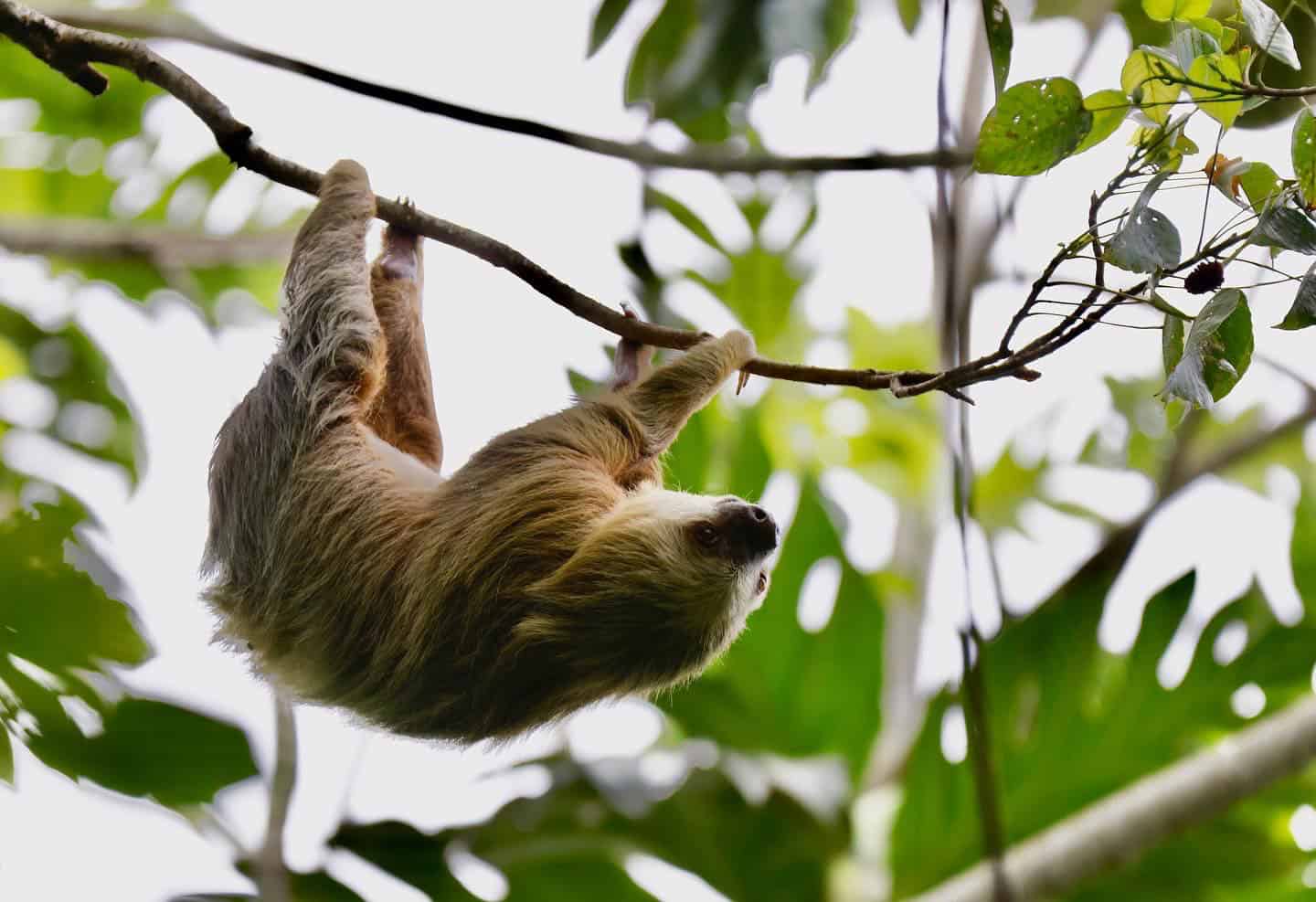
Many travelers hope to spot a sloth in the wild in Puerto Limón. Both two-toed and three-toed sloths live in Costa Rica. They spend much of their lives in the treetops and are often surprisingly well camouflaged by their fur.
The animals move slowly and are often found high above the ground. A nature guide can help you identify their typical resting spots. However, a sighting is never guaranteed.
What animals can you see?
Costa Rica’s southern Caribbean coast offers a wide variety of habitats: rainforest, coastal forests, rivers, and canals. Not every species lives everywhere or is seen regularly. These twelve profiles will help you correctly identify what you see.
Sloths
EXPLORE SPECIES
Sloths
Special connective tissues help support internal organs while sloths hang upside down. Three-toed sloths also have unusually many neck vertebrae.
Algae and tiny invertebrates inhabit their fur. The relationships between sloths and these organisms remain an active research topic.
Three-toed sloths typically descend to defecate about once a week, exposing themselves to dangers on the forest floor.
Despite moving slowly through branches, sloths can swim using their long forelimbs.
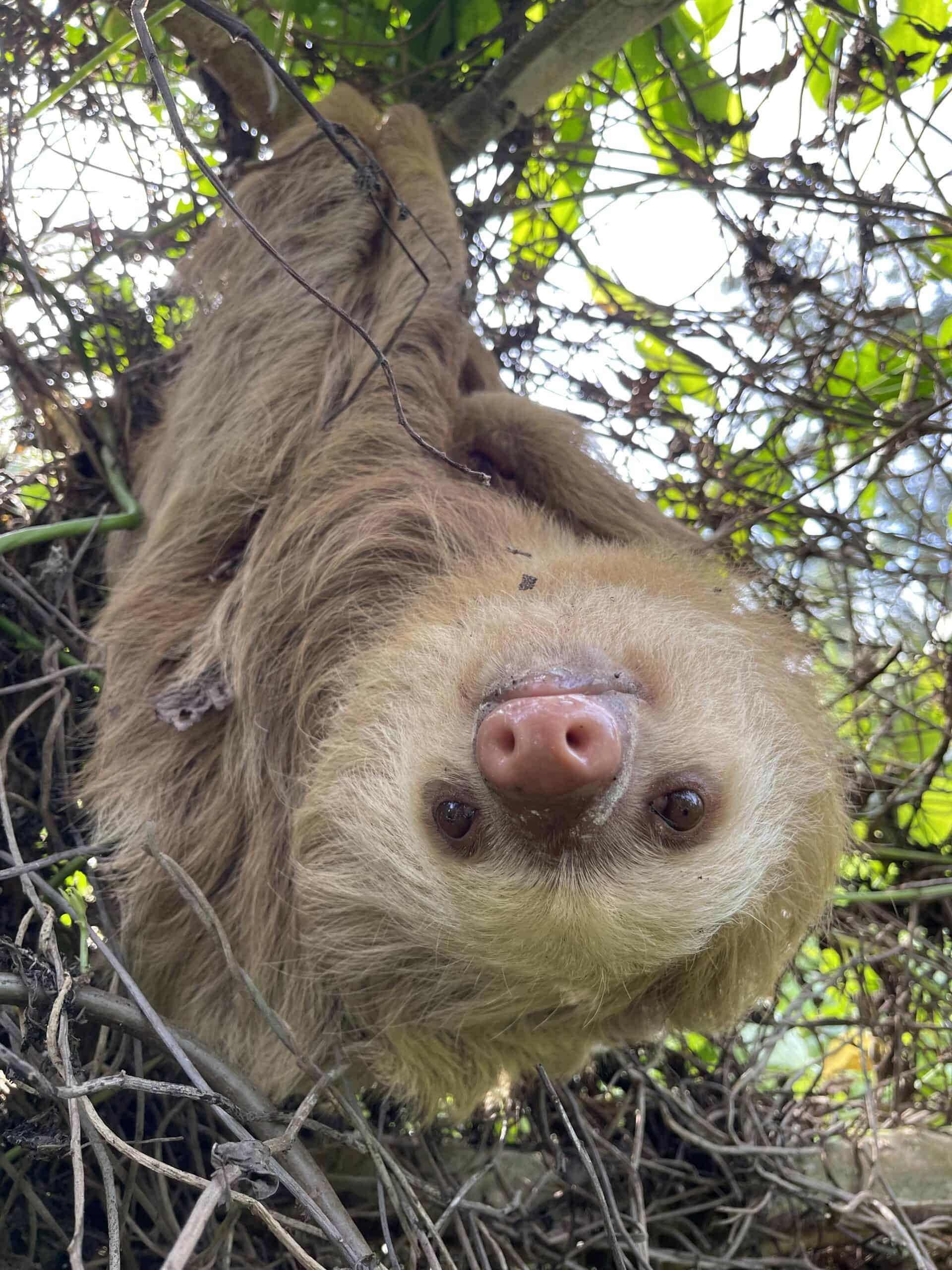
Two-toed and three-toed sloths live in the treetops. They move slowly, are exceptionally well-camouflaged, and can never be reliably spotted on demand.
Observation: Possible with patience and a guide
Howler Monkeys
EXPLORE SPECIES
Howler Monkeys
An enlarged hyoid apparatus acts as a resonating chamber, producing exceptionally deep, far-carrying calls.
Calls announce a group’s presence and can help avoid direct confrontations.
The prehensile tail supports body weight; its sensitive underside helps grip branches.
Seeds eaten with fruit can be deposited elsewhere, supporting forest regeneration.
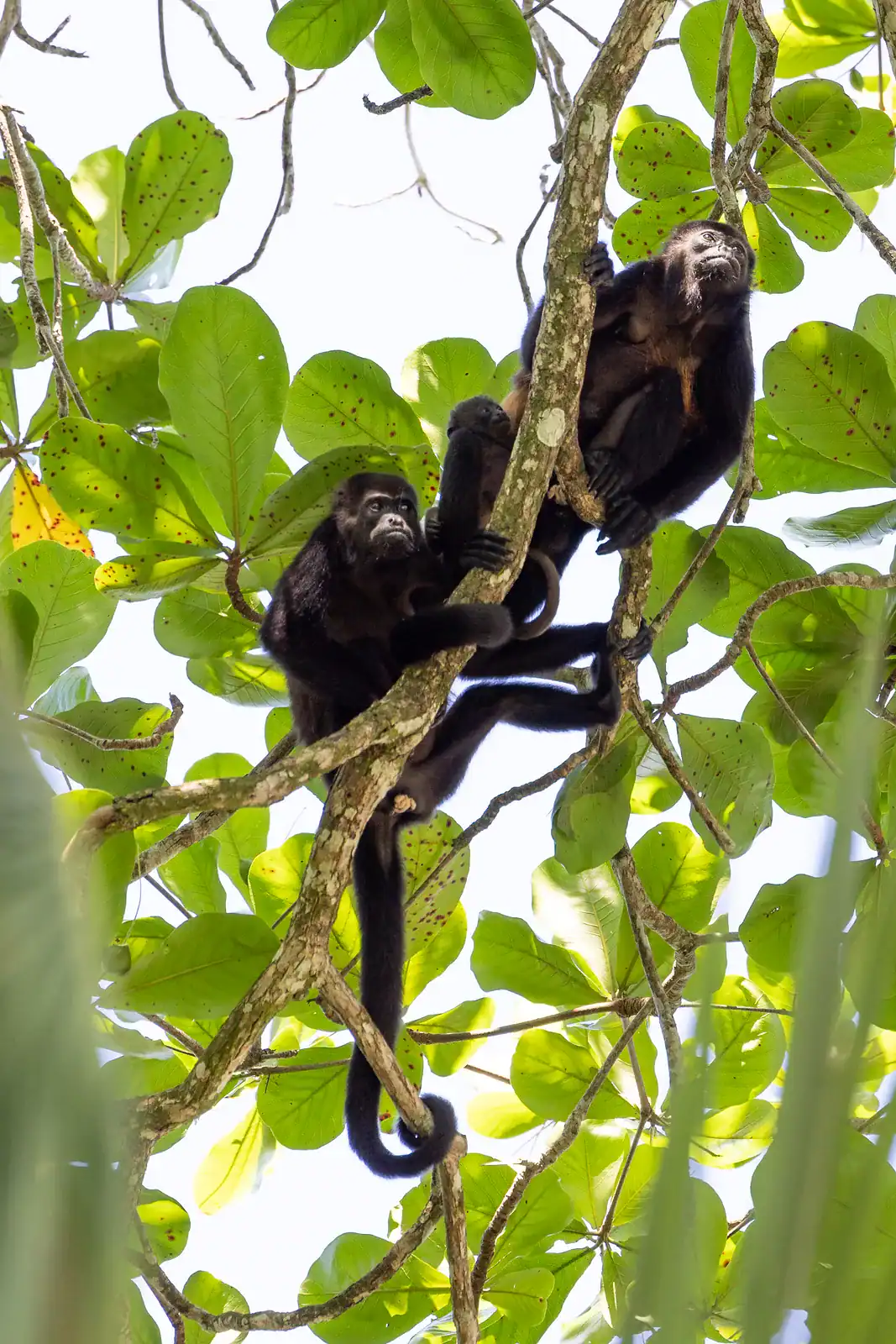
Mantled howler monkeys often give themselves away with their deep calls. They live in groups high up in the trees; keep your distance and don’t try to lure them.
Observation: Often audible first
Capuchin monkeys
EXPLORE SPECIES
Capuchin monkeys
Capuchins solve difficult problems and learn by observation. Tool use is documented in some other capuchin populations, not necessarily every local troop.
Young monkeys spend years learning how to forage and navigate social relationships.
Facial expressions, gestures, touch and calls convey social intentions.
As omnivores, capuchins can disperse seeds while also affecting populations of small prey.
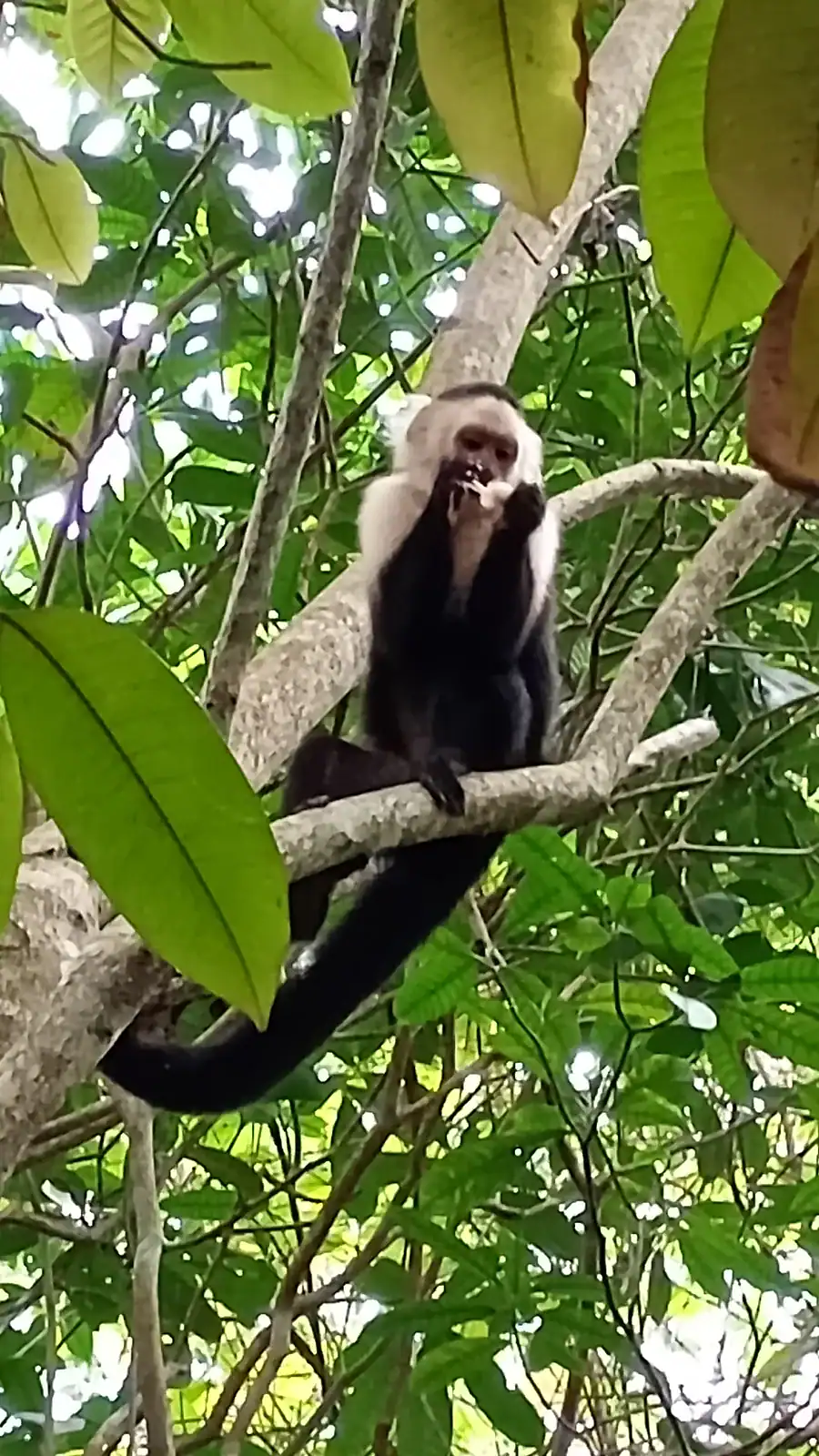
White-headed capuchin monkeys are agile and often travel in groups. Never feed them or openly offer them objects: contact with food alters their behavior.
Observation: Active and agile
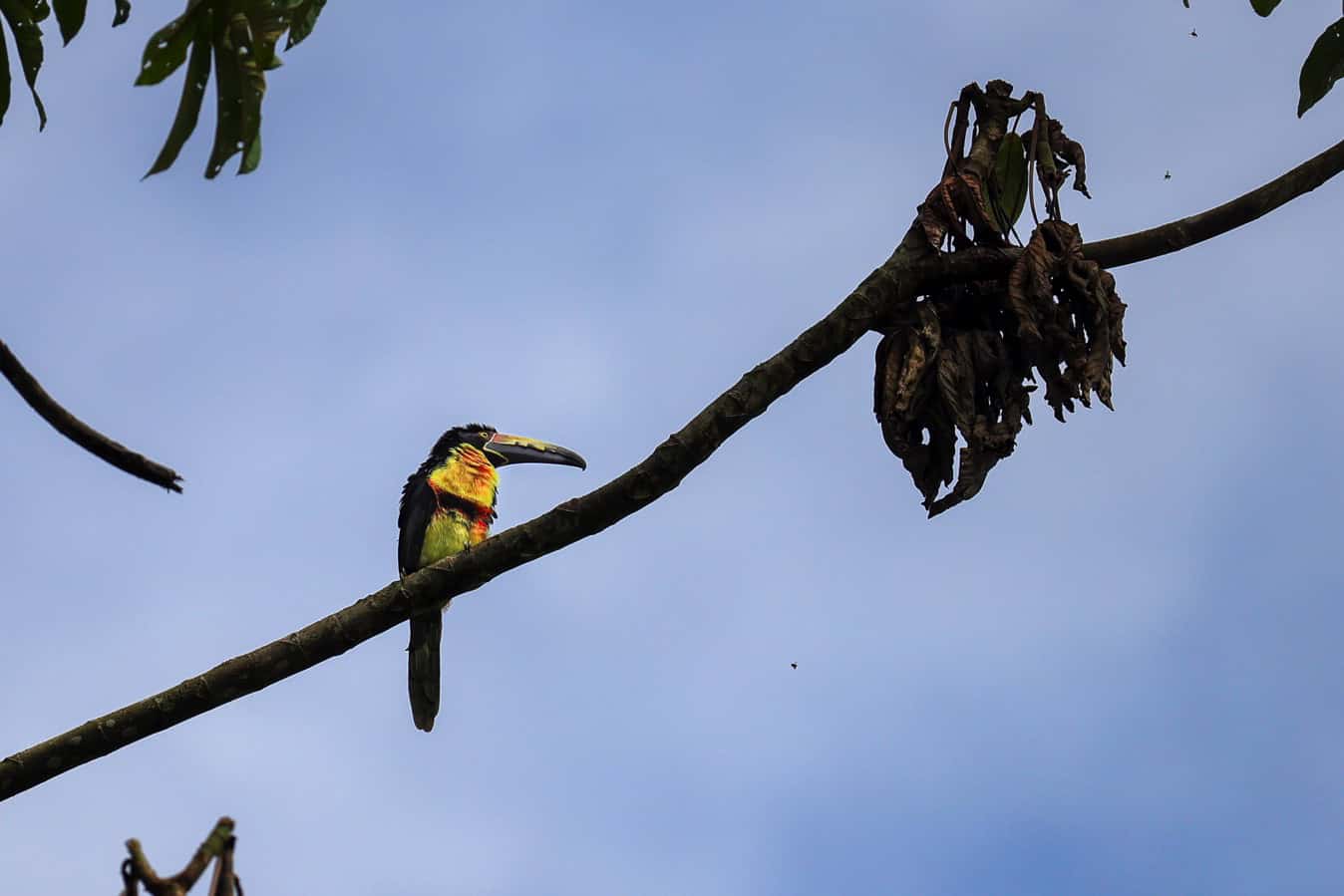
Toucans and Other Birds
EXPLORE SPECIES
Toucans and Other Birds
In toco toucans, blood flow through the bill helps release excess body heat. This finding should not be generalised unchanged to every species.
An internal framework keeps the enormous bill surprisingly light.
Many toucans nest in existing tree cavities, making mature trees important breeding habitat.
Birds disperse seeds, pollinate flowers and control insects in distinct ecological niches.
Toucans, kingfishers, herons, and parrots can be spotted depending on the habitat. Binoculars and quiet observation are more helpful than loud calls.
Observation: Depending on the type and location
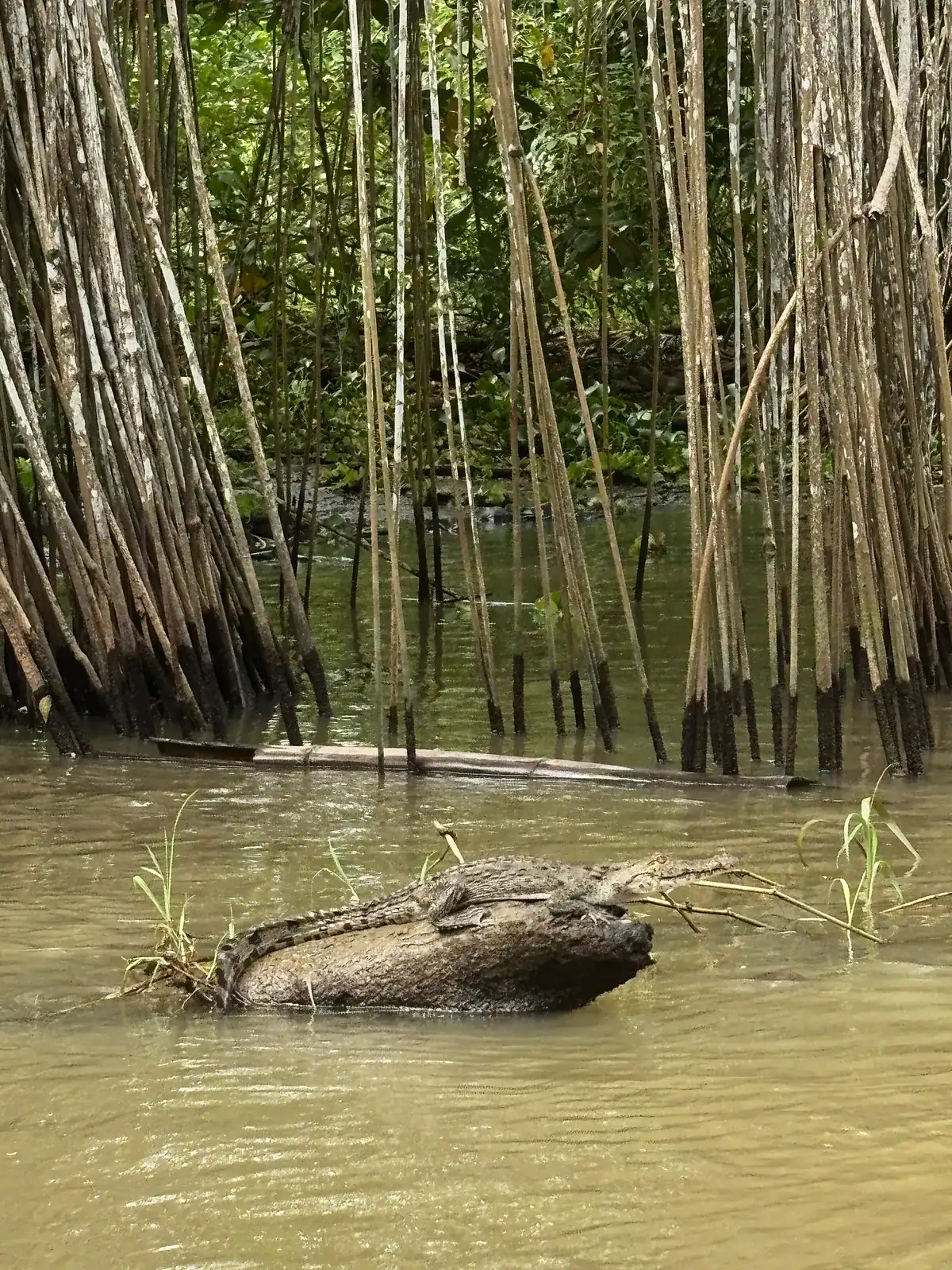
Caimans
EXPLORE SPECIES
Caimans
Caimans belong to crocodilian lineages with ancestors living alongside dinosaurs, although modern species continued evolving.
Sensitive jaw receptors detect tiny water movements, while a nictitating membrane protects the eyes.
In many crocodilians, incubation temperature influences offspring sex; the pattern varies by species.
Females of many caiman species guard nests and young.
Caimans are found in calm waters and along overgrown banks. They are often difficult to spot. Observe them only from a safe distance, preferably with a guide who knows the area well.
Observation: Rare, inconspicuous sightings
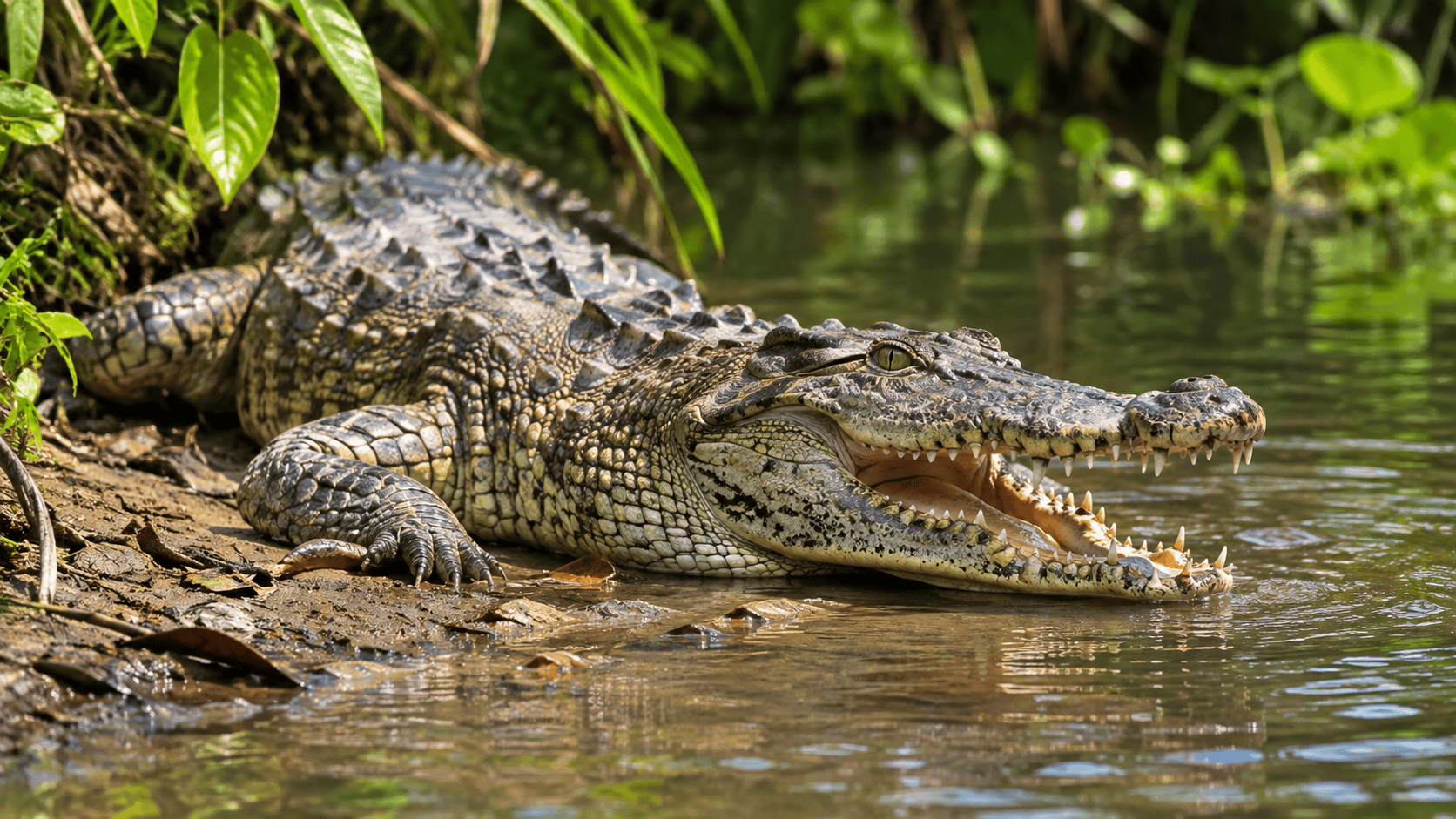
Crocodiles
EXPLORE SPECIES
Crocodiles
American crocodiles have functioning salt glands on their tongues, helping them inhabit saline environments.
Young crocodilians vocalise inside their eggs, helping coordinate hatching and maternal responses.
Their jaws close with enormous force; this never implies a safe way to handle one.
Large predators affect food webs and how other animals use aquatic habitats.
American crocodiles are found in Costa Rica in suitable rivers, lagoons, and estuaries. Sightings are not to be expected everywhere; do not enter the water’s edge without caution, and never lure them into the water.
Observation: Only at suitable locations
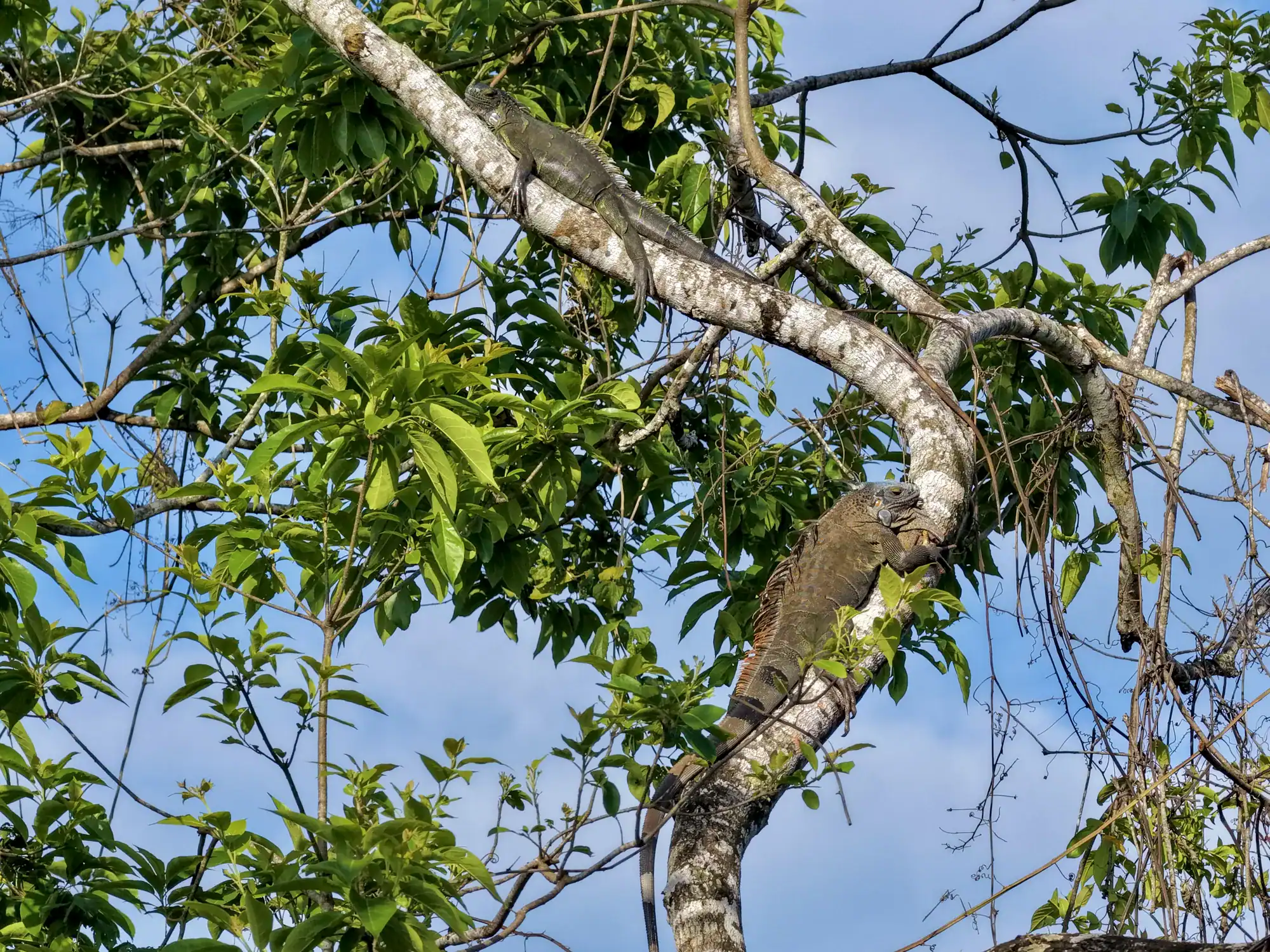
Iguanas
EXPLORE SPECIES
Iguanas
A light-sensitive parietal organ detects brightness but does not form normal images.
The muscular tail can deliver powerful blows, and claws and teeth are also dangerous.
The throat flap plays a role in visual signalling and may help with temperature regulation.
Females lay eggs in excavated nests; hatchlings largely fend for themselves.
Green iguanas bask in the sun on branches and in the treetops. Especially when the light is good, they can sometimes be seen from the trail.
Observation: With a little attention
Basilisks
EXPLORE SPECIES
Basilisks
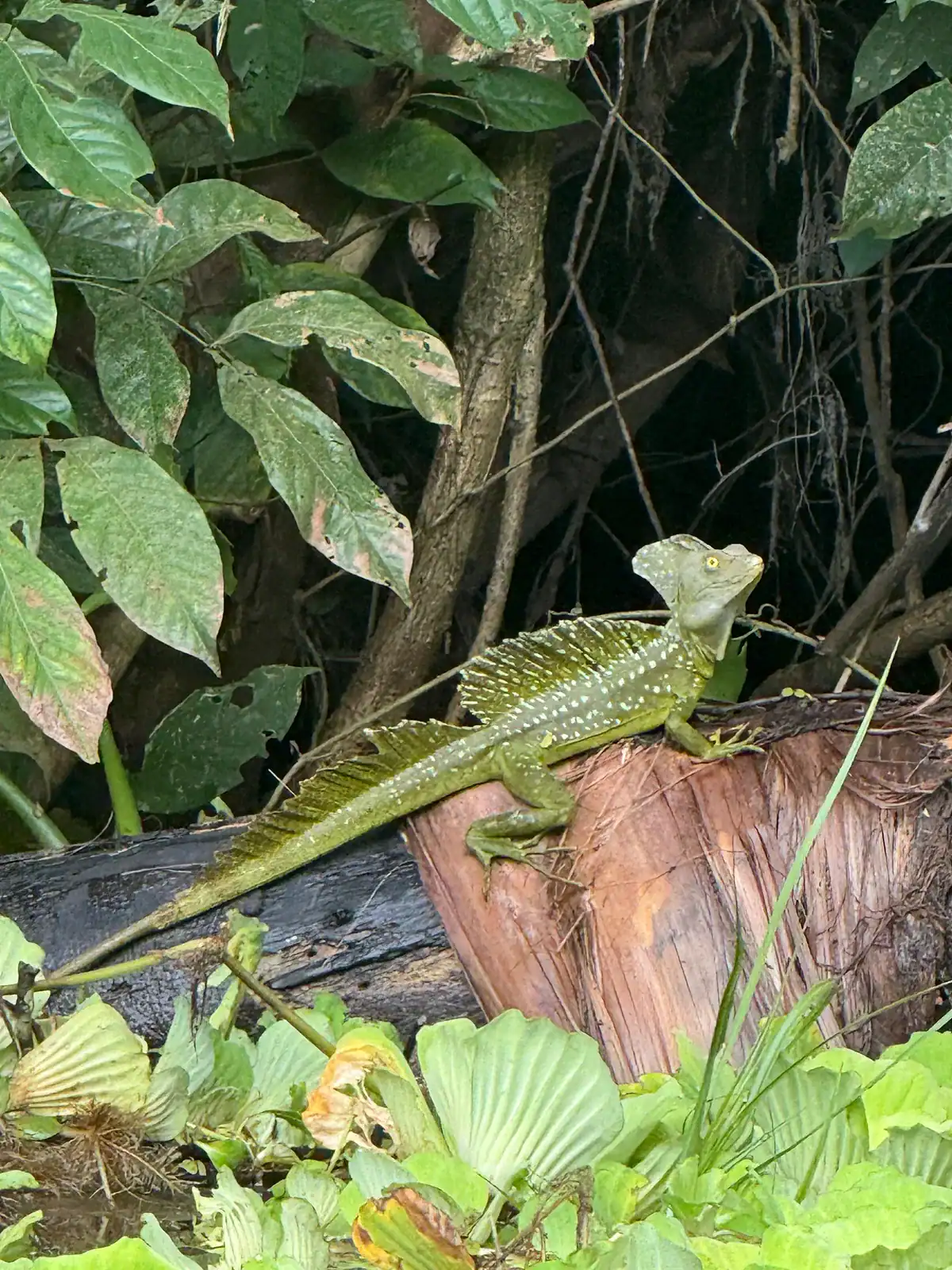
Rapid steps and specialised toes create forces that briefly support running across the water surface.
Smaller, lighter basilisks often manage water-running more easily than heavier adults.
In some species, males have crests on the head, back or tail used in display and recognition.
Basilisks are capable climbers and swimmers as well as runners.
Basilisks often live near bodies of water. When in danger, they can flee quickly and, in some cases, run briefly across the water. Do not chase or capture them.
Observation: More common near bodies of water
Frogs and Amphibians
EXPLORE SPECIES
Frogs and Amphibians
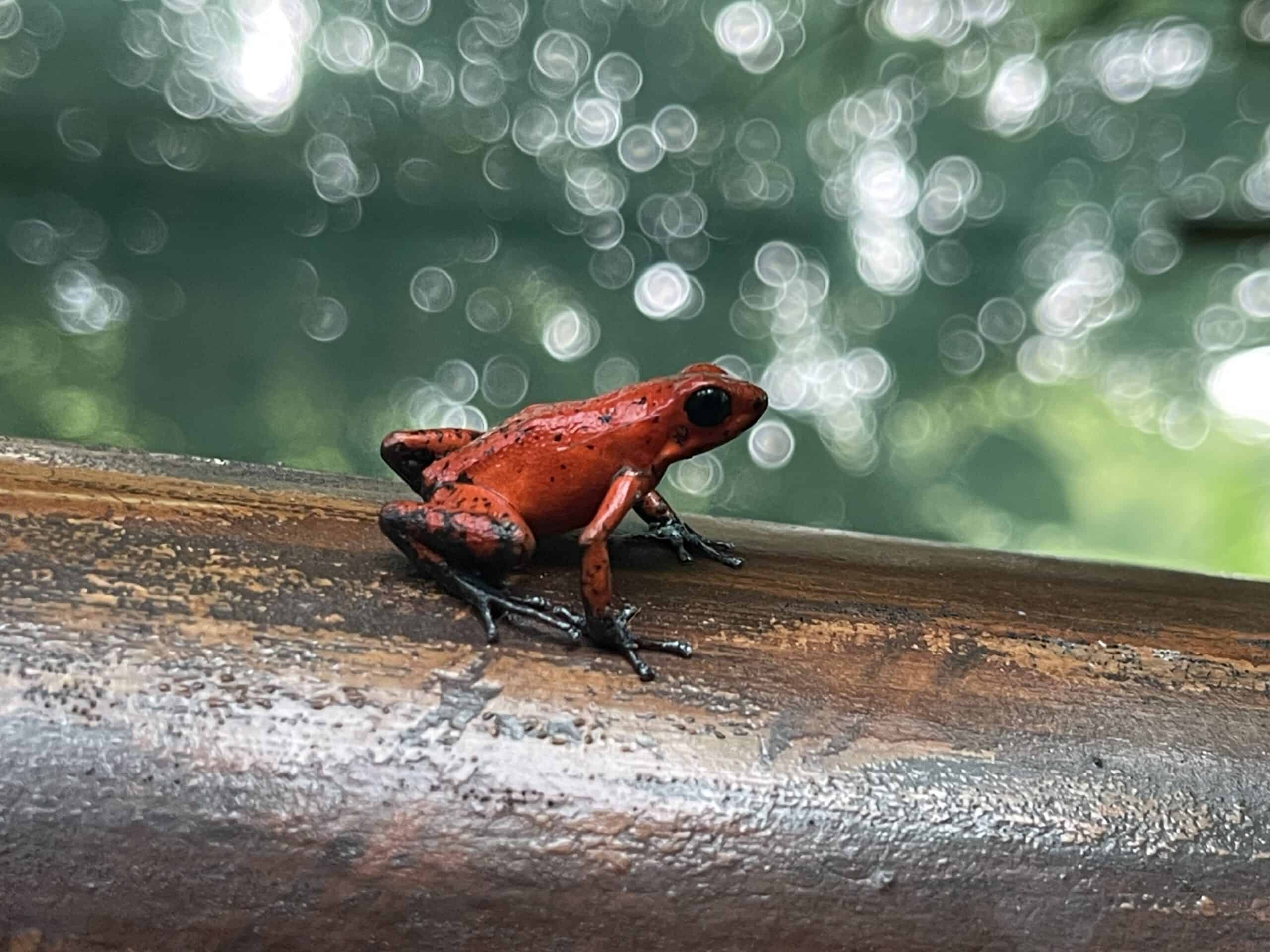
Some glass frogs have translucent bellies that reveal internal organs. Transparency varies between species.
Males of some frog species protect eggs or keep them moist; parental care differs widely.
Characteristic mating calls help researchers distinguish certain frog species.
Amphibians respond sensitively to changing moisture, water quality and habitat conditions.
Strawberry frogs and other amphibians live in moist, suitable habitats. Many species are very small; never touch them, partly because of their sensitive skin and possible skin toxins.
Observation: It’s better to get help from someone familiar with the area
Morpho Butterflies
EXPLORE SPECIES
Morpho Butterflies
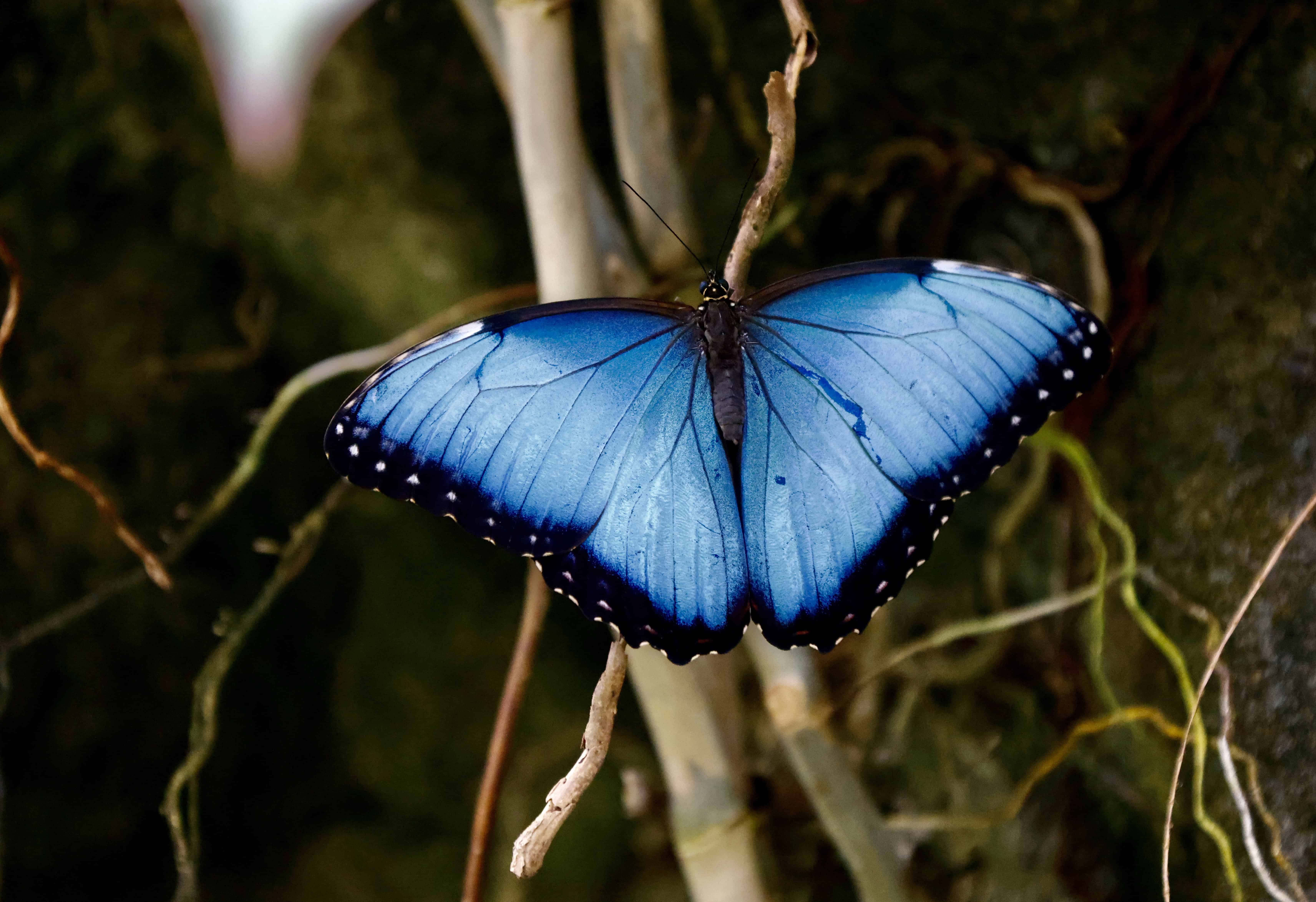
The brilliant blue of many morphos comes from microscopic wing-scale structures that reflect and interfere with light.
The undersides of many species carry eyespots that may confuse predators.
Morphos develop through egg, caterpillar and chrysalis to adult, reorganising many body structures inside the chrysalis.
Caterpillars need suitable food plants; adult butterflies alone cannot sustain a population.
When the weather is right, you can spot morphos and other butterflies in clearings and in natural gardens. Do not touch them, and do not hold them still for photos.
Observation: Depending on the weather and season
Snakes
EXPLORE SPECIES
Snakes
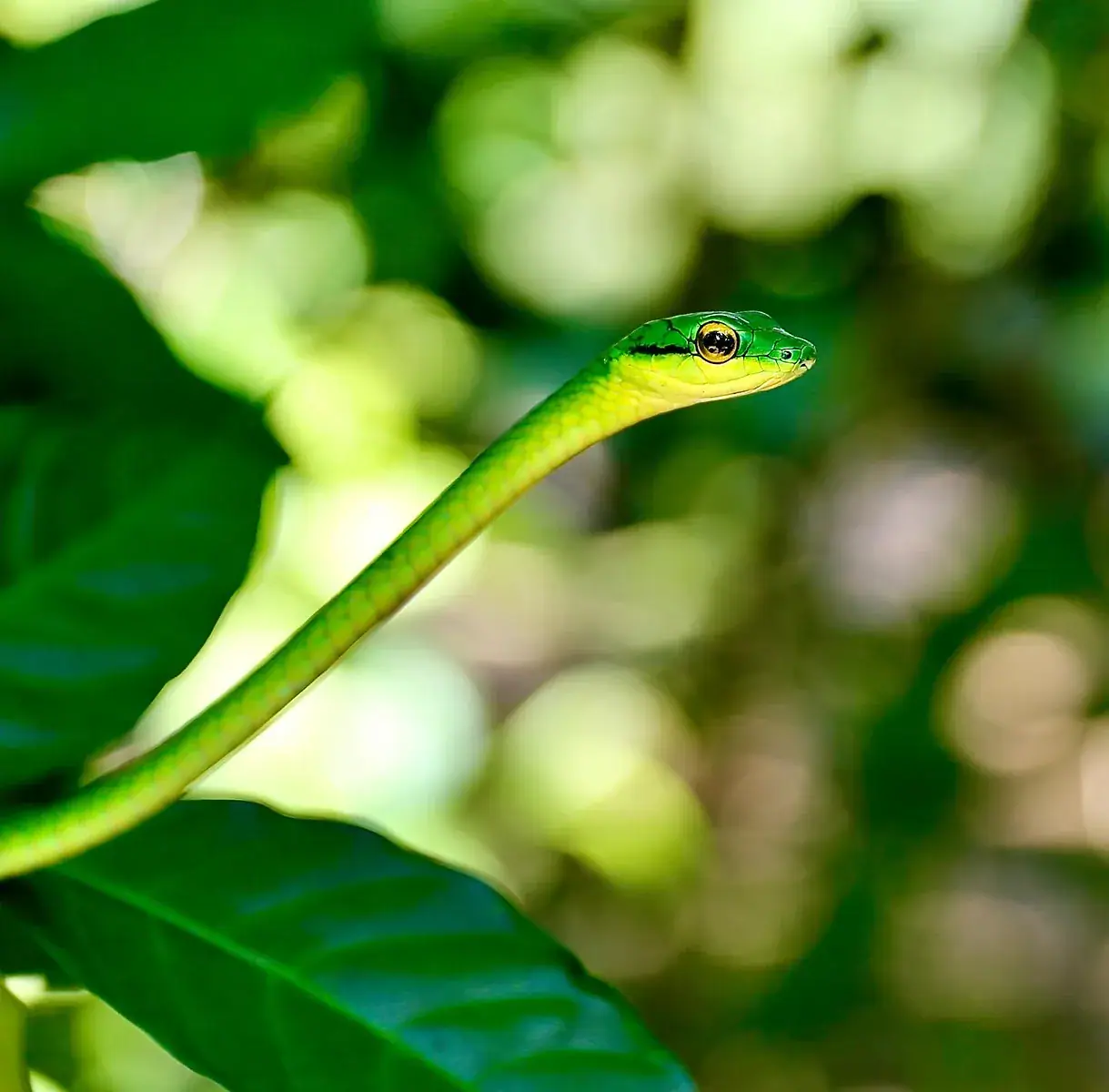
The forked tongue collects chemical particles for the vomeronasal organ, allowing comparison of scent direction.
Some pit vipers detect temperature differences using specialised facial pits; most snakes lack these organs.
Mobile skull bones and ligaments allow swallowing wide prey without dislocating the jaws.
Snakes shed their outer skin regularly; their eyes may look cloudy beforehand.
Snakes are part of the ecosystem. Some species are venomous, but many are harmless. Never try to identify them yourself, touch them, or move them out of your path; keep your distance.
Observation: Often well hidden
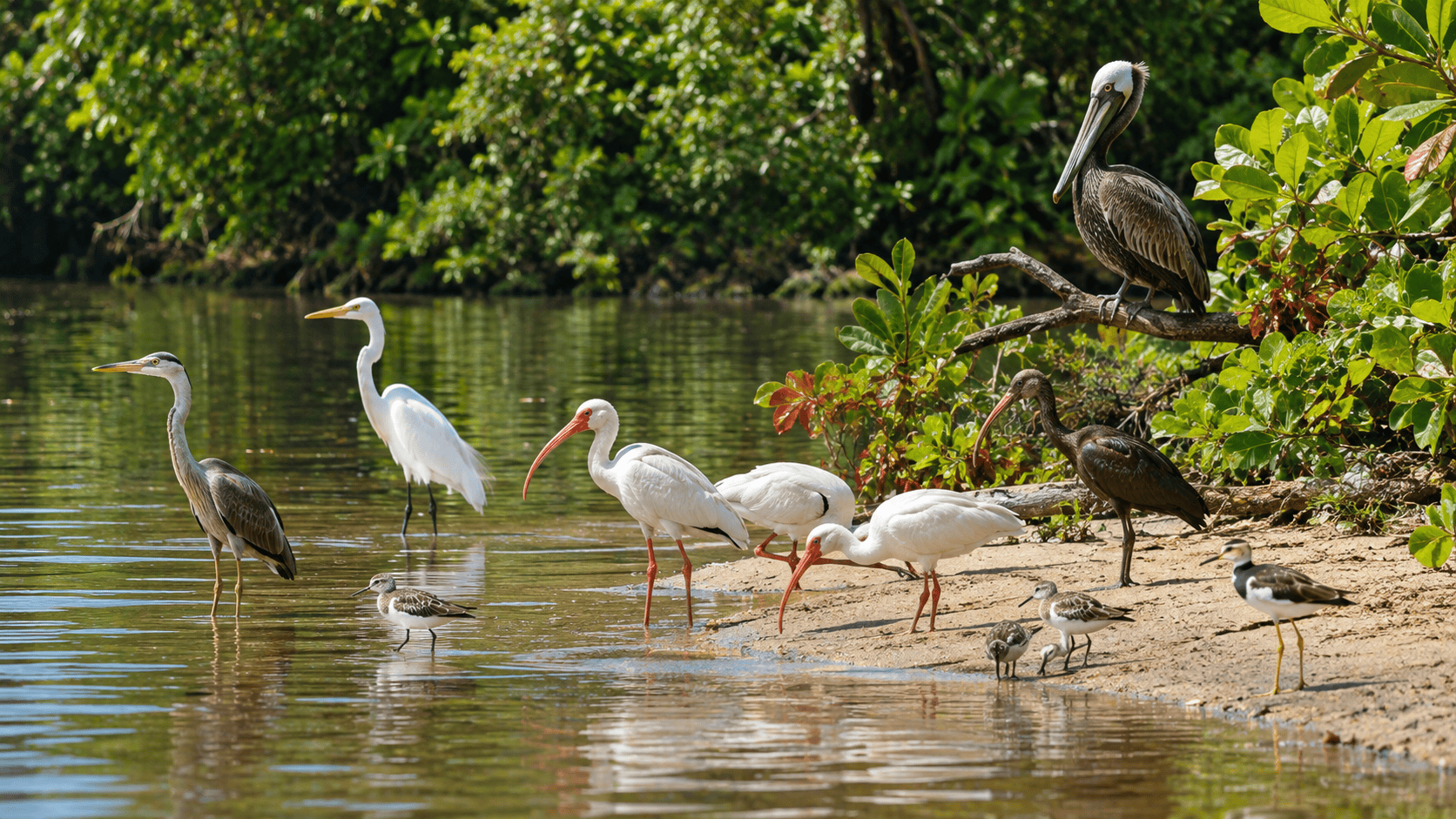
Coastal and Water Birds
EXPLORE SPECIES
Coastal and Water Birds
Kingfishers must account for light refraction when plunging from air into water.
Herons use rapid head-and-neck strikes to catch fish and other prey.
Mangrove roots shelter juvenile fish and invertebrates, indirectly feeding many birds.
Water levels and rainfall shift where prey is accessible during the day.
Herons, kingfishers, and other waterbirds forage along rivers, in lagoons, and in coastal areas. It’s best to observe them quietly from a trail or a boat.
Observation: Good Fishing Spots
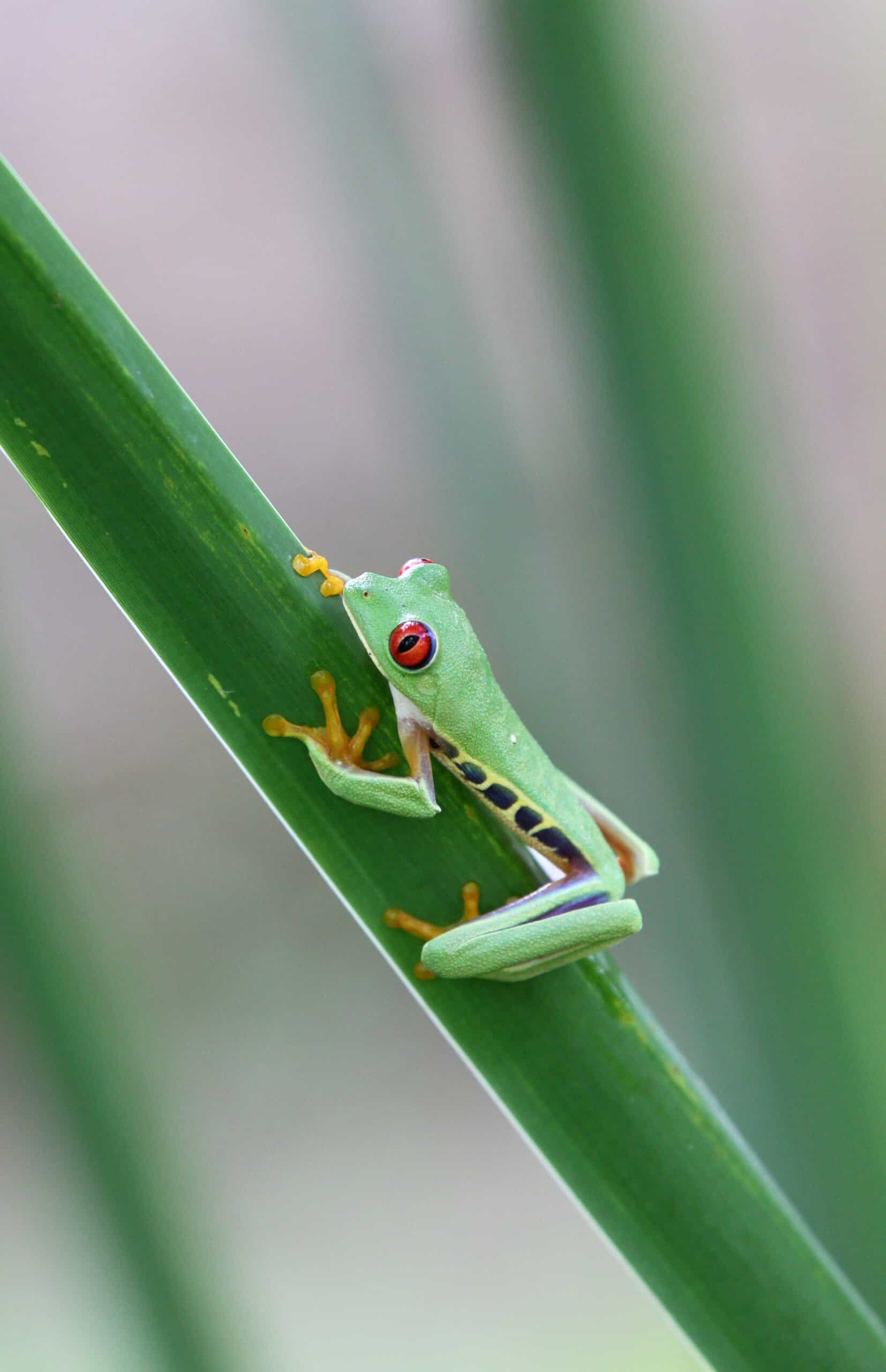
Red-eyed Tree Frog
EXPLORE SPECIES
Red-eyed Tree Frog
Suddenly opening red eyes can startle predators.
Eggs are laid on leaves above water; tadpoles drop in after hatching.
Embryos may hatch early when predators attack the eggs.
Adults need vegetation while tadpoles depend on water.
Bright red eyes and colourful flanks make this nocturnal frog unmistakable.
Sighting: Possible with luck; never guaranteed
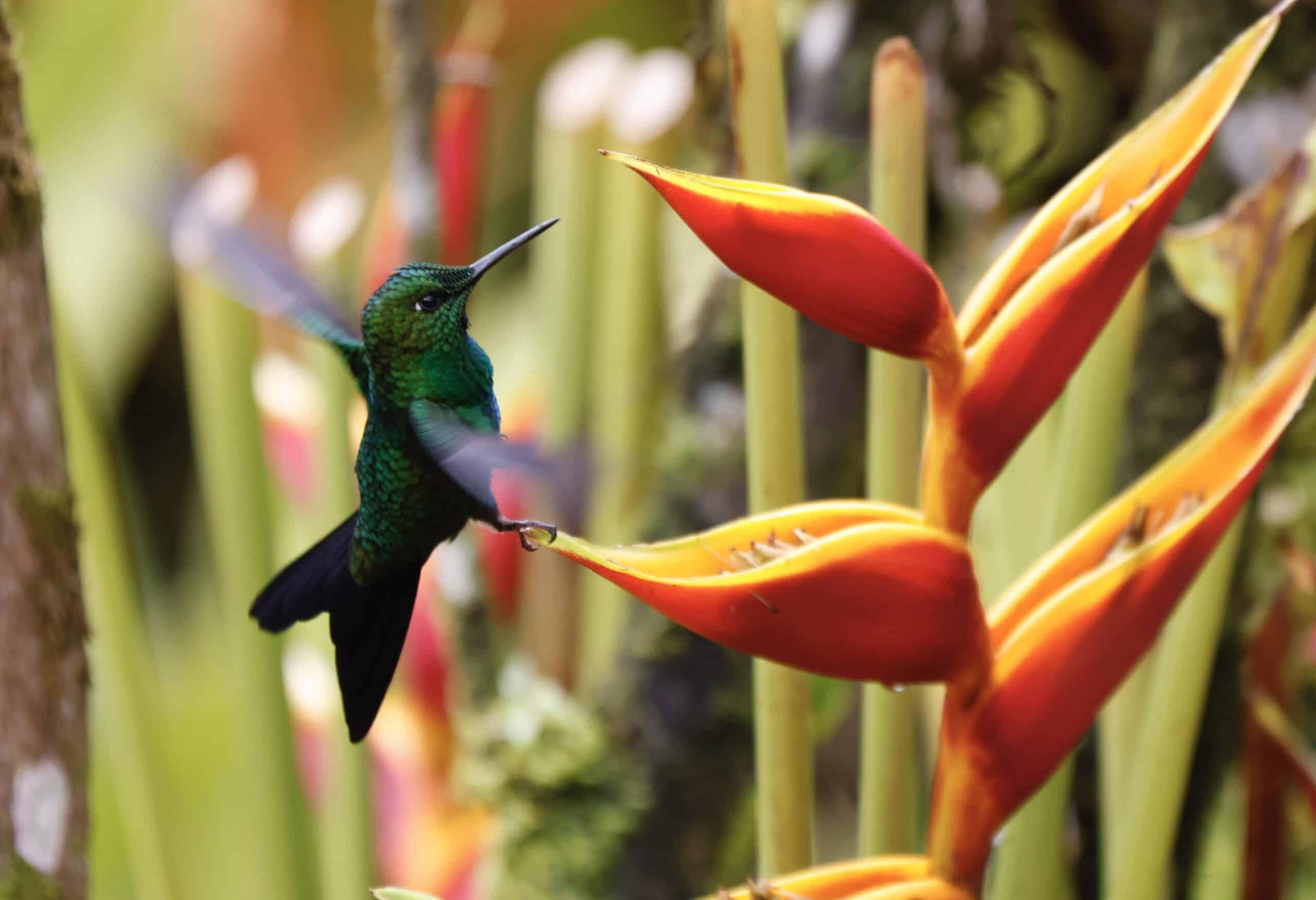
Hummingbirds
EXPLORE SPECIES
Hummingbirds
Hummingbirds can hover and fly backwards.
Some species dramatically reduce energy use at night.
Iridescent colours often come from microscopic feather structures.
Hummingbirds carry pollen while drinking nectar.
Hummingbirds hover at flowers and change direction instantly. Several species live along the Caribbean coast.
Sighting: Possible with luck; never guaranteed
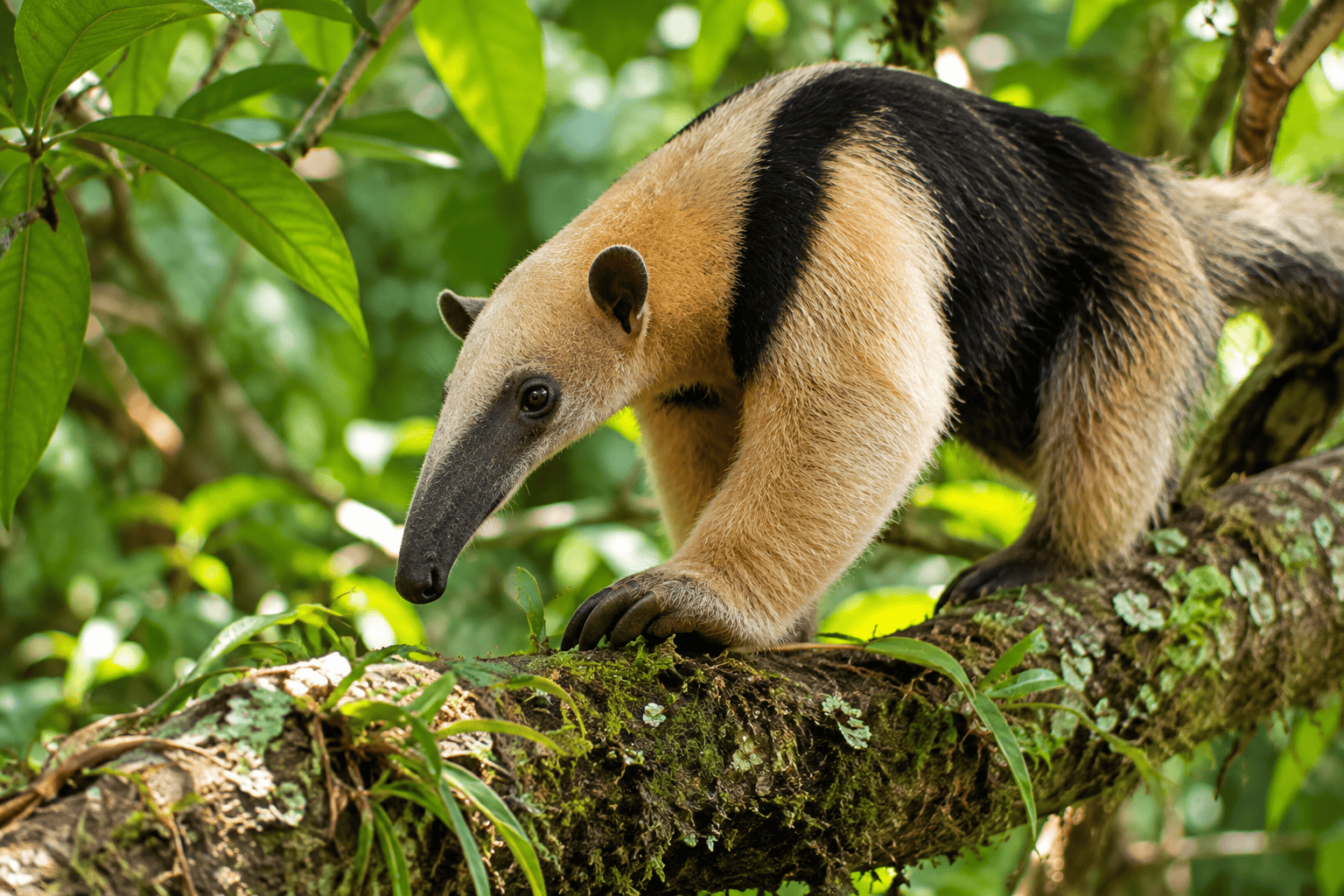
Northern Tamandua
EXPLORE SPECIES
Northern Tamandua
A long sticky tongue collects ants and termites; tamanduas have no teeth.
Powerful claws open insect nests and provide defence.
A prehensile tail helps grip branches.
Tamanduas visit numerous insect nests while feeding.
This tree-climbing anteater occurs in Gandoca-Manzanillo but is rarely seen.
Sighting: Possible with luck; never guaranteed
Jaguar
EXPLORE SPECIES
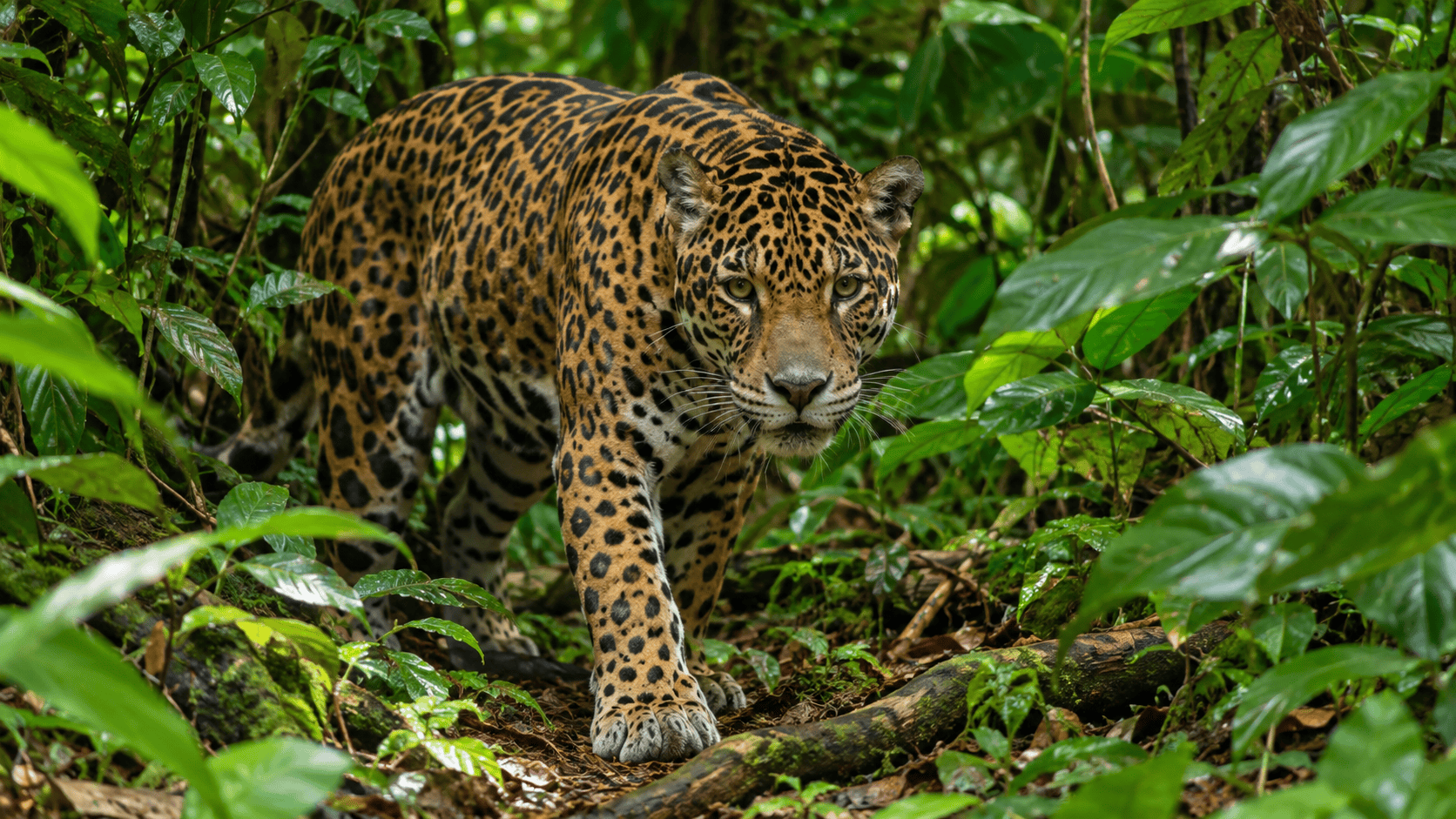
Jaguar
Jaguars have exceptionally powerful bites.
Coat rosettes often contain small spots inside.
Jaguars swim well and cross rivers.
They need extensive connected forest habitats.
The largest cat in the Americas inhabits protected Caribbean forests. Encounters are extremely rare.
Sighting: Extremely rare – not expected
White-nosed Coati
EXPLORE SPECIES
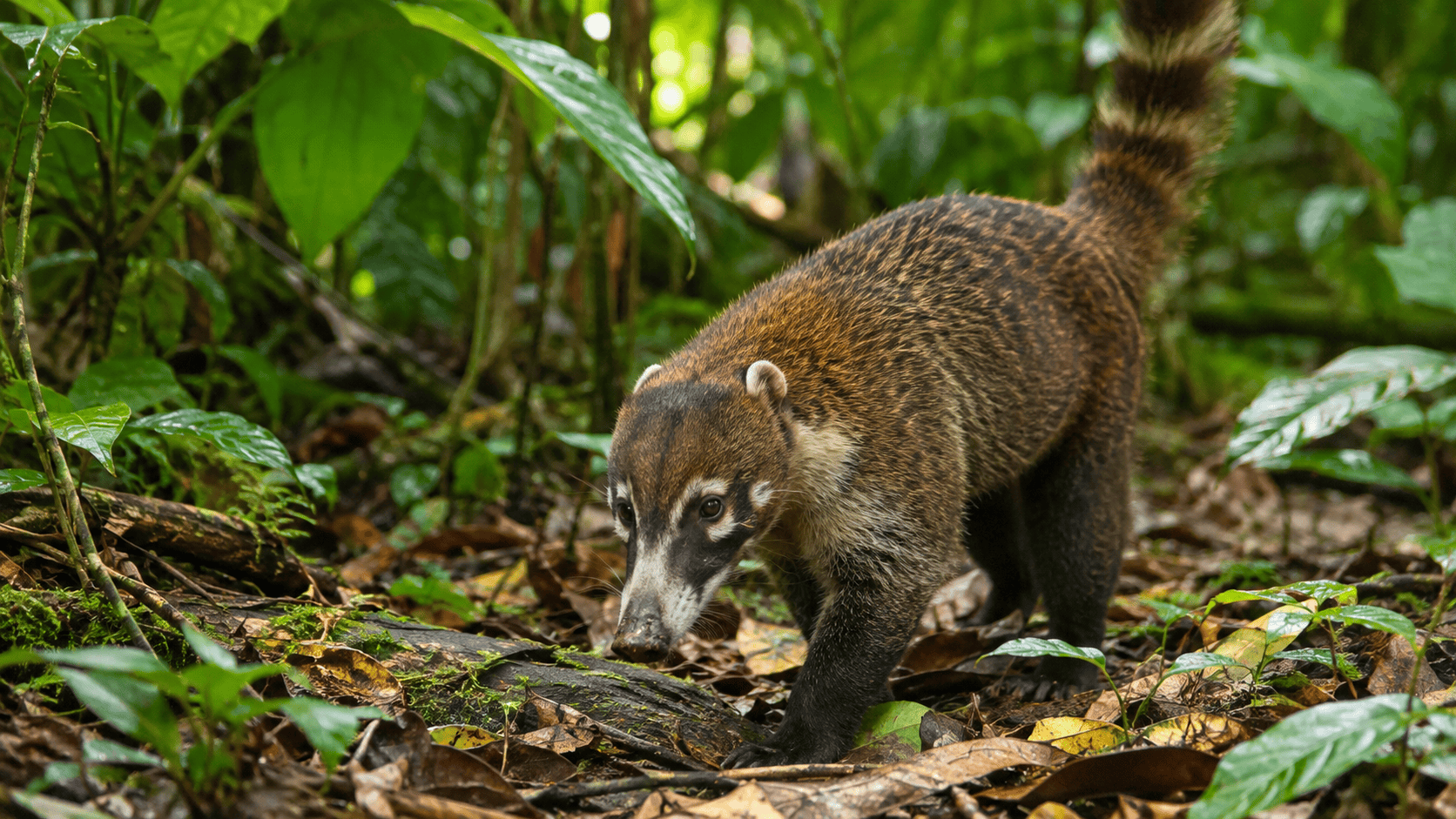
White-nosed Coati
A flexible snout locates food in leaf litter.
Females often live in bands; adult males are frequently solitary.
An upright tail helps group members follow each other.
Coatis climb exceptionally well and often rest above ground.
With its long snout and ringed tail, the coati searches the forest floor for food.
Sighting: Possible with luck; never guaranteed
Image credits: Rotaugenlaubfrosch – PINTofCARLING (CC BY-SA 4.0) · Kolibri – Hobbyfotowiki (CC BY-SA 4.0) · Tamandua – Jacob R. Barnett (CC BY-SA 3.0) · Jaguar – Gzen92 (CC BY-SA 4.0) · Nasenbär – Alexey Yakovlev (CC0). Jaguar photo taken in a zoo; images resized for the website.
Where are the best places to observe wildlife?
Of particular interest are suitable forested areas around Cahuita, the coastal forests near Puerto Viejo and Manzanillo, and overgrown waterways in the wider region. Birds and butterflies may also appear in natural gardens.
The early morning hours are often a good time for observing wildlife. For nocturnal animals, different times apply; such excursions should only be undertaken with a qualified guide.
5 Rules for Wildlife Observers
Keep your distance · Do not feed the animals · Stay on the trails · Keep noise to a minimum · Leave the habitats clean.
Frequently Asked Questions
Can I see sloths in Puerto Limón?
Yes, sloths live in suitable forest and tree habitats in the Caribbean region. It is possible to spot them in the wild, but this is not guaranteed.
Which animals are particularly easy to spot?
Birds, some reptiles, and butterflies often stand out more. How successful an observation is depends on the location and the weather.
Are the animals dangerous?
As a general rule, you should not touch wild animals. With some species, such as snakes, it is especially important to keep a safe distance. Follow the instructions of guides and nature reserves.
Where can I learn more about tropical plants?
Our Plant Guide for the Caribbean Coast explains typical plants and habitats.
Image Credits and Open Licenses
The updated photos of animals and habitats are primarily from the Puerto Limón media library. The source citations for the Wikimedia Commons photos used previously are documented below. For habitat images, no claim is made that a specific animal species is depicted in them.
- Sloth: Alexander Farley, CC BY 2.0 – Original
- Howler Monkey: Paul Harrison, CC BY-SA 4.0 – Original
- Fisher’s Toucan: Slingshot, CC BY-SA 3.0 – Original
- Green Basilisk: Arthur T. LaBar, CC BY 2.0 – Original
- Strawberry Frog: David Dodge / Ecohawkeye, CC BY 3.0 – Original
- Blue Morpho Butterfly: Rodtico21, CC BY-SA 3.0 – Original


