
Punta Uva Beach Snorkeling for First-Timers
Plan Punta Uva beach snorkeling with practical advice on conditions, marine life, safety, access, equipment, and respectful reef etiquette in Costa Rica.
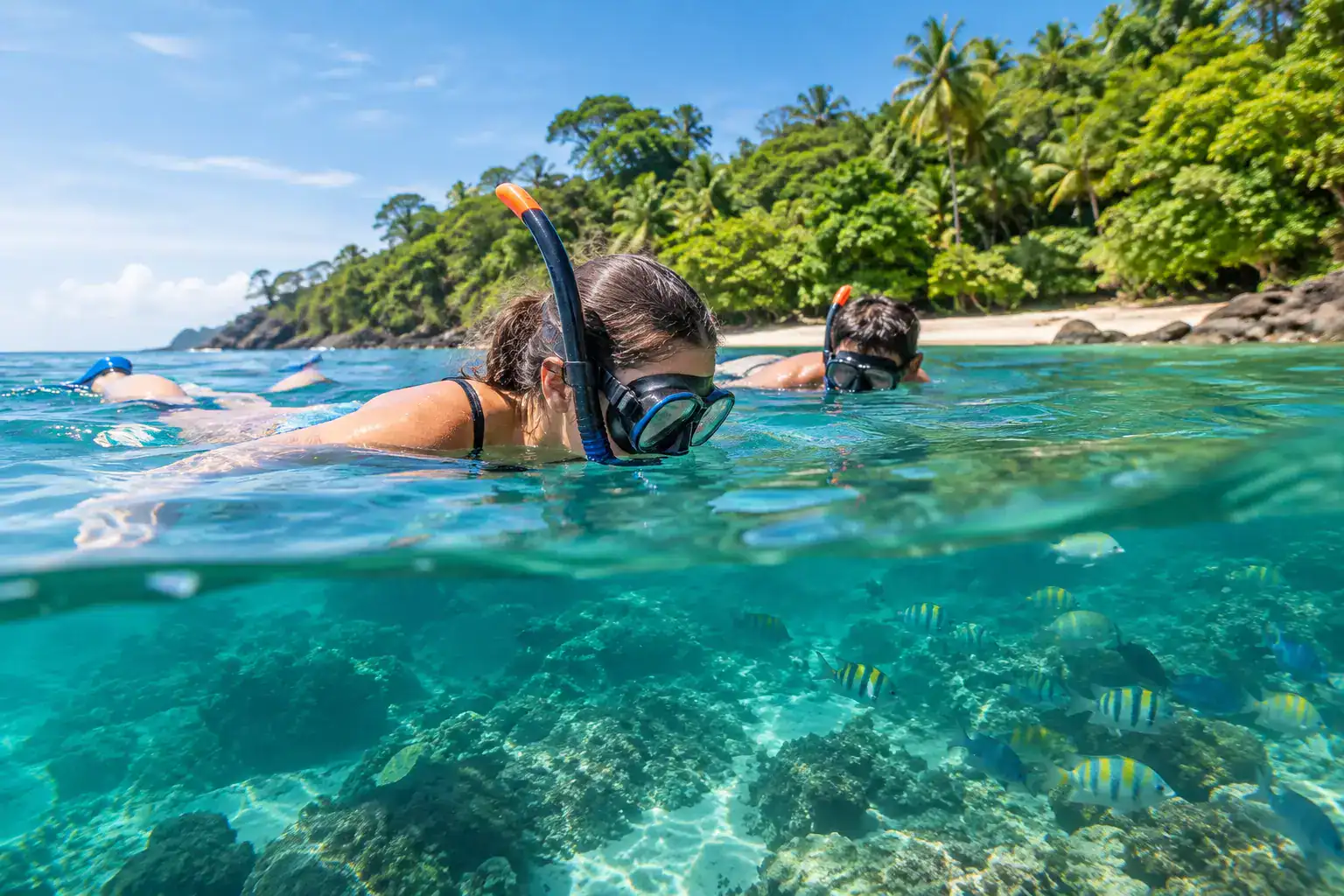
The appeal of Punta Uva beach snorkeling is easy to understand once the sea is calm: clear Caribbean water, a gently curving beach, and rocky sections near the shore where small fish can gather. But Punta Uva is not a guaranteed, always-glass-calm snorkeling destination. Conditions change quickly with wind, rain, swell, and runoff, so a good experience depends far more on timing and judgment than on simply arriving with a mask.
Located south of Puerto Viejo de Talamanca on Costa Rica’s Caribbean coast, Punta Uva suits independent travelers who want to combine a beach day with a short, low-key look beneath the surface. It is best approached as a natural shoreline with variable conditions, rather than a managed underwater attraction.
Is Punta Uva good for snorkeling?
On a calm, sunny day, Punta Uva can be a rewarding place for casual shore snorkeling. The most interesting areas are generally around rocky points and natural formations at either end of the beach, rather than over the broad sandy middle. These harder surfaces can support algae, sponges, and small marine life, while sandy sections tend to offer less to see underwater.
Visibility is the deciding factor. When the water is clear, snorkelers may see schools of small reef fish, sergeant majors, parrotfish, and other common Caribbean coastal species. Sea urchins can also be present on rocks and shallow reef structures. Larger wildlife is possible anywhere along this coast, but it should never be treated as an expectation or a reason to approach animals.
Punta Uva is usually better for relaxed observation close to shore than for ambitious reef exploration. If your priority is extensive coral formations and guided interpretation, Cahuita National Park is often the stronger choice, subject to park conditions and tour arrangements. Punta Uva has a different advantage: it is easy to pair with swimming, paddling, and time on one of the area’s most scenic beaches.
When conditions are right
The Caribbean coast does not follow Costa Rica’s Pacific-side dry and rainy season pattern neatly. Rain can occur throughout the year, and sea conditions are shaped by local weather, wind, tides, and recent rainfall. A bright morning after several days of heavy rain may still bring poor visibility because sediment and freshwater runoff have reached the sea.
Before entering, stand on the beach for a few minutes and look carefully at the water. Good snorkeling conditions usually mean you can distinguish the bottom in the shallows, waves are small and regular, and the water is not visibly brown or stirred up. If foam, strong shore break, or choppy water is present, save the mask for another day.
Morning often offers the best chance of calmer water and clearer light, but it is not a rule. Ask locally on the day, especially if you are staying in Puerto Viejo, Playa Chiquita, or Manzanillo. Hotel staff, experienced guides, and rental operators can often provide a useful read on recent conditions, though the final decision should be your own once you see the shoreline.
Choose the entry point with care
The sandy portions of Punta Uva are generally the easiest places to enter and exit the water. From there, swim only as far as your confidence, the visibility, and the current allow. Rocky points may be more interesting but can be slippery, sharp, and exposed to wave action.
Avoid climbing over coral, rocks, or submerged formations to reach a better-looking spot. Apart from the risk of cuts and falls, contact damages fragile marine life. If the route requires navigating breaking waves over rocks, it is not the right entry for a casual snorkeling session.
What to bring for Punta Uva beach snorkeling
A basic setup is enough when conditions are suitable, but quality and fit matter. A leaking mask or loose fins can turn a short swim into an unnecessary safety issue. Bring your own equipment if you have gear that fits well, or inspect rented equipment before leaving the beach.
For a comfortable, lower-impact outing, pack:
- A well-fitting mask and snorkel, plus fins only if you are confident using them in shallow water
- A rash guard or swim shirt for sun protection and light abrasion protection
- Reef-safe sun protection applied well before entering the water, along with drinking water and shade for afterward
- Water shoes for walking on uneven shore sections, though they do not make sharp or slippery rocks safe to climb
Do not rely on a phone alone for navigation, weather information, or emergencies. Keep valuables secured onshore, and avoid leaving bags unattended while everyone in your group is in the water.
Safety matters more than seeing more
Punta Uva does not have the controlled boundaries of a pool or the supervision of a dedicated snorkeling site. Ocean awareness is essential, particularly for families, first-time snorkelers, and travelers who are used to calmer enclosed bays.
Never snorkel alone. One person can stay close to shore and keep watch while the other is in the water, then switch. Children should remain within arm’s reach of a capable adult, even when the sea appears gentle. Masks can narrow peripheral vision, and an enjoyable fish sighting can carry a swimmer farther from shore than intended.
Watch for currents by observing whether floating leaves, foam, or swimmers drift steadily along the coast. If you feel yourself being pulled away from your planned exit, do not fight directly against the current. Stay calm, signal for help if needed, and move parallel to the shore when possible until you can return safely. If you are unsure about the conditions, choose swimming close to shore or enjoy the beach instead.
It is also wise to avoid snorkeling after drinking alcohol, during thunderstorms, or when you have a cut that could be irritated by saltwater and sand. Costa Rica’s Caribbean coast is wonderfully informal, but the sea deserves a cautious approach.
Respect the reef and the coastline
What makes Punta Uva attractive is also vulnerable. Nearshore marine habitats face pressure from storm damage, warming water, sediment, pollution, and careless contact. Snorkeling responsibly is not complicated: float rather than stand, keep fins away from coral and rocks, and give wildlife room to move naturally.
Do not feed fish. Food changes animal behavior and can concentrate wildlife in ways that harm the ecosystem. Avoid collecting shells, coral fragments, or marine creatures as souvenirs, even when they appear abandoned. A shell may still be habitat, and a broken coral piece is part of a living coastal system.
The beach itself also benefits from simple care. Take every item back with you, including bottle caps, snack wrappers, and cigarette filters. Use marked access routes where available, and be considerate of nearby homes, small businesses, and other beach users. Punta Uva is a shared public landscape, not a private resort beach.
Planning a half-day at Punta Uva
Punta Uva works well as a flexible half-day outing from Puerto Viejo. Arrive early, assess the water before committing to a snorkel, and leave room for the possibility that swimming or a beach walk becomes the better plan. This approach is especially helpful for cruise visitors on a limited schedule: the journey from Puerto Limón takes time, and road conditions, traffic, and weather can affect the day.
Facilities and services around the area are more limited and informal than in a major beach town. Bring cash in small denominations, water, and the items you need for the beach rather than assuming rentals, changing rooms, or secure storage will be available exactly where you stop. Respect parking arrangements and avoid blocking driveways or narrow roads.
If the water is clear and calm, keep your snorkeling session short enough to stay alert. Twenty to forty attentive minutes near a suitable shoreline can be more enjoyable than pushing farther out in search of a dramatic sighting. If visibility is poor, Punta Uva still offers a beautiful setting for swimming carefully, resting in the shade, and appreciating the coast from land.
Frequently asked questions
Do I need a tour to snorkel at Punta Uva?
No. Confident swimmers can snorkel independently from shore when conditions are calm. A local guide can be useful for beginners or travelers who want help assessing conditions and identifying marine life, but no tour can make unsafe water suitable for snorkeling.
Can beginners snorkel at Punta Uva?
Beginners can enjoy it only in clear, calm water and with a capable companion. Start in shallow sandy water, practice breathing through the snorkel, and do not move toward rocks or deeper water until you are comfortable.
Is Punta Uva better than Cahuita for snorkeling?
It depends on the day and the experience you want. Punta Uva is convenient for a casual beach-and-snorkel outing, while Cahuita is better known for protected reef areas and guided snorkeling. Weather and visibility can affect both.
A good Punta Uva snorkeling day begins with modest expectations: check the sea, stay close to shore, and let the conditions decide the plan. That patience is part of traveling well on Costa Rica’s Caribbean coast.