
Cahuita National Park Snorkeling for Beginners
Plan Cahuita National Park snorkeling with advice on seasons, access, guides, reef conditions, safety, and responsible ways to enjoy Costa Rica's Caribbean.
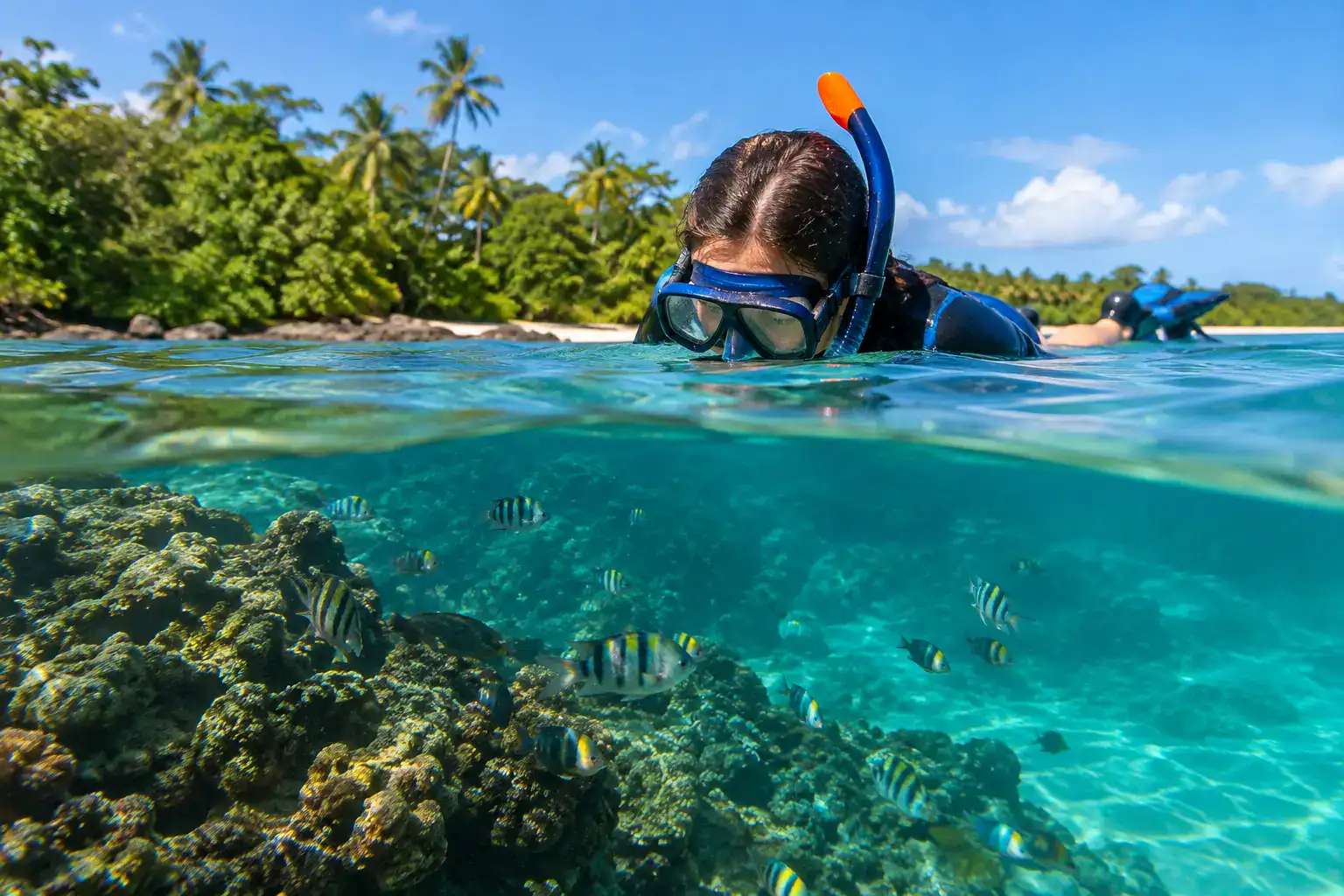
A calm Caribbean morning can make the reef off Cahuita look close enough to reach in a few strokes. In practice, Cahuita National Park snorkeling is an experience best planned with care: the reef is a protected, living ecosystem, weather can change visibility quickly, and the most rewarding areas are generally visited with an authorized local guide.
Why snorkeling in Cahuita is different
Cahuita National Park protects a remarkable meeting point of rainforest, beach, seagrass, and coral reef on Costa Rica’s southern Caribbean coast. While the park’s coastal trail is famous for sloths, monkeys, and birdlife, the underwater landscape deserves the same respect and patience.
This is not a large resort reef with floating platforms, fixed markers, and guaranteed clear water. Sea conditions, rainfall, river runoff, and wind all shape the experience. On a favorable day, snorkelers may see branching and boulder corals, sea fans, reef fish, and the busy smaller life that gathers around healthy reef structure. On another day, waves or sediment may limit visibility enough that a boat trip is not worthwhile.
That variability is part of Cahuita’s character. Travelers looking for a polished, always-predictable excursion may prefer to keep plans flexible. Those interested in seeing a Caribbean reef within a protected national park will find a more meaningful outing here, especially with a guide who understands local conditions.
Cahuita National Park snorkeling: where and how it works
The reef is associated with the waters around Punta Cahuita, the headland within the national park. Most visitors snorkel as part of a guided boat excursion departing from the Cahuita area. Operators assess sea conditions before departure and typically provide basic equipment, flotation support, and a briefing.
Going with an authorized guide is the sensible choice even for confident swimmers. Reefs can sit farther offshore than they appear, boat traffic needs to be considered, and currents can vary around the point. Guides also help visitors avoid fragile coral formations and identify marine life without chasing, touching, or crowding it.
Park management rules and permitted snorkeling areas can change in response to weather, conservation needs, or safety conditions. Confirm current entry procedures, guide requirements, and whether snorkeling is operating before committing to transportation from Puerto Limón, Puerto Viejo, or a cruise port. Do not assume that a tour advertised elsewhere includes national park arrangements.
Some visitors combine a morning on the water with the park’s coastal walk. This can work well if conditions are favorable and time is not tight, but it is better not to build a day around an exact snorkeling departure. The Caribbean coast follows its own weather rhythm.
When are conditions best?
Cahuita can be visited year-round, but snorkeling visibility depends more on recent conditions than on a single calendar month. Costa Rica’s Caribbean coast does not follow the Pacific-side dry-season pattern exactly. The comparatively drier periods often fall around February through April and September through October, and these windows can bring calmer, clearer days.
Still, a sunny morning does not guarantee clear water. Heavy rain in the preceding days can carry sediment toward the coast, while wind and swell can stir up the shallower areas. Conversely, a short rain shower does not necessarily end a good snorkeling day.
If snorkeling is a priority, allow at least two potential mornings in or near Cahuita rather than scheduling one nonrefundable outing on your final day. Morning departures are often preferred because winds may build later, but the captain or guide’s assessment should always decide whether conditions are suitable.
What you might see underwater
The reef rewards slow observation. Brightly colored parrotfish, schools of smaller reef fish, surgeonfish, grunts, and damselfish are among the marine life visitors may encounter. Sea urchins, sponges, soft corals, and sea fans add texture and color, particularly when sunlight reaches the shallows.
Wildlife is never guaranteed, and that is worth saying plainly. Coral reefs are dynamic habitats, not aquariums. Water clarity may limit what is visible, while fish behavior changes with time, tide, and disturbance. A responsible guide will avoid promising specific sightings.
The most memorable moments are often small: a fish disappearing into a coral crevice, a sea fan moving with the current, or the realization that the pale shapes below are living structures built over many years. Keep a respectful distance from everything you see, including turtles or rays if they happen to pass through.
Safety and comfort in the water
Cahuita snorkeling is suitable for many beginners, but basic water confidence matters. Let the guide know before departure if you are not a strong swimmer, feel anxious in open water, or are traveling with children. A properly fitted flotation vest can make the experience more relaxed and allows you to focus on the reef rather than staying afloat.
Choose a mask that seals comfortably before leaving shore and ask for help if it fogs or leaks. A rash guard or lightweight long-sleeved swim shirt is useful for sun protection and can be more practical than relying heavily on sunscreen. If you use sunscreen, apply it well before entering the water and choose a reef-conscious product where possible.
Never stand on coral, even in shallow water. Contact can injure both the reef and the snorkeler, since sharp coral, urchins, and hidden organisms are common. Keep fins high and use small, controlled kicks. If you need to adjust your mask, signal the guide or move to a clear area rather than grabbing the reef for balance.
A few practical items make the day easier: drinking water, a towel, dry clothes, and a waterproof bag for valuables. Leave unnecessary jewelry and loose items behind. If you are prone to motion sickness, consider taking your usual preventive medication before boarding, following its instructions.
Choosing a responsible local guide
A good snorkeling guide does more than point out fish. They explain the protected status of the park, monitor conditions, set group boundaries, and intervene when guests drift too close to coral. They should provide safety equipment in good condition and give clear instructions before anyone enters the water.
Ask practical questions before booking. Confirm the departure point, approximate time on the water, equipment included, group size, flotation options, and cancellation policy if weather makes snorkeling unsafe. It is also reasonable to ask whether the operator works with authorized local guides and follows park regulations.
The lowest price is not always the best value in a protected area. Small groups, well-maintained gear, patient instruction, and a willingness to cancel when conditions are poor are signs of an operator putting safety and the reef ahead of a quick sale. Cahuita’s community-based tourism economy benefits most when visitors choose local businesses that treat the park as a shared responsibility.
Pair the reef with time in Cahuita
Cahuita is easy to enjoy at an unhurried pace. After a morning on the water, the town’s restaurants offer a relaxed setting for Caribbean-influenced Costa Rican cooking, while the beaches and park trail invite a slower afternoon. The park’s northern Playa Blanca entrance is near town, while the Puerto Vargas sector is farther south and offers another access point to the protected coastline.
Visitors arriving from Puerto Limón can usually make Cahuita a comfortable day trip, though an overnight stay gives more flexibility for weather-dependent snorkeling. Cruise passengers should be particularly cautious about tight return times. A canceled snorkeling trip is disappointing, but missing a ship departure is a far worse outcome.
Is Cahuita snorkeling good for first-timers?
Yes, when sea conditions are calm and the outing is led by a qualified guide. Beginners should use flotation support, speak up about their swimming ability, and avoid treating the excursion as a test of endurance.
Can you snorkel from the beach in Cahuita?
It may look tempting, but the reef areas are not a casual self-guided beach swim. Offshore conditions, currents, and protected-area rules make a guided outing the safer and more responsible approach.
What if the water is too rough or cloudy?
Accept the guide’s decision and have a backup plan. Walk part of the coastal trail, spend time in Cahuita village, or visit the beach. Choosing not to enter poor conditions protects both visitors and the reef.
Cahuita’s reef is at its best when approached without a checklist of promised sightings. Give the sea room to set the pace, listen to local guidance, and treat every quiet moment underwater as a chance to observe one of Costa Rica’s most delicate Caribbean landscapes.