
Why Is There No Military in Costa Rica Today?
Why does Costa Rica have no military? Learn how abolition of the army shapes daily life, public security, and travel on the Caribbean coast for visitors.
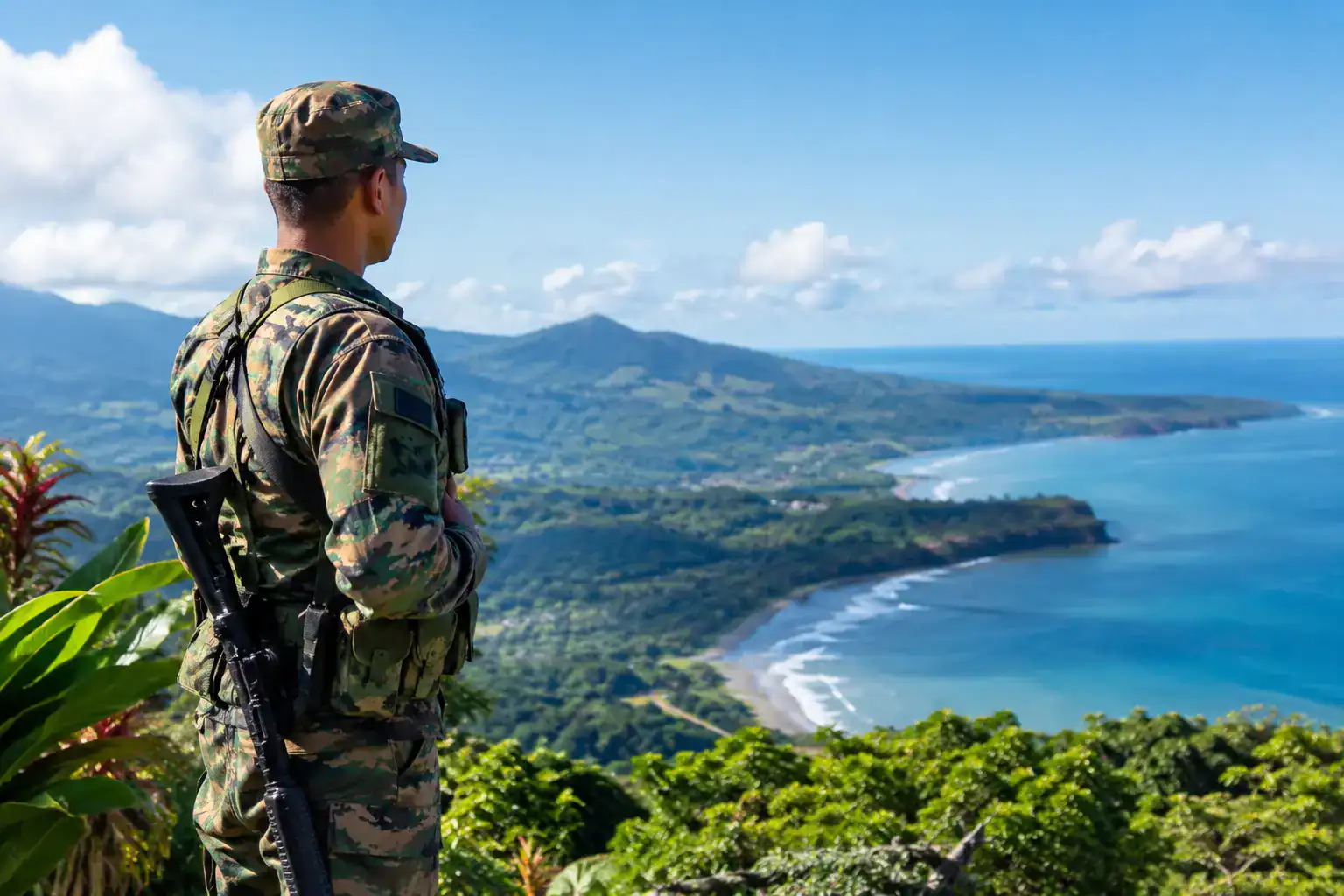
A patrol boat off Puerto Limón, officers at a border crossing, and police directing traffic after a busy cruise-ship arrival can make one fact easy to overlook: there is no military in Costa Rica as a permanent institution. The country still protects its borders and enforces its laws, but it does so without the standing army that many visitors expect in Central America.
For travelers, this is more than an interesting national statistic. Costa Rica’s decision has become part of its civic identity, its political culture, and the way public security is organized. It also explains why military installations and soldiers are not a routine part of the journey from San José to the Caribbean coast, Cahuita, Puerto Viejo, or the port city of Limón.
Why there is no military in Costa Rica
Costa Rica abolished its army on December 1, 1948, after a short but consequential civil war. José Figueres Ferrer, leader of the victorious junta, announced the abolition at the Bellavista Barracks in San José, a building that later became the National Museum of Costa Rica. The gesture was symbolic, but the decision was formalized in the 1949 Constitution.
Article 12 states that the army is abolished as a permanent institution. Costa Rica may organize military forces for national defense under exceptional circumstances or through a continental agreement, but it has no standing army in peacetime. That distinction matters. Costa Rica is not without security institutions, nor is it unprotected. It simply chose a different model from maintaining a conventional military force.
The decision followed a period of political instability, and it has since become one of the country’s most recognized democratic commitments. Costa Ricans often connect it with a broader national preference for education, public institutions, diplomacy, conservation, and civilian government. The country has faced economic and social challenges like any other nation, so it would be too simple to claim that ending the army solved them all. Still, the policy has had lasting cultural and political significance.
What protects Costa Rica instead?
Costa Rica’s Ministry of Public Security oversees the main civilian security forces. The Public Force, known locally as the Fuerza Pública, serves as the national police and has responsibilities that can include public order, patrols, border security, and support during emergencies. Other agencies address specialized roles, including the Coast Guard Service, Border Police, Drug Control Police, and the Judicial Investigation Agency, which investigates serious crimes under the judiciary.
These bodies may be armed and can operate in demanding conditions. Seeing officers with equipment at an airport, port, checkpoint, or public event does not mean Costa Rica has restored its army. It reflects the work of police and security agencies with different legal mandates from a military.
On the Caribbean coast, security has a particularly practical dimension. The province of Limón includes an international port, coastal waters, remote border areas, national parks, and communities connected by roads that can be affected by rain, construction, or public events. Coast Guard and police activity may be visible around Puerto Limón and along maritime routes. Their presence is part of routine security and law-enforcement work, not evidence of a military presence.
A country without an army is not a country without risks
The absence of a standing army should not be mistaken for a guarantee of personal safety. Travelers should apply the same thoughtful habits they would use in any destination: keep valuables out of sight, avoid leaving bags unattended, use licensed transportation when possible, and ask accommodation staff about local conditions after dark.
On Costa Rica’s Caribbean coast, the experience varies by place and time. Puerto Viejo’s restaurants and beach roads can feel relaxed and social, while some stretches are quiet after nightfall. Cahuita’s village center and national park area have a different rhythm from the working port environment of Limón. Independent travelers benefit from planning transportation before late evenings, especially when arriving by bus or cruise ship.
This is practical travel advice, not a reason to avoid the region. The Caribbean coast is known for its living Afro-Caribbean culture, beaches, rainforest, wildlife, and distinctive food traditions. Respectful awareness helps visitors enjoy those qualities without treating a complex region as either perfectly carefree or inherently dangerous.
How the policy shapes daily life and travel
Costa Rica’s military-free identity is most visible in civic symbols rather than daily tourist logistics. The country marks December 1 as Army Abolition Day. In San José, the former Bellavista Barracks stands as a powerful reminder that a site built for military use became a museum.
Visitors on the Caribbean coast are more likely to notice the policy through conversation, education, and the country’s international reputation than through a specific attraction. Many Costa Ricans view the abolition as an expression of national independence and a rejection of military rule. It sits alongside other ideas that travelers encounter frequently: protected natural areas, renewable electricity, public education, and peaceful democratic transfers of power.
Those connections deserve nuance. Costa Rica’s environmental leadership and social development did not appear solely because the army was abolished, and public budgets are shaped by many competing priorities. Yet the decision created an enduring public narrative: national strength can also mean stable civilian institutions, negotiation, and investment beyond armed force.
For cruise passengers arriving in Puerto Limón, this context can add depth to a shore visit. The port is a gateway to a province with a layered history shaped by Indigenous communities, Afro-Caribbean migration, the banana trade, railroads, and maritime commerce. Costa Rica’s lack of a standing army is one chapter in that national story, not a substitute for understanding the Caribbean coast on its own terms.
What travelers may notice at borders and ports
Travelers entering Costa Rica from Panama near Sixaola, flying into the country, or arriving by cruise ship should expect standard immigration, customs, and security procedures. Passport checks, luggage screening, patrols, and questions from officers are normal. The officials involved are generally immigration authorities, customs personnel, police, or other public-security agencies.
Carry the documents required for your route and travel status, and allow extra time when crossing an international border. Procedures can change, and border conditions may be affected by weather, traffic, public holidays, or operational requirements. A polite, patient approach goes further than assumptions based on how checkpoints operate elsewhere.
Visitors should also avoid photographing police operations, port-security areas, or border facilities without clear permission. That is sensible etiquette in any country and particularly relevant in an active commercial port such as Limón.
Is Costa Rica the only country without an army?
No. A small number of countries have no standing military, although their arrangements differ widely. Some rely on defense agreements with other states, while others maintain small security forces or coast guards. Costa Rica is especially well known because it made the abolition a constitutional principle and has maintained that model for decades in a region where armed forces have often played a major political role.
Costa Rica also works through regional and international cooperation on issues such as organized crime, maritime security, disaster response, and drug trafficking. Its lack of a permanent army does not mean isolation from security concerns. It means the country approaches those concerns through civilian institutions, policing, diplomacy, and cooperation with partners.
A useful perspective for your Caribbean coast visit
Costa Rica’s military-free status is worth remembering not because it turns every trip into a civics lesson, but because it offers a clearer view of the country behind the beaches and rainforest. It reflects a choice made after conflict, preserved through constitutional law, and still debated through the real demands of security, policing, and public investment.
As you travel through Limón province, let that context encourage a more attentive kind of visit. Notice the institutions, communities, and landscapes that shape the coast – and give the places you enter the same care and respect that locals expect from thoughtful guests.