
Afro Caribbean Culture in Limón, Costa Rica
Afro Caribbean culture in Limón, Costa Rica shapes food, language, music, and daily life. Learn how to experience it respectfully on the Caribbean coast.
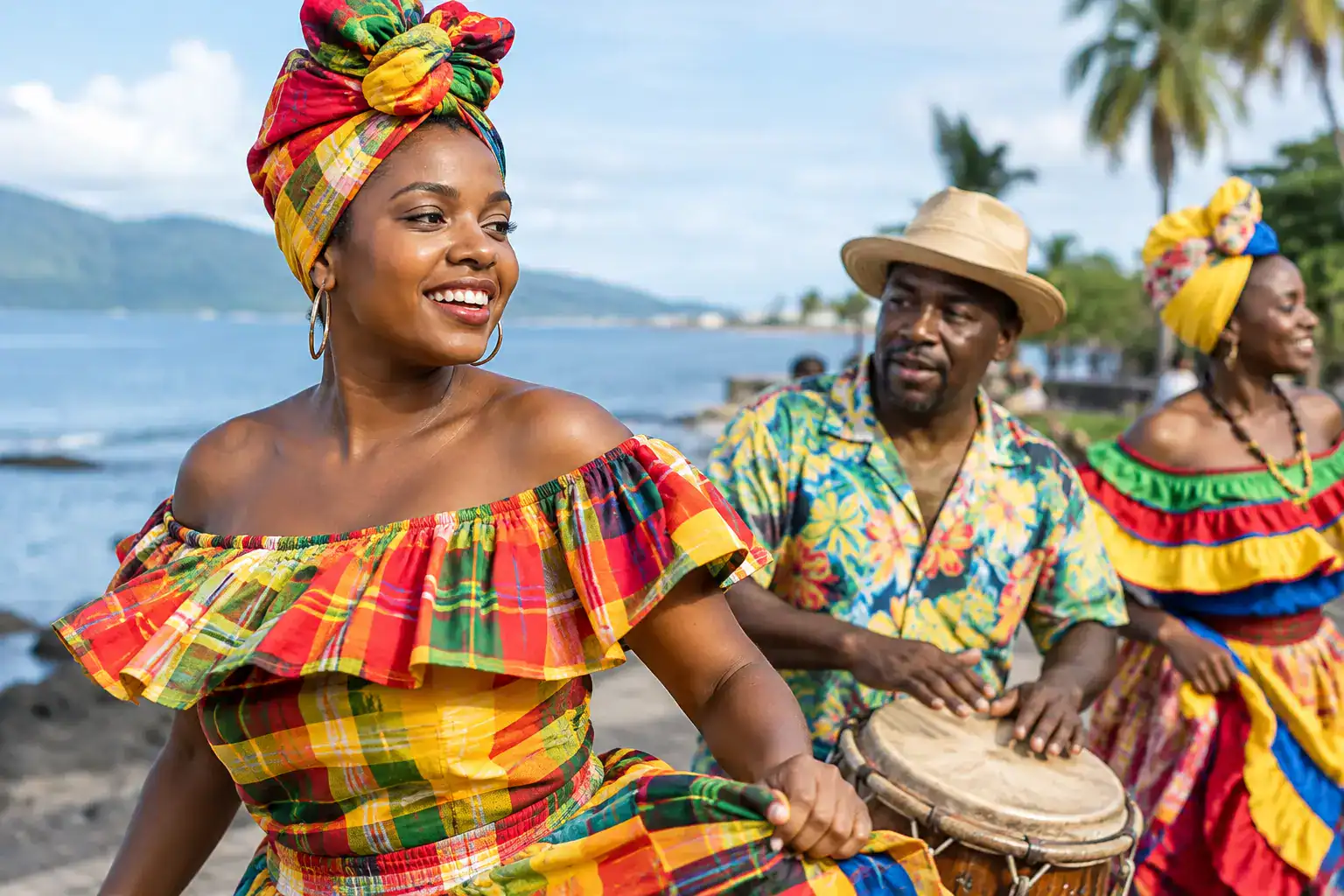
Puerto Limón’s character is heard as much as it is seen: in English-influenced Creole conversations, the rhythm of calypso and reggae, and kitchens where coconut milk is part of everyday cooking. Afro Caribbean culture in Limón, Costa Rica is not a visitor attraction added to the coast’s beaches and rain forest. It is a living heritage that has shaped the province’s language, food, music, religion, architecture, labor history, and sense of community.
For travelers, understanding that distinction makes a visit more meaningful. The best encounters are often simple ones: eating at a locally owned restaurant, listening closely to the stories behind a neighborhood, attending a public cultural event, or allowing time to explore beyond a cruise-terminal schedule.
How Afro Caribbean culture shaped Limón
Limón’s Afro-Caribbean history is closely connected to migration from Jamaica and other Caribbean islands during the late 19th and early 20th centuries. Many migrants arrived to work on the construction of Costa Rica’s Atlantic railroad and later in the banana industry. They brought skills, family networks, Protestant traditions, culinary knowledge, music, and varieties of English that became deeply rooted along the coast.
Their contribution was central to the development of Limón as a port city and commercial center. Yet the community also faced exclusion. For decades, many Afro-Caribbean residents encountered restrictions on movement, employment, citizenship rights, and access to the Central Valley. This history matters because Limón’s culture cannot be separated from the perseverance of families who built lives and institutions despite those barriers.
Today, the province is culturally diverse, with Afro-Costa Rican, Indigenous, mestizo, immigrant, and international communities. Afro-Caribbean heritage remains especially visible in Puerto Limón, Cahuita, Puerto Viejo de Talamanca, and smaller coastal communities, though each place has its own identity. It is better to think of the Caribbean coast as a region of connected but distinct communities rather than one uniform cultural experience.
Language, music, and the sound of the coast
Spanish is the national language, but visitors may also hear Limón Creole, often called Mekatelyu. This English-based Creole developed through generations of Afro-Caribbean life on Costa Rica’s Caribbean coast. It is a meaningful marker of identity, not a novelty or a performance for outsiders.
A few words of Spanish will be appreciated almost everywhere, and English is widely understood in many tourism-facing businesses. Still, travelers should avoid assuming that every local resident speaks English or wants to explain the region’s culture on demand. A friendly greeting, patience, and genuine curiosity go further than treating language as a souvenir.
Music is another essential thread. Limón has a longstanding connection to calypso, a Caribbean genre known for its storytelling, social commentary, and warm, rhythmic guitar-led sound. Walter Ferguson of Cahuita is among the best-known Costa Rican calypso musicians, and his work helped bring international attention to the tradition.
Reggae, dancehall, soca, gospel, and contemporary Caribbean-influenced sounds are also part of daily life and celebrations. What is playing depends on where and when you visit. A relaxed afternoon in Cahuita, a neighborhood gathering in Limón, and a late-night venue near Puerto Viejo may have very different soundtracks.
Public celebrations worth planning around
Limón’s annual Carnival is the best-known public celebration in the city, typically held in October. Its schedule, route, and programming can change, so visitors should confirm current local details before making plans. The event brings together music, food, dance, parades, and a strong sense of regional pride, but it can also mean road closures, crowds, and limited availability in town.
August 31 is observed in Costa Rica as the Day of the Black Person and Afro-Costa Rican Culture. Cultural programs, school activities, talks, and community events may take place around this date, particularly in Limón. It can be an excellent time to learn, provided visitors approach events as guests rather than spectators entitled to access every space.
Food that tells a Caribbean story
The food of Limón is one of the most direct and enjoyable ways to understand Afro-Caribbean influence. Coconut, plantains, cassava, fresh seafood, spicy sauces, and slow-cooked stews appear across the region, although recipes differ from one household and restaurant to another.
Rice and beans is perhaps the dish most associated with the Costa Rican Caribbean. Unlike the gallo pinto served in many other parts of the country, Caribbean rice and beans is commonly prepared with coconut milk and often served with chicken, fish, salad, and fried plantains. It is filling, fragrant, and an excellent first order for travelers unfamiliar with the region’s cuisine.
Rondón is another classic, especially in coastal communities. The name is commonly understood as referring to a dish made from what is available, and recipes can include fish or seafood, root vegetables, plantains, and coconut milk. Patí, a savory spiced pastry with Caribbean roots, is a popular snack, while pan bon is a traditional dark fruit bread associated with holiday gatherings.
Heat levels vary. Ask before ordering if you are sensitive to spice, and do not assume a dish must be very hot to be authentic. In Puerto Limón and along the coast, seek out established, locally owned sodas, bakeries, and family restaurants rather than relying only on internationally familiar menus. The setting may be modest, but the food often carries generations of knowledge.
Where to experience Afro Caribbean culture respectfully
Puerto Limón is the historic urban heart of the province. Its streets, port history, markets, churches, and civic spaces provide context that beach towns alone cannot offer. For cruise passengers, the practical challenge is time: a short port call is enough for a meal and a guided introduction, but not for a deep understanding of the region. Choose a locally knowledgeable guide or keep plans focused and leave room for an unhurried lunch.
Cahuita offers a quieter setting where Caribbean culture, village life, and the nearby national park meet. It is well suited to travelers who want to combine cultural interest with nature, especially over two or more nights. Puerto Viejo de Talamanca has a more international, energetic atmosphere and a wide restaurant scene, but its popularity can make it feel less intimate during busy periods.
The right base depends on your priorities. Stay in Puerto Limón for city history and port context; choose Cahuita for a slower pace and easy access to nature; consider Puerto Viejo for beaches, nightlife, and a broader range of accommodations. None of these places should be treated as a cultural theme park.
Good visitor etiquette
Respect starts with ordinary choices. Ask before photographing people, homes, religious services, musicians, or food stalls. Avoid describing the coast as “more Caribbean” as though that makes it less Costa Rican. Afro-Caribbean culture is part of Costa Rica, while also holding a distinctive history that deserves recognition.
Support community businesses when possible, pay agreed prices without arguing over small amounts, and be cautious with claims that package an entire community into a single stereotype. Not every restaurant serving coconut rice is Afro-Caribbean owned, and not every local person wants to be a cultural spokesperson. Meaningful travel leaves room for complexity.
Frequently asked questions
Is Limón safe for travelers interested in cultural tourism?
Puerto Limón and the wider Caribbean coast can be rewarding destinations when travelers use the same practical judgment they would in any port city or beach region. Keep valuables secure, avoid isolated areas after dark, use licensed transportation when needed, and ask your accommodation or a trusted local business for current neighborhood advice.
Can visitors experience Afro-Caribbean culture in one day?
A day can offer an introduction through food, music, a city walk, or a cultural program. A longer stay is more rewarding because it allows travelers to visit local businesses, spend time in more than one community, and avoid reducing the experience to a quick stop between sightseeing activities.
Limón’s Afro-Caribbean heritage is best approached with attention rather than a checklist. Let a meal take time, ask thoughtful questions when conversation is welcome, and make room for the coast to reveal itself through the people and places that sustain its culture every day.