
Drone Flight in Costa Rica: Rules for Travelers
Plan a drone flight in Costa Rica with practical advice on permits, protected areas, Caribbean Coast weather, safety, privacy, and responsible filming.
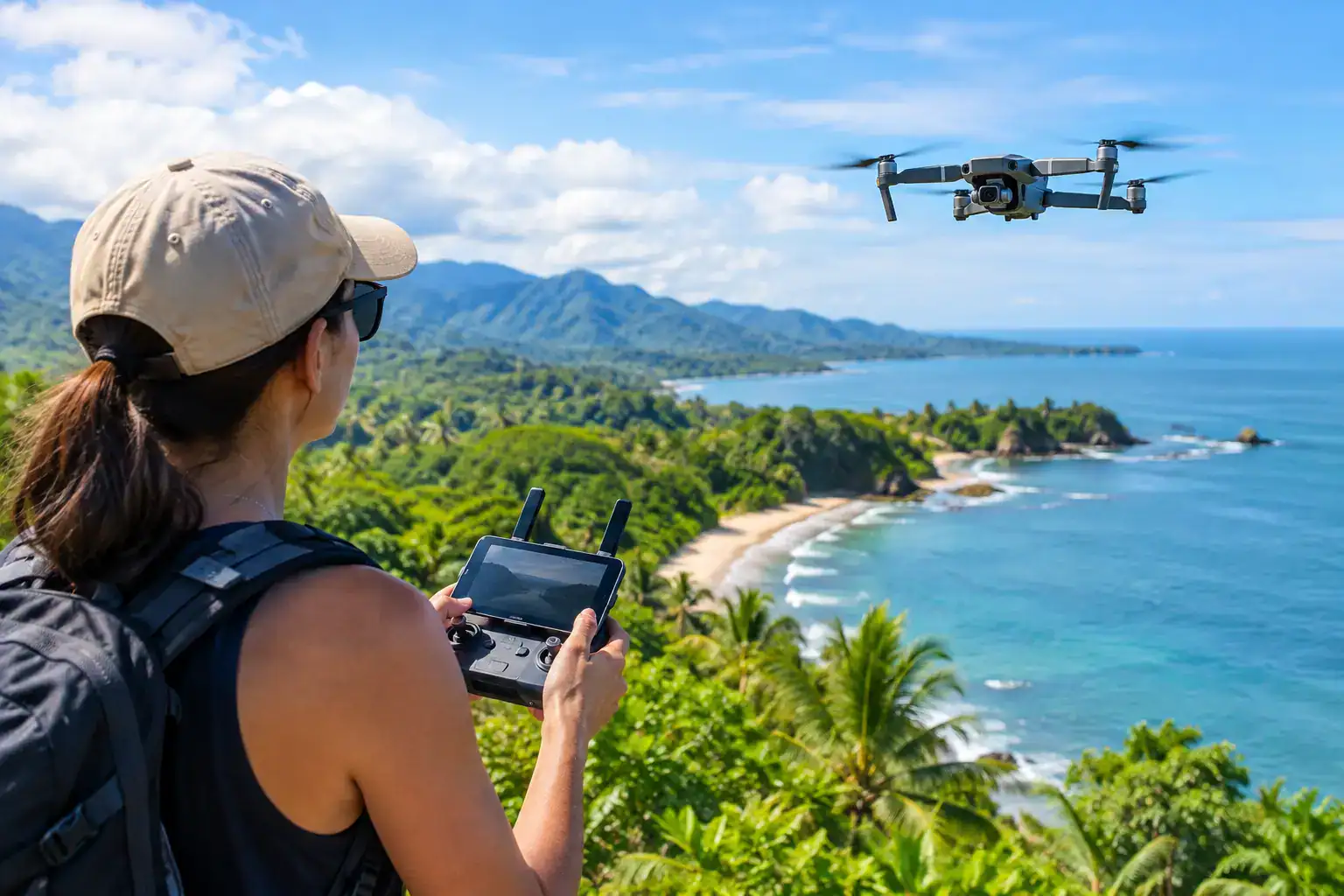
A drone can reveal the geometry of a Caribbean beach, the meeting of rainforest and sea, or the scale of Puerto Limón’s working harbor. But a drone flight in Costa Rica requires more preparation than packing batteries and choosing a viewpoint. Aviation rules, protected-area restrictions, tropical weather, and respect for local communities all shape where and whether you can fly.
For visitors exploring the Caribbean coast, the most useful approach is simple: treat a drone as an aircraft, not as a camera accessory. Plan each flight deliberately, confirm the current rules before departure, and be ready to keep the drone in its case when the setting calls for it.
Start with Costa Rica’s drone rules
Costa Rica regulates drones through its civil aviation authorities. Requirements can differ according to the drone’s weight, intended use, location, and whether the flight is recreational or connected to commercial filming, tourism promotion, real estate, surveying, or other professional work. Rules and administrative procedures can also change, so travelers should confirm current requirements directly with Costa Rica’s civil aviation authority before bringing a drone into the country.
Do not assume that a registration or recreational privilege from your home country applies in Costa Rica. Foreign visitors may need to provide details about the aircraft and operator, particularly for work that produces material for a business, client, publication, or paid project. Import requirements, insurance expectations, and permissions for more complex operations should likewise be checked before travel.
Even where a flight may be allowed, the fundamental safety principles are clear: keep the drone within visual line of sight, fly in daylight and favorable conditions, avoid people and vehicles, and never interfere with manned aircraft. Airports, heliports, emergency operations, government facilities, and other sensitive locations demand particular caution. The Caribbean coast has regular aviation activity, including flights serving regional airports and remote destinations. If there is any doubt about airspace or a proposed launch site, do not fly.
National parks are not aerial filming locations
Costa Rica’s protected areas are central to the country’s environmental identity, and they are not a backdrop to be treated casually. National parks, wildlife refuges, biological reserves, and other protected lands are administered under their own rules. Drone use is commonly restricted and may require explicit authorization from the responsible conservation authority.
This matters especially along the Caribbean coast. Cahuita National Park, Tortuguero National Park, Gandoca-Manzanillo National Wildlife Refuge, and inland forest reserves protect nesting sites, wetlands, coral environments, and wildlife corridors. A small drone can create stress for birds, monkeys, sloths, reptiles, and other animals, even when the operator believes they are filming from a respectful distance.
Never launch from, land in, or fly over a protected area unless you hold written permission that clearly covers the intended operation. A viewpoint outside a park boundary does not automatically make the flight appropriate either. Wildlife may move beyond the boundary, and a drone crossing into protected airspace can still create a problem.
The same standard applies to turtle nesting beaches. Seasonal nesting activity is highly sensitive, and artificial light, noise, movement, and crowds can affect wildlife. Aerial footage is never worth disturbing an animal or compromising the work of conservation teams.
Planning a drone flight on the Caribbean coast
A successful flight begins well before takeoff. The region’s scenery can look open from the road, yet the practical conditions are often demanding: dense vegetation, changing wind, salt air, sudden rain, power lines, and limited recovery space all raise the stakes.
Check the weather beyond the forecast icon
Costa Rica’s Caribbean coast does not follow the country’s Pacific dry-season pattern exactly. Rain can arrive in any month, and bright morning conditions can shift quickly to low cloud, gusts, or a heavy downpour. Humidity is persistent, while coastal winds can be stronger above treetops than they feel at ground level.
Check a detailed local forecast shortly before flying, but also read the surroundings. Moving palm fronds, incoming dark clouds, haze over the sea, or a distant rumble are good reasons to postpone. Do not fly in rain or thunderstorms, and give electronics time to dry and acclimatize after moving from air-conditioned transport into tropical humidity.
Salt spray deserves similar attention. Beaches near Puerto Viejo, Cahuita, and Moín can be visually tempting, but salt and sand are hard on propellers, motors, gimbals, and landing surfaces. Use a clean, stable launch area well away from surf, then inspect the drone carefully after each coastal flight.
Choose quiet locations, not just beautiful ones
The most photographed places are often the least suitable places to fly. A crowded beach, a busy roadside pull-off, a cruise terminal area, or a town center creates privacy and safety concerns even if the image would be striking. Do not fly above beachgoers, restaurant terraces, markets, traffic, or private homes.
Instead, look for a lawful location with the landowner’s permission, clear takeoff and landing space, minimal bystanders, and no nearby wildlife activity. On private property, ask first. On community land, beaches near homes, farms, lodges, or small businesses, permission is both courteous and practical. It also opens a better conversation about whether a flight could disrupt people, livestock, or daily work.
Puerto Limón itself needs extra care. The port is an active industrial and cruise area, with security considerations, maritime traffic, and changing operational conditions. A view of the city or coast should never lead an operator to fly near port infrastructure, ships, cranes, or restricted facilities.
Protect privacy and local trust
Costa Rica’s Caribbean communities are places where people live, work, worship, study, fish, and gather with family. A drone hovering near a home or beach party can feel intrusive regardless of the operator’s intentions. Frame landscapes rather than individuals, do not record people without consent, and avoid hovering near schools, churches, homes, and community events.
This is particularly relevant in Afro-Caribbean communities, where respectful travel means more than following a posted rule. Ask before filming on private or community spaces, explain what you are doing when appropriate, and accept a no without argument. The best travel photography is rarely rushed or extractive.
A practical pre-flight routine
Before every flight, check the aircraft, location, and conditions rather than relying on yesterday’s plan. A short routine can prevent most avoidable problems:
- Confirm that the site is outside restricted airspace and is not part of a protected area.
- Obtain permission from the landowner or responsible manager where required.
- Inspect propellers, battery condition, compass status, GPS signal, and return-to-home settings.
- Set a conservative return-to-home altitude that accounts for palms, forest canopy, buildings, and terrain.
- Keep a visual observer with you when conditions are complex or when you are filming near the coast.
- Stop immediately if people gather, weather deteriorates, birds react, or aircraft are heard or seen nearby.
Bring more battery capacity than you think you need, but resist the urge to use every minute of it. In humid heat, batteries can drain faster than expected, and a low battery over forest or water is not a manageable inconvenience. Land early with a comfortable margin.
Can cruise visitors bring a drone to Puerto Limón?
Cruise passengers should be especially cautious. A short port call leaves little time to investigate permissions, weather, transport delays, or airspace restrictions properly. Cruise lines may have their own rules on carrying, charging, or using drones aboard, while terminals and port zones have additional security controls.
If your shore day includes Cahuita, Puerto Viejo, or another coastal destination, do not assume a beach stop is a suitable flying opportunity. The responsible choice may be to enjoy the landscape from the ground. Travelers who want aerial footage for a serious project should arrange permissions and a realistic filming plan well before the ship arrives.
When hiring a local drone operator makes sense
For a wedding, hotel campaign, property listing, documentary, or professional travel feature, hiring a properly prepared Costa Rica-based operator can be the better option. Local professionals understand regional weather, launch constraints, permissions, and the practical difference between a scenic idea and a feasible flight.
Ask how they handle aviation compliance, landowner approvals, safety planning, and protected-area restrictions. A responsible operator will be willing to explain limitations and may decline a location that appears easy on social media. That is a sign of sound judgment, not a lack of ambition.
Costa Rica’s Caribbean coast rewards patience. When conditions, permissions, and place all align, aerial images can add a meaningful perspective. When they do not, keep the drone packed and take the slower view from the trail, shoreline, or town street instead.