
Playa Blanca Cahuita
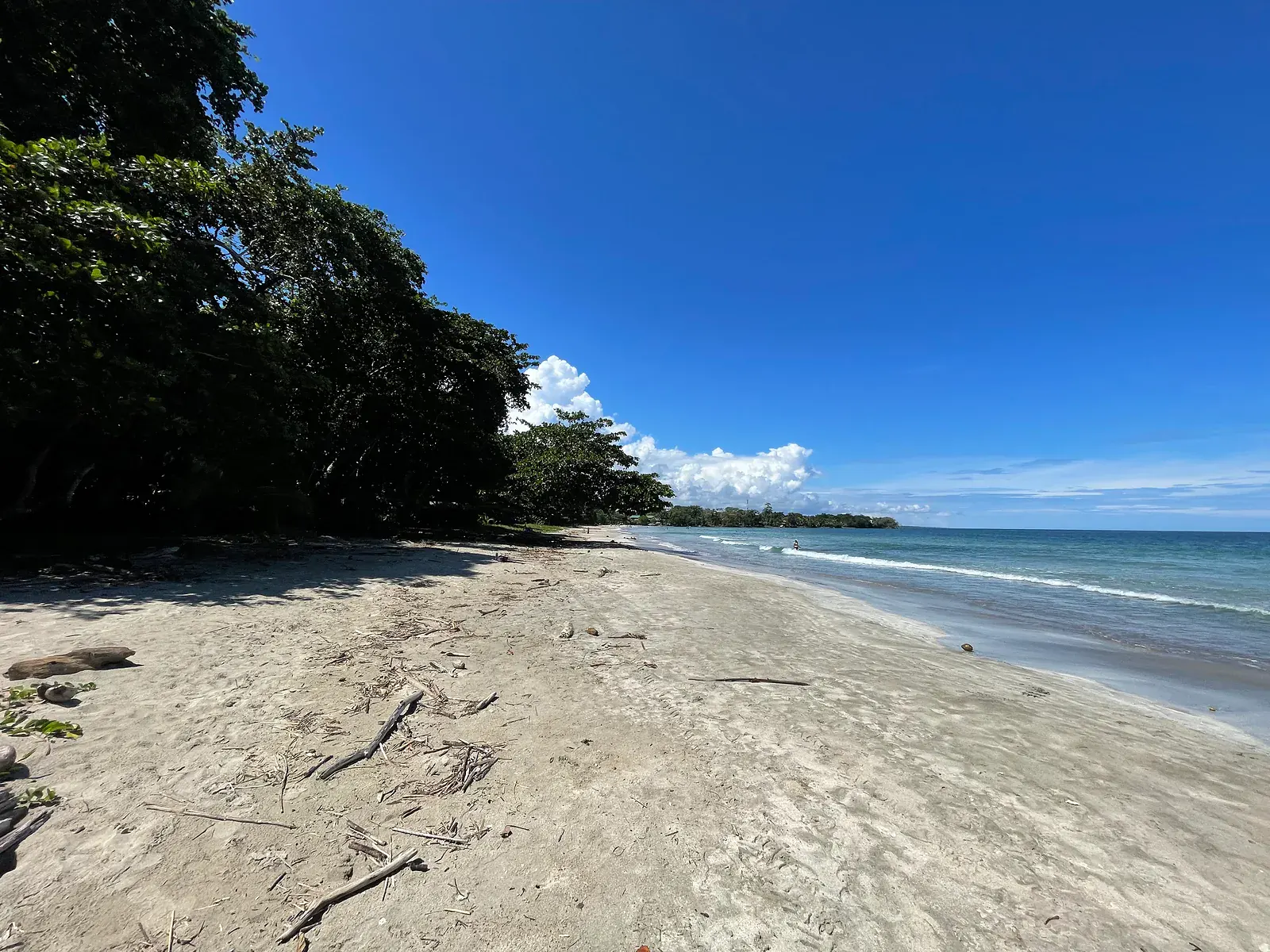
A bright Caribbean beach right at the entrance to Cahuita National Park—surrounded by coastal forest, nature trails, and the ever-changing conditions of the Caribbean Sea.
Beach and nature right on the outskirts of Cahuita
Playa Blanca is the beach area at the northern entrance to Cahuita National Park. From the town of Cahuita, you can go directly to the Playa Blanca sector and from there onto the coastal trail through the protected area.
Its special charm lies less in a classic tourist beach promenade than in the natural blend of light-colored sand, tropical forest, and the open Caribbean Sea. Even a brief visit gives you a good sense of the landscape around Cahuita.
This goes well with a walk through Cahuita.
Great for nature watching, beach breaks, and coastal hikes.
Not a resort beach: The weather, waves, and trail conditions are all part of the nature experience.
What Makes Playa Blanca Special
Playa Blanca is not an isolated beach, but rather part of a protected coastal landscape. The beach, forest, and nature trail blend seamlessly into one another.
Light-colored sand
The beach is known for its light-colored sandy areas. Its width and appearance may vary depending on the tides, rain, and wave action.
Coastal Forest
In many places, tropical vegetation extends right up to the beach. This provides shade, the sounds of nature, and good opportunities for wildlife viewing.
Coastal Trail
From the entrance, a mostly flat path runs along the coast. You can adjust the route to suit your schedule, the weather, and your fitness level.
Short or long visit
You can either visit just the nearby beach area or use Playa Blanca as a starting point for a longer hike in the national park.
Caribbean Sea
The water may appear calm, but it can also develop strong waves and currents. Current conditions are more important than what the water looks like.
Nature Instead of Infrastructure
Nature takes center stage in the protected area. Don’t expect a fully developed tourist beach infrastructure throughout the area.
Realistically Assess Swimming Conditions
Playa Blanca may be suitable for swimming, but it is not a supervised swimming area. Conditions must be reassessed each time you visit.
Waves and Currents
Wave height, current, and visibility can change rapidly due to wind, rain, and weather conditions.
With children
Children should be closely supervised at all times when near the water, even if the beach area seems quiet at first.
Watch carefully, keep a safe distance
The area around Playa Blanca is home to wildlife. Sightings are possible, but they cannot be planned or guaranteed.
They are often found high up in the treetops and are easy to overlook unless you have a trained eye.
Capuchin monkeys and howler monkeys may be found in the coastal forest. Keep your distance and never feed them.
Don’t leave food or bags lying around. These animals are fast and very agile.
Birds, iguanas, basilisks, and other species are part of the natural coastal landscape.
How to Plan Your Visit to Playa Blanca
The entrance is right next to Cahuita. Opening hours and organizational details are subject to change and should be officially verified again before your visit.
Access from the town of Cahuita
The entrance is located on the outskirts of Cahuita. From there, you can reach the beach and the coastal trail without having to travel far within the park.
From one hour to half a day
The ideal duration depends on whether you want to see just the nearby beach area or explore a longer stretch of the coastal trail.
Be Well Prepared for the Beach
Playa Blanca is easily accessible, but remains part of a tropical nature reserve.
Take it with you
After the Rain
Be respectful
Valuables and Food
Find Playa Blanca in Cahuita
The beach access is located right next to the town of Cahuita in the Playa Blanca sector of the national park.
From the town straight into the national park
This route is especially good if you want to visit Cahuita, the beach, and the national park all in one day.
Frequently Asked Questions About Playa Blanca Cahuita
Is Playa Blanca located within Cahuita National Park?
Can you go swimming at Playa Blanca?
How much time should you set aside?
Do you have to pay an admission fee?
Is Playa Blanca a classic beach with amenities?
Is it possible to continue hiking through the national park from Playa Blanca?
Continue exploring Cahuita and the National Park
Enhance your visit with the complete National Park Guide and the Cahuita town portal.