
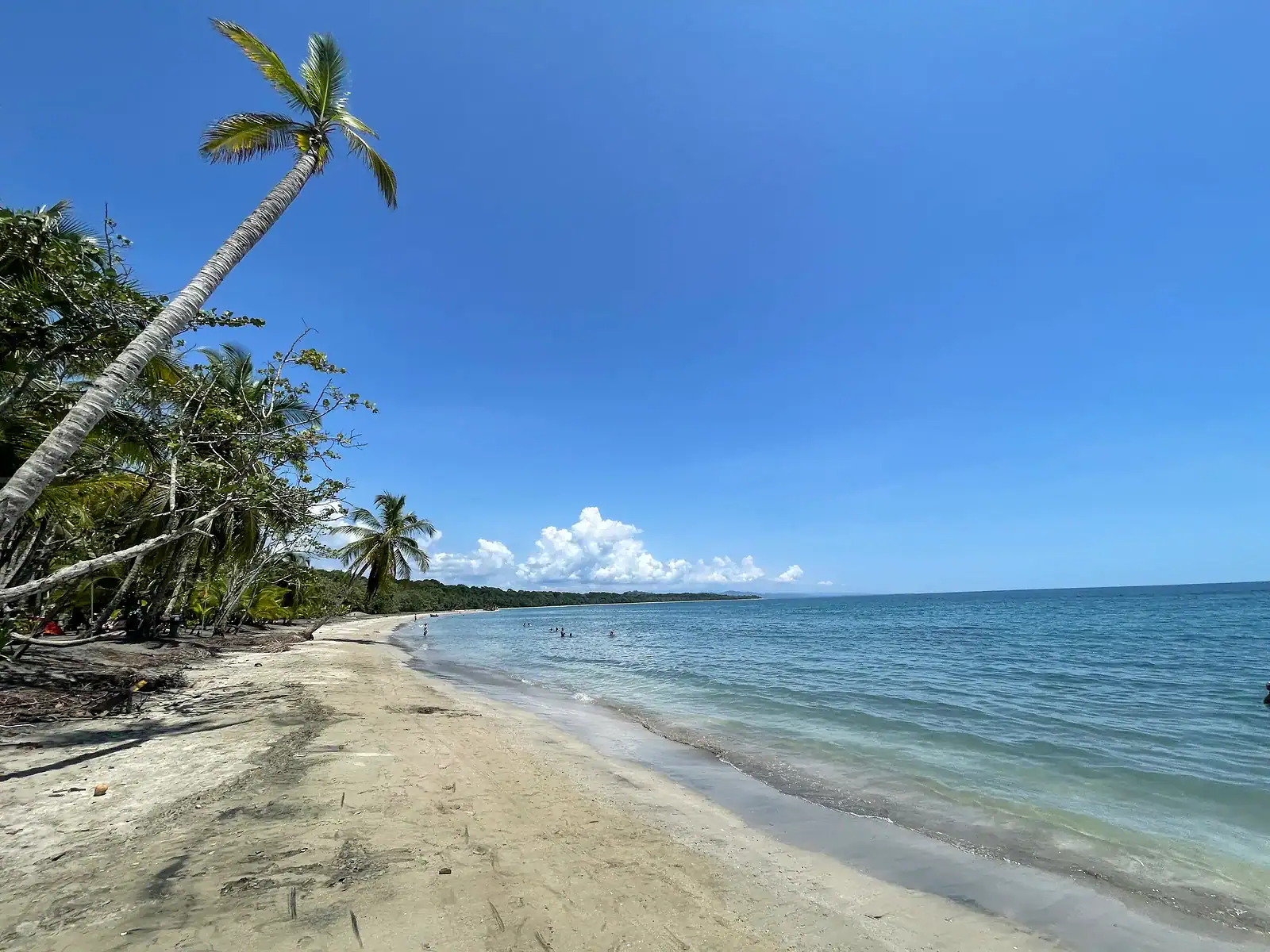
Cahuita National Park
Rainforest, bright Caribbean beaches, coral reefs, and an exceptionally close connection to the local community: Cahuita National Park is one of the most impressive natural destinations on the southern Caribbean coast.
A National Park Between a Village, the Jungle, and the Caribbean
Cahuita National Park protects a striking stretch of coastline featuring tropical forest, beaches, wetlands, and a significant coral reef. What makes it special is not only the landscape but also the close connection between the protected area and the local community.
You can explore the park on foot along the coast. Even on short stretches, dense forest, open beach areas, and views of the Caribbean Sea alternate.
What Makes Cahuita National Park Special
The appeal stems from the direct interplay between the coastal forest, beaches, the sea, and an exceptionally diverse array of wildlife.
Tropical coastal forest
A humid tropical forest with palm trees, vines, and dense vegetation extends right up to the coast.
Bright Caribbean beaches
Playa Blanca and the areas around Punta Cahuita combine light-colored sand, nature, and ever-changing ocean conditions.
Coral reef
Off the coast lies one of the most significant coral reef systems in the Costa Rican Caribbean.
Coastal Trail
The mostly flat trail is ideal for leisurely hikes; rain, mud, and heat make it more challenging.
Wildlife Observation
Sloths, monkeys, raccoons, iguanas, basilisks, and numerous species of birds may be found there.
Community and Protection
Cahuita is considered a prime example of cooperation between the local community and government conservation efforts.
What kinds of animals might be found in the park?
Sightings are never guaranteed. Walking quietly, keeping your distance, and being patient increase your chances.
They are often perched high up in the treetops and are easy to overlook.
Capuchin monkeys and howler monkeys may be seen along the coastal forest.
Iguanas, basilisks, and snakes are part of the natural habitat.
The park provides a habitat for numerous coastal and forest birds.
Entrances, Hours of Operation, and Fees
Official sources sometimes provide different times. Therefore, check the opening hours and fees again with SINAC or Visit Costa Rica shortly before your visit.
Playa Blanca Sector
This entrance is located in the town of Cahuita and is especially good if you want to visit the village, the beach, and the national park.
Puerto Vargas Sector
The entrance is located south of Cahuita on the coastal road and provides an alternative way into the protected area.
Well Prepared for the National Park
A little preparation makes your visit more enjoyable and helps protect the delicate natural environment.
Take it with you
Travel and Schedule
Water Safety
Despite its calm appearance, the Caribbean can have strong currents and changing conditions.
Behavior Toward Animals
Do not feed, touch, or harass wild animals for the sake of taking photos.
Find Cahuita National Park
For specific directions, we recommend using your navigation system to get to the desired entrance.
Two entrances, one coastal park
Sector Playa Blanca is located right next to Cahuita. Sector Puerto Vargas is located further south on the coastal road toward Puerto Viejo.
Frequently Asked Questions About Cahuita National Park
Which entrance is best for a first visit?
Is admission free?
How much time should you set aside?
Can you swim or snorkel?
Are you guaranteed to see sloths or monkeys?
Do you need a guide?
Learn more about Cahuita
You can find places, attractions, events, and other content on the Cahuita town portal.