
Where to See Sloths Near Puerto Viejo, Costa Rica
Wondering where to see sloths near Puerto Viejo? Find ethical wildlife spots, timing tips, and practical ways to improve your chances in Costa Rica today.
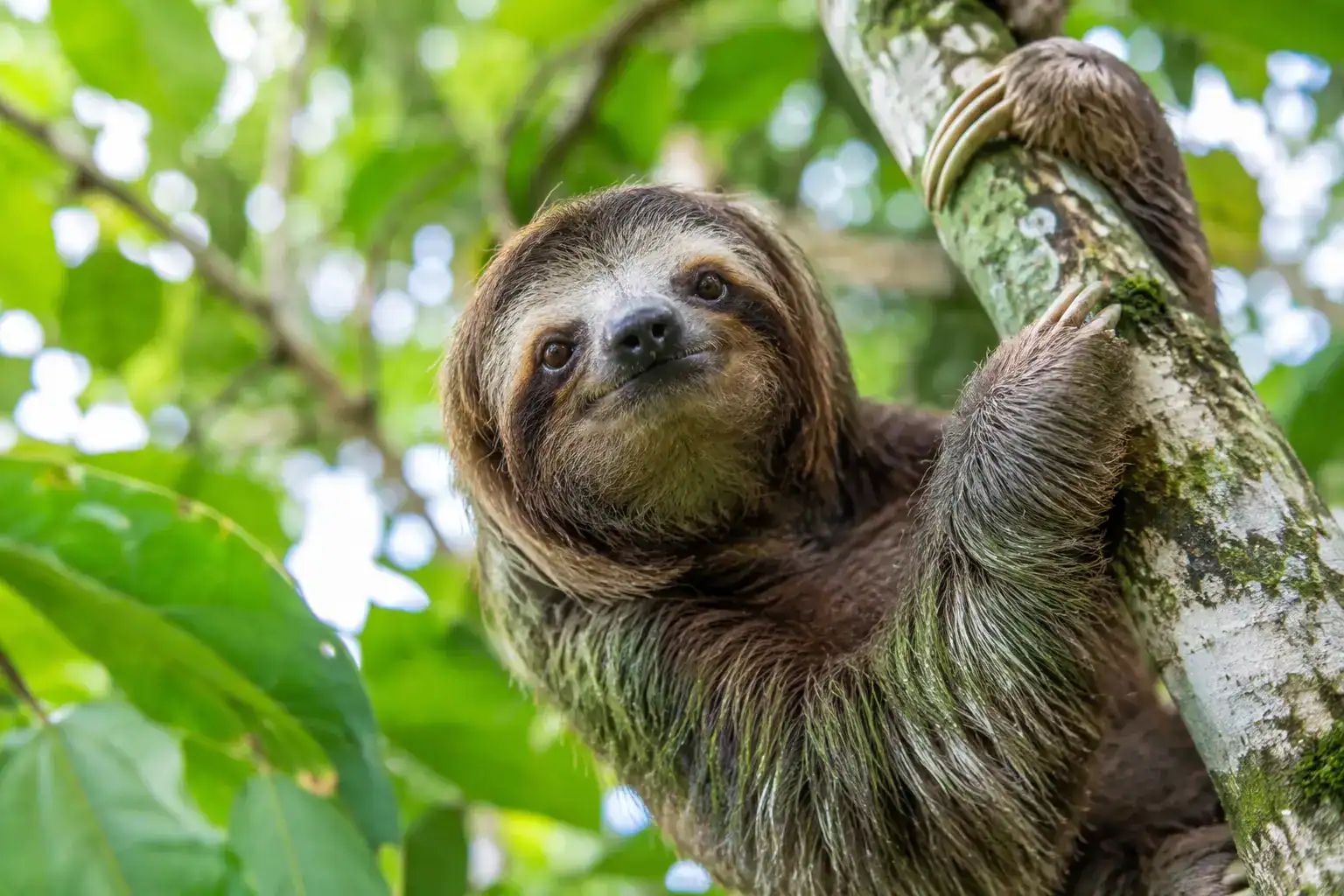
Where to See Sloths Near Puerto Viejo, Costa Rica: Best Places & Wildlife Tips
Imagine walking beneath the lush green canopy of Costa Rica’s Caribbean rainforest. Somewhere above you, almost perfectly camouflaged among the leaves, a sloth is resting in the branches. For many travelers, seeing a wild sloth is one of the most memorable experiences in Costa Rica.
Puerto Viejo de Talamanca and the surrounding Caribbean coast offer excellent opportunities to look for sloths in their natural habitat. From Punta Uva and Playa Chiquita to Cahuita National Park and Gandoca-Manzanillo Wildlife Refuge, this guide explains where to look, when to go, and how to observe these animals responsibly. No forest or guide can guarantee a sighting.
Are There Sloths in Puerto Viejo, Costa Rica?
Yes. Puerto Viejo lies within Costa Rica’s Caribbean lowlands, an area of tropical rainforest, coastal vegetation, rivers, gardens, and wildlife corridors. Two sloth species occur in this region:
- Brown-throated three-toed sloth (Bradypus variegatus): Often observed resting or feeding in the canopy during daylight hours.
- Hoffmann’s two-toed sloth (Choloepus hoffmanni): Generally more active at night and often harder to notice during daytime walks.
Both species spend much of their lives in trees. Their slow movements, natural camouflage, and preference for elevated branches make them difficult to spot. Sloths can sometimes be observed in mature gardens, roadside trees, and connected forest fragments, although protected forests offer more appropriate environments for responsible observation.
Best Places to See Sloths Near Puerto Viejo
1. Playa Chiquita – Forested Roads and Tropical Gardens
Playa Chiquita is a small coastal community south of Puerto Viejo, surrounded by tropical vegetation and mature trees. Its quiet roads, forest fragments, and gardens provide suitable habitat for wildlife. Sloths may occasionally be seen resting high in trees where the canopy remains connected.
Explore slowly and pay attention to large trees, cecropias with distinctive hand-shaped leaves, branch forks, and dense vegetation. A local naturalist guide can help locate animals that visitors might overlook. Never enter private gardens without permission or stop vehicles where they obstruct traffic.
2. Punta Uva – Sloth Watching Near Caribbean Beaches
Punta Uva combines tropical vegetation, coastal forest, and beautiful beaches. Forested areas surrounding the community provide opportunities to look for sloths, monkeys, and tropical birds. Look in mature trees along quieter roads and forest edges, rather than expecting animals directly on the beach.
A morning nature walk followed by time at the beach can be an enjoyable way to explore the area. Sightings are possible but never guaranteed.
3. Gandoca-Manzanillo Wildlife Refuge – Protected Rainforest
The Gandoca-Manzanillo Wildlife Refuge protects tropical rainforest, coastal habitats, wetlands, and marine environments south of Puerto Viejo. It supports sloths, howler monkeys, tropical birds, iguanas, frogs, butterflies, and countless forest insects.
Sloths may be observed in the canopy, although sightings depend on vegetation, weather, and animal movements. Experienced guides can recognize subtle signs of wildlife. Stay on authorized trails and respect access restrictions and conservation rules.
4. Cahuita National Park – Wildlife Walks Near Puerto Viejo
Cahuita National Park is one of the most rewarding places to explore Costa Rica’s Caribbean rainforest. North of Puerto Viejo, its coastal trails pass through forest where visitors may encounter monkeys, sloths, iguanas, raccoons, and birds. The forest extends almost to the beach, creating a memorable setting.
Why Cahuita Is Worth Visiting for Sloth Watching
Cahuita offers established trails, different wildlife habitats, local naturalist guides, and beautiful scenery even without a sloth sighting. Binoculars or a spotting scope are useful. The drive from Puerto Viejo typically takes around 30–40 minutes depending on traffic and starting point.
Visiting Cahuita From a Cruise Ship
For cruise passengers arriving in Puerto Limón, guided excursions can combine Cahuita with other Caribbean rainforest experiences. Maratopia Tours offers a Caribbean Expedition combining a guided wildlife boat trip through the Tortuguero Canal area, Cahuita National Park, banana cultivation, and Maratopia Tropical Jungle Garden. Wildlife sightings always depend on natural conditions.
5. Puerto Viejo Town – Sloths Without Leaving the Village?
Sloths are occasionally observed in mature trees around Puerto Viejo itself, but town sightings are unpredictable. The forested areas around Playa Chiquita, Punta Uva, Manzanillo, and Cahuita generally offer more suitable observation opportunities. Keep your eyes on the trees while walking through town: sometimes a wildlife encounter happens unexpectedly.
Where Can You See Sloths at a Wildlife Rescue Center?
A reputable rescue or rehabilitation center may provide educational opportunities to learn about sloths receiving professional care. One established organization in the region is the Jaguar Rescue Center near Puerto Viejo. Despite its name, the organization works with different wildlife species and focuses on rescue, rehabilitation, and conservation. Visitor arrangements and the animals present can change, so check current policies.
What Makes a Responsible Sloth Rescue Center?
Look for facilities that prioritize rescue, veterinary care, rehabilitation, release where possible, and education. Avoid attractions promoting sloth selfies or unnecessary handling. Seeing an animal receiving care is different from encountering one in its natural habitat.
How to Spot a Sloth in the Rainforest
Look High Into the Trees
Scan upper branches for rounded shapes, unusual clusters of fur, and limbs hanging beneath branches. Sloths often rest high in the canopy and blend into surrounding vegetation.
Learn to Recognize Cecropia Trees
Cecropia trees have distinctive hand-shaped leaves and are commonly associated with sloths. Three-toed sloths frequently feed on their leaves, although both species use other trees too. Finding a cecropia is a reason to look carefully, not a guarantee.
Watch for Subtle Movement
Look for slow changes in a branch’s outline or leaves moving independently of nearby vegetation. A sloth may move only slightly while feeding or adjusting its position.
Bring Binoculars
Binoculars allow you to see animals without approaching them. A spotting scope used by an experienced guide can be even more effective.
Consider a Local Naturalist Guide
A good guide explains rainforest ecology, identifies trees, interprets animal behavior, and helps visitors notice camouflaged wildlife. For travelers with limited time, professional guidance can make the experience more informative.
What Is the Best Time of Day to See Sloths?
Morning Wildlife Walks
Early morning is often comfortable for walking, with cooler conditions and opportunities to observe other wildlife. Three-toed sloths may be active in daylight but also rest for long periods.
Afternoon Sloth Watching
Sloths can be visible in the afternoon too. Cloud cover and changing light affect visibility; an afternoon visit is not automatically less worthwhile.
Can You See Sloths at Night?
Hoffmann’s two-toed sloths are often more active after dark. Participate only in authorized guided activities that respect protected-area regulations and private property. Avoid strong lights directed at animals.
Can You See Sloths During the Rainy Season?
Yes. Sloths remain in Costa Rica’s Caribbean rainforest throughout the year. Rain may reduce visibility and make trails slippery, but it does not mean sloths disappear. The Caribbean coast does not follow exactly the same seasonal pattern as the Pacific region. Read our Costa Rica Caribbean Coast Weather Guide for seasonal planning.
Two-Toed vs. Three-Toed Sloths in Costa Rica
Brown-Throated Three-Toed Sloth
The brown-throated three-toed sloth has three claws on each forelimb and a rounded facial appearance. It feeds primarily on leaves and spends extended periods resting or feeding in the canopy.
Hoffmann’s Two-Toed Sloth
Hoffmann’s two-toed sloth has two claws on each forelimb, is generally more active at night, and eats leaves and other plant material. It often remains concealed during daytime.
How Can You Tell Them Apart?
Claw number, facial appearance, and body shape can help identify the species, but these features may not be visible from the ground. Do not approach an animal to identify it; use binoculars instead.
Why Sloths Are Important to Costa Rica’s Rainforest
Sloths are part of a complex tropical ecosystem. Their fur can support algae and other small organisms, while their feeding behavior connects them to forest plants. They depend on connected tree cover for movement, food, and shelter. Habitat fragmentation can force them onto roads or near dogs, vehicles, and electrical infrastructure. Protecting mature trees and wildlife corridors helps reduce these risks.
How to Observe Sloths Responsibly
- Maintain a respectful distance.
- Never touch, hold, or feed a wild sloth.
- Do not shake branches to provoke movement.
- Avoid flash photography.
- Never use drones to approach wildlife.
- Do not enter private property or restricted areas.
- Keep children and pets at a safe distance.
- Follow qualified local guides’ instructions.
What Should You Do if You Find a Sloth on the Ground?
A sloth on the ground is not automatically injured; sloths occasionally descend naturally. Do not pick up or relocate it. Keep a safe distance and contact an appropriate wildlife authority or qualified rescue organization if it appears injured or in immediate danger.
Discover More Caribbean Wildlife Around Puerto Limón
Wildlife Boat Excursions Through the Tortuguero Canal
Boat trips through the Caribbean waterways offer a different perspective from a forest walk. From the water, visitors may see monkeys, sloths, iguanas, caimans, and birds, depending on conditions. Maratopia Tours offers a Tropical Boat Tour combining a guided canal excursion with additional nature experiences.
Maratopia Tropical Jungle Garden
Maratopia Tropical Jungle Garden introduces visitors to tropical vegetation, butterflies including blue morphos, seasonal fruit tasting, and a raised wooden walkway. The garden complements wildlife excursions, but should not be regarded as a location guaranteeing sloth sightings. Explore the experiences offered by Maratopia Tours.
Planning a Sloth-Watching Day Near Puerto Viejo
If You Have Half a Day
Choose one area rather than rushing between distant locations. A guided walk near Punta Uva or an accessible part of Gandoca-Manzanillo can be a good option. Allow time to scan the canopy.
If You Have a Full Day
Consider a morning wildlife walk in Cahuita National Park and a relaxed afternoon around Punta Uva or Playa Chiquita, giving yourself opportunities to explore different habitats.
If You Are Arriving by Cruise Ship
Puerto Limón is the main cruise gateway to the region. Prioritize reliable transportation and sufficient time to return to the ship. Cahuita and the Caribbean waterways are particularly interesting. Maratopia Tours organizes excursions around cruise ship arrivals. Confirm the itinerary, meeting point, duration, and return arrangements before booking.
Frequently Asked Questions About Sloths Near Puerto Viejo
Where Is the Best Place to See Sloths Near Puerto Viejo?
Playa Chiquita, Punta Uva, Gandoca-Manzanillo Wildlife Refuge, and Cahuita National Park are all promising locations. Sightings are never guaranteed.
Can You See Sloths in Puerto Viejo Without a Tour?
Yes, occasionally in trees around town and nearby roads. A guide can help locate camouflaged animals and suitable habitat.
Are Sloths Common in Cahuita National Park?
Sloths inhabit the coastal forests, and visitors sometimes observe them along the trails. Not every visit produces a sighting.
What Time of Day Is Best for Sloth Watching?
Early morning is comfortable for walking, but sloths can be visible at different times.
Can You See Sloths in Punta Uva?
Yes, they may be found in mature trees and forested surroundings, though not predictably.
Are Sloths Dangerous?
Sloths generally avoid confrontation, but they are wild animals with claws and teeth. Never touch or restrain one.
Can You Hold a Sloth in Costa Rica?
Responsible wildlife experiences do not encourage tourists to hold sloths. Choose ethical observation instead.
Is a Guided Sloth Tour Worth It?
Guides can identify wildlife and explain behavior, but no ethical guide guarantees sightings.
Do Sloths Live in the Tortuguero Canal Area?
Sloths inhabit suitable forest environments in the Caribbean lowlands. Sightings may be possible on canal excursions.
Can Cruise Passengers See Sloths Near Puerto Limón?
Yes, through nature excursions visiting suitable rainforest habitats or waterways, subject to ship schedules.
Can You See Sloths During Rainy Weather?
Yes, although rain can make them harder to observe and affect trail conditions.
Should You Use a Drone to Photograph a Sloth?
No. Drones can disturb wildlife and may violate local restrictions. Use binoculars or a camera lens from a distance.
Final Thoughts: Finding Sloths on Costa Rica’s Caribbean Coast
Seeing a wild sloth near Puerto Viejo rewards patience rather than speed. The forests around Playa Chiquita, Punta Uva, Manzanillo, and Cahuita offer opportunities to discover these fascinating animals in their natural surroundings.
A quiet rainforest walk may also reveal monkeys, tropical birds, butterflies, and countless details that are easy to overlook. The best sloth encounter is one in which the animal remains completely undisturbed.
Take your time, bring binoculars, consider a knowledgeable guide, and enjoy the wider ecosystem. If your travels also take you to Puerto Limón, explore the Caribbean nature and wildlife excursions offered by Maratopia Tours.