
Spiders and Snakes on the Caribbean Coast
Spiders and snakes on the Caribbean coast of Costa Rica are part of rainforest travel. Learn what you may see, what to avoid, and how to react properly.
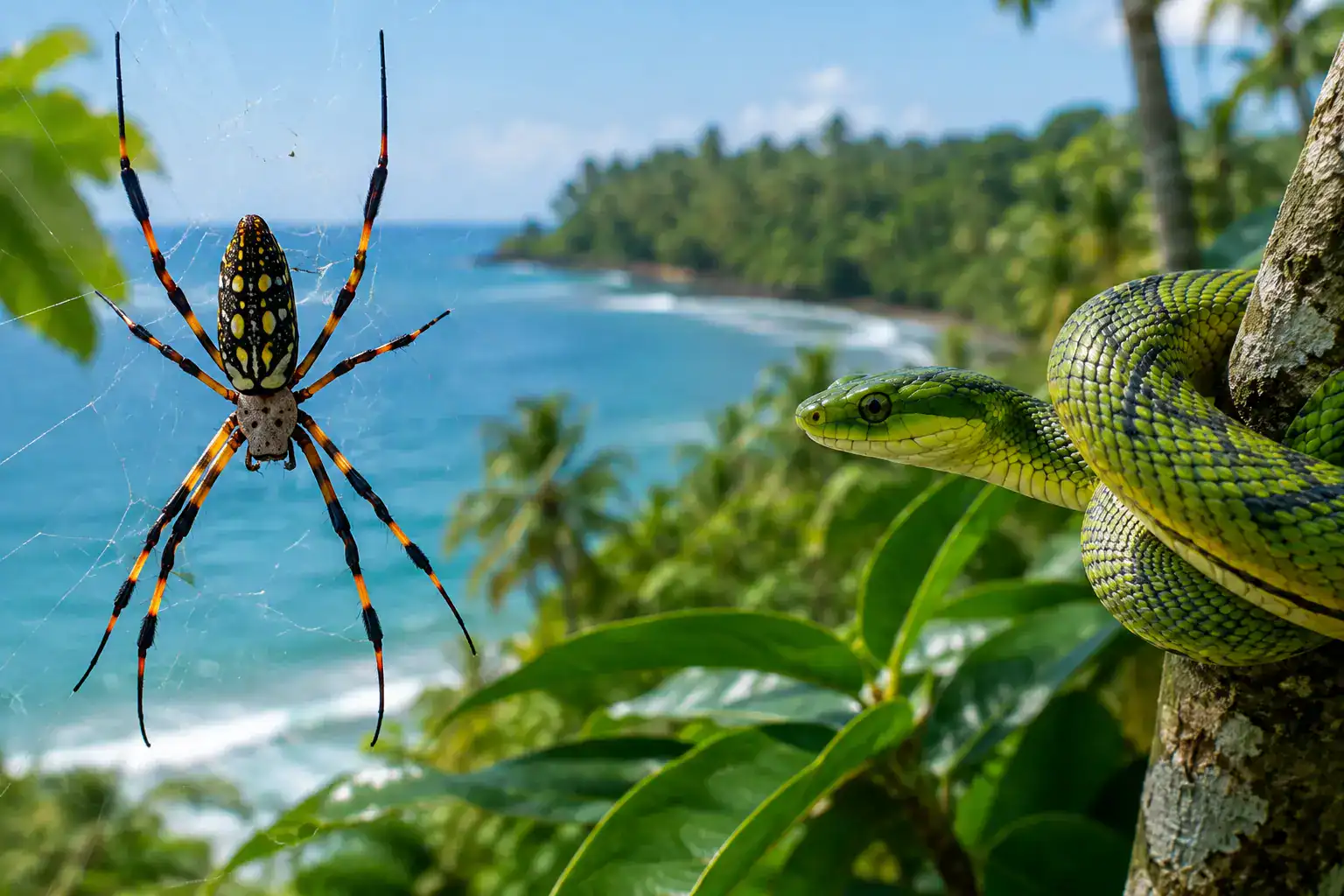
The rustle beside a rainforest trail is usually a lizard, a crab, or falling leaves, not a dangerous snake. Still, spiders and snakes on the Caribbean coast of Costa Rica are a sensible concern for visitors staying near forest, gardens, rivers, and less-developed beaches. The region’s warm, humid climate supports extraordinary wildlife, and a little practical awareness lets travelers enjoy it without unnecessary anxiety.
Most visitors to Puerto Limón, Cahuita, Puerto Viejo, Manzanillo, and Tortuguero will never have a dangerous encounter. The key is not to identify every animal from a distance. It is to give wildlife space, use light after dark, and know what to do if an incident occurs.
Why Costa Rica’s Caribbean Coast Has So Much Wildlife
Costa Rica’s Caribbean lowlands are greener and wetter than many visitors expect. Rainforest, cacao farms, roadside drainage, coastal gardens, mangroves, and protected areas create habitat for reptiles, amphibians, insects, and spiders throughout the year.
This does not mean snakes are waiting on every path. Most are secretive and avoid people. But damp conditions and dense vegetation make encounters more likely than in a city or a dry beach resort. A snake may rest beneath a fallen palm frond, beside a trail edge, or near a woodpile. Spiders commonly build webs between shrubs, under eaves, and around outdoor lights where insects gather.
Wildlife is one reason the Caribbean coast feels distinct from more heavily developed destinations. Responsible travel means treating that biodiversity as part of the setting, rather than trying to turn every sighting into a close-up photo opportunity.
Snakes on the Caribbean Coast: What Travelers May See
Costa Rica has many snake species, and only a minority are medically significant. Nonvenomous snakes, including boas and several slender, harmless species, are often mistaken for dangerous animals. They play an important role in the ecosystem by controlling rodents and other small prey.
The species visitors most often hear about is the terciopelo, also known as the fer-de-lance or Bothrops asper. This pit viper occurs in the humid lowlands and is responsible for many serious snakebites in Costa Rica, largely because it can be well camouflaged in leaf litter and is found near rural homes and cultivated land. It is a snake to respect from a distance, not a reason to avoid the Caribbean coast.
Other venomous snakes occur in the region, including coral snakes and arboreal vipers such as the eyelash viper. Their colors can be striking, but color patterns are not a reliable field guide for inexperienced visitors. Never use a rhyme, an online image, or a quick glance to decide whether a snake is safe to handle. The correct approach is the same for every unidentified snake: stop, step back slowly, and leave it alone.
Where encounters are most likely
Snake sightings are more likely on poorly lit paths after rain, in tall grass, around piles of lumber or garden debris, and near forest edges. They are less likely on busy beaches, paved town centers, and well-maintained hotel grounds, though no location in a tropical region is entirely wildlife-free.
For travelers, footwear is the simplest preventive measure. Closed shoes are a good choice for hikes, night walks, rural properties, and visits to national parks. Sandals work well in town and on open beaches, but they offer little protection on a muddy trail. Use a flashlight or headlamp after sunset, especially when walking from a cabin, restaurant, or beach access path.
The Spiders You Are Most Likely to Notice
Spiders are far more commonly seen than felt. Large orb-weavers may build impressive webs across vegetation, while hunting spiders, jumping spiders, and tarantulas may appear near homes or on trails. Their size can be startling, particularly for visitors from cooler climates, but most pose little risk when left undisturbed.
Orb-weavers are among the most visible. They often sit at the center of large circular webs and help control flying insects. Tarantulas are also present in Costa Rica, usually remaining hidden in burrows, beneath debris, or in quiet corners. A tarantula bite can be painful and may cause local symptoms, but serious outcomes are uncommon. Handling one is unnecessary and stressful for the animal.
Costa Rica also has spiders whose bites can require medical evaluation. The challenge is that species identification is difficult, and many harmless spiders resemble more concerning ones. A traveler should not attempt to catch a spider for identification. If a bite causes intense or worsening pain, muscle cramps, sweating, nausea, blistering, difficulty breathing, or any unusual whole-body symptoms, seek medical care promptly.
How to reduce spider encounters indoors
Choose accommodation with intact window screens where possible, keep luggage closed or elevated, and shake out shoes, towels, and clothing that have been left outdoors or on the floor. These are sensible habits in tropical areas, not signs that a room is unsafe.
At rustic lodges, cabins, and vacation rentals near forest, avoid reaching blindly behind furniture, into stored boxes, or beneath outdoor seating. Ask the property staff for help if you find a spider or snake indoors. Local staff are generally better placed to arrange safe removal than a guest with a broom and good intentions.
If You See a Snake or Spider
Distance is the best response. Do not touch, feed, corner, or try to move wildlife. Give a snake a clear route away, keep children and pets back, and alert staff or a local wildlife professional if it is inside a building or in a busy public area.
A photograph can be useful only if it can be taken from a safe distance without delaying care or moving closer. Never attempt a photograph after a bite. For species identification, a general description of the animal, location, and time of day can still help medical professionals.
Snake encounters on trails are often brief. If a snake is crossing the path, wait quietly until it moves on or take a wide detour. Do not throw sticks or stones. A defensive bite is far more likely when an animal feels trapped or threatened.
What to Do After a Bite
Any suspected snakebite in Costa Rica should be treated as a medical emergency. Remain as calm and still as possible, move away from the animal, remove rings, watches, or tight footwear near the affected limb, and arrange immediate transport to medical care or call 9-1-1. Keep the bitten area still and avoid walking if assistance is available.
Do not cut the wound, suck out venom, apply ice, use a tourniquet, drink alcohol, or rely on herbal treatments. These measures can cause additional harm or delay appropriate treatment. Costa Rica has experienced medical teams and antivenom protocols, but timely care matters.
For a suspected spider bite, wash the area gently with soap and water, apply a cool cloth for pain or swelling, and monitor symptoms. Seek urgent care for severe pain, spreading swelling, signs of infection, breathing problems, faintness, vomiting, muscle cramps, or symptoms affecting a child, older adult, or person with a known allergy.
A Calm Approach to Caribbean Nature
The practical reality is reassuring: snakebite and serious spiderbite are uncommon among travelers who stay aware of their surroundings. Avoid walking barefoot in vegetation, use a light at night, keep hands out of hidden spaces, and respect the distance between you and wildlife.
For families and first-time rainforest visitors, a guided walk can be especially valuable. A knowledgeable local guide helps people notice the animals that are usually missed, explains why they matter, and makes a forest visit feel more informed than intimidating.
Costa Rica’s Caribbean coast rewards attentiveness. Watch where you step, let wildlife keep its space, and you can enjoy the rainforest’s remarkable detail with the confidence to look up as often as you look down.