
Rice&Beans on Costa Rica’s Caribbean Coast
Rice&beans is a signature Caribbean Coast meal in Costa Rica. Learn what makes it distinct, where to try it, and how to order it with care on your visit.
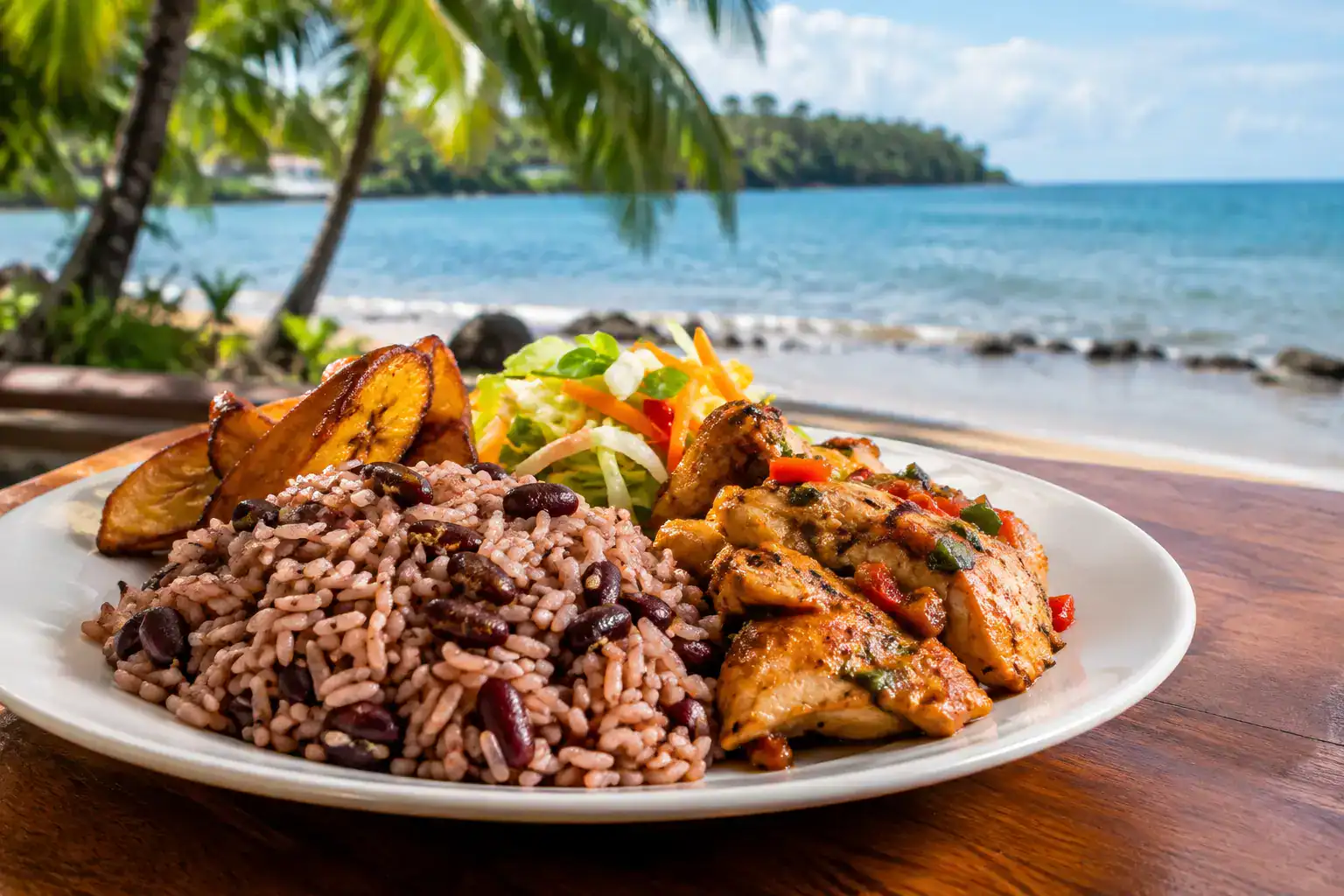
Rice & Beans: A Taste of Costa Rica’s Caribbean Coast
A plate of rice & beans can tell travelers more about Costa Rica’s Caribbean coast than a long menu description. Fragrant with coconut milk, gently seasoned with herbs, and often served alongside fried plantains, salad, and fish or chicken, this traditional dish reflects the region’s rich Afro-Caribbean heritage.
For visitors traveling between Puerto Limón, Cahuita, Puerto Viejo, and the communities farther south, Caribbean rice and beans is one of the most worthwhile local specialties to try.
Its appeal lies in its balance: creamy but not heavy, savory with a subtle sweetness from coconut milk, and adaptable to a variety of accompanying dishes.
Discover what makes Costa Rican Caribbean rice and beans special, how it differs from gallo pinto, and where to enjoy this traditional dish along the Caribbean coast.
What Makes Caribbean Rice & Beans Different?
Costa Rica has several beloved rice dishes, but Caribbean rice and beans stands apart thanks to its ingredients, preparation, and cultural origins.
Unlike gallo pinto, the country’s famous breakfast dish, Caribbean rice and beans is typically prepared with coconut milk.
The result is a fragrant, flavorful dish deeply connected to the culinary traditions of Limón Province.
Rice & Beans vs. Gallo Pinto
Although both dishes combine rice and beans, they are not interchangeable.
Gallo pinto is commonly prepared with cooked rice and beans, onions, peppers, cilantro, and seasonings. It is widely eaten throughout Costa Rica, especially for breakfast.
Caribbean rice and beans, by contrast, is traditionally simmered with coconut milk, red beans, aromatic herbs, and spices.
Typical ingredients include:
- Rice and red beans
- Coconut milk
- Onion and garlic
- Fresh or dried thyme
- Sweet pepper
- Chile panameño or another aromatic hot pepper
- Salt and additional seasonings
The coconut milk gives the rice a distinctive aroma and rich texture without necessarily making the dish sweet.
Some cooks add a whole chile panameño during preparation and remove it before serving, creating a fragrant dish with relatively mild heat.
Others prefer a spicier version.
A Regional Tradition, Not One Fixed Recipe
There is no single official recipe for Caribbean rice and beans.
Families and restaurants across Limón Province prepare their own variations, often reflecting recipes passed down through generations.
One cook may use more thyme, while another emphasizes coconut milk or serves homemade pepper sauce alongside the dish.
These differences are part of its character.
The dish belongs to the living culinary heritage of Costa Rica’s Afro-Caribbean communities, whose traditions have shaped the region’s language, music, and food.
For travelers, trying rice and beans is not simply about tasting a local specialty. It is also an opportunity to appreciate the cultural identity of the Caribbean coast.
Where to Eat Rice & Beans on Costa Rica’s Caribbean Coast
Rice and beans appears on menus throughout Limón Province, from small family-run restaurants to established Caribbean kitchens.
It is especially popular around Puerto Limón, Cahuita, Puerto Viejo, and the surrounding coastal communities.
For additional dining suggestions, explore our Puerto Limón restaurant guide.
Rice & Beans in Puerto Limón
Puerto Limón is an excellent place to discover traditional Caribbean cuisine.
The city’s Afro-Caribbean heritage is reflected in many local dishes, including rice and beans, Caribbean-style chicken, seafood preparations, and plantain-based sides.
For cruise passengers visiting Puerto Limón, trying a traditional Caribbean lunch can provide a memorable introduction to the region.
Choose a locally operated restaurant, ask what is freshly prepared, and allow enough time to enjoy the meal.
Rice & Beans in Cahuita
Cahuita is known for its relaxed coastal atmosphere, natural surroundings, and Caribbean culinary traditions.
Small restaurants and family-run kitchens offer opportunities to enjoy rice and beans with fish, chicken, vegetables, or other regional accompaniments.
After exploring Cahuita National Park or spending time along the coast, a traditional Caribbean lunch can be a satisfying part of the day.
Rice & Beans in Puerto Viejo
Puerto Viejo de Talamanca combines beach culture, Caribbean influences, and a lively food scene.
Visitors can find traditional local cooking alongside vegetarian options and international restaurants.
Rice and beans remains an important part of the area’s food culture, often served with Caribbean-style chicken, fish, plantains, and fresh salads.
Discover more about the destination in our Puerto Viejo travel guide.
What Is Traditionally Served With Caribbean Rice & Beans?
Rice and beans is rarely served alone.
In Costa Rica’s Caribbean region, it often forms the centerpiece of a complete lunch.
Caribbean-Style Chicken
Chicken prepared with aromatic herbs, vegetables, and Caribbean seasonings is a popular accompaniment.
Depending on the restaurant, it may be grilled, stewed, or served with a flavorful sauce.
Fresh Fish and Seafood
Along the Caribbean coast, fish is another natural companion to rice and beans.
Some restaurants serve grilled fish, while others offer preparations featuring sauces and tropical seasonings.
Availability can vary depending on the catch, season, and restaurant.
Fried Ripe Plantains
Sweet fried plantains provide a delicious contrast to the savory rice.
Their soft texture and natural sweetness complement the coconut milk and spices.
Patacones
Patacones are made from green plantains that are fried, flattened, and fried again.
They offer a crispier, less sweet alternative to ripe plantains.
Fresh Salad and Vegetables
A simple salad adds freshness and balance to the meal.
Tomatoes, cabbage, cucumber, and other vegetables may be served alongside the main dish.
Every restaurant has its own combinations, making rice and beans a versatile meal with plenty of regional variation.
Is Caribbean Rice & Beans Spicy?
Not necessarily.
Although some recipes include chile panameño or other hot peppers, the finished dish can range from mild and aromatic to noticeably spicy.
Coconut milk adds richness and balances the flavors, but it does not eliminate the heat of chile peppers.
If you prefer mild food, ask:
“¿Es picante?” — Is it spicy?
You can also request hot sauce separately:
“La salsa picante aparte, por favor.” — Hot sauce on the side, please.
This is particularly useful for families traveling with children or visitors who are sensitive to spicy food.
Is Costa Rican Caribbean Rice & Beans Vegetarian?
The basic combination of rice, beans, coconut milk, and herbs can be suitable for vegetarians or vegans.
However, preparation methods differ.
Some kitchens may use animal stock, butter, or other ingredients that are not vegetarian.
Accompanying proteins and sauces also vary.
If you follow a vegetarian or vegan diet, ask the restaurant about the ingredients before ordering.
A simple question can help:
“¿Se prepara con caldo de carne o pollo?”
This means: Is it prepared with meat or chicken stock?
Never assume that a dish is vegetarian simply because its main ingredients are rice and beans.
The Afro-Caribbean Heritage Behind Rice & Beans
To understand Caribbean rice and beans, it helps to understand the history of Limón Province.
Costa Rica’s Caribbean coast has long been connected to the wider Caribbean through migration, maritime commerce, agriculture, and cultural exchange.
Afro-Caribbean communities have contributed significantly to the region’s identity, including its culinary traditions.
Ingredients such as coconut milk, aromatic herbs, beans, plantains, and spicy peppers reflect the broader Caribbean influence on local cooking.
Rice and beans is therefore more than a filling meal.
It represents a living tradition maintained through family kitchens, local restaurants, and generations of shared food culture.
Travelers who take the time to appreciate these connections gain a deeper understanding of the places they visit.
How to Find Authentic Caribbean Food in Costa Rica
The best dining experience does not always come from the largest or most famous restaurant.
Smaller, locally operated kitchens can offer memorable examples of traditional Caribbean cooking.
When exploring Puerto Limón and the southern Caribbean coast, consider these practical tips.
Choose Locally Operated Restaurants
Family-run restaurants and traditional sodas can provide a more personal introduction to regional dishes.
Supporting local businesses also contributes to the communities that maintain these culinary traditions.
Ask About the Daily Menu
Some kitchens prepare a selection of dishes each day based on ingredients and availability.
Asking what is freshly prepared can be more useful than searching for a supposedly definitive version of rice and beans.
Allow Time for Your Meal
Caribbean cooking often rewards a relaxed approach.
Especially in smaller restaurants, food may be prepared to order.
If you are traveling independently, allow enough time to sit down and enjoy the experience.
Explore Beyond the Main Tourist Streets
Traditional dining options can be found throughout the region, not only in the busiest tourist areas.
Our Puerto Limón business directory offers an additional starting point for discovering local establishments.
Enjoying Caribbean Cuisine Responsibly
Food tourism can benefit local communities when travelers choose independently operated restaurants and approach regional cuisine with curiosity and respect.
A traditional dish should be appreciated as part of a living culture, not simply as a photograph for social media.
Ask questions politely, respect restaurant staff, and recognize that recipes and serving styles naturally vary.
Not every restaurant will offer the same ingredients, portions, or preparations.
This diversity is part of what makes Costa Rica’s Caribbean food culture interesting.
Frequently Asked Questions About Caribbean Rice & Beans
What Is Costa Rican Caribbean Rice & Beans?
It is a traditional dish typically made with rice, red beans, coconut milk, herbs, and seasonings. It is particularly associated with the Afro-Caribbean culinary traditions of Limón Province.
What Is the Difference Between Rice & Beans and Gallo Pinto?
Caribbean rice and beans is generally cooked with coconut milk and aromatic herbs. Gallo pinto is commonly prepared without coconut milk and is especially popular as a breakfast dish throughout Costa Rica.
Where Can I Try Rice & Beans in Costa Rica?
Puerto Limón, Cahuita, Puerto Viejo, and other communities along the Caribbean coast are excellent places to look for traditional rice and beans.
Is Caribbean Rice & Beans Spicy?
It can be mild or spicy depending on the recipe. Ask whether hot peppers are included if you prefer a milder dish.
Is Rice & Beans Served for Breakfast or Lunch?
Although it can be served at different times, Caribbean rice and beans is particularly common as a substantial lunch.
What Goes Best With Caribbean Rice & Beans?
Popular accompaniments include Caribbean-style chicken, fish, fried plantains, patacones, fresh salad, and vegetables.
Does Caribbean Rice & Beans Contain Coconut Milk?
Traditional Caribbean-style preparations commonly include coconut milk, which creates the dish’s characteristic aroma and texture.
Can Vegetarians Eat Caribbean Rice & Beans?
Many preparations can be vegetarian, but ingredients vary. Always confirm whether animal stock or other animal-derived ingredients are used.
Discover the Flavors of Costa Rica’s Caribbean Coast
Caribbean rice and beans is much more than a simple combination of two everyday ingredients.
It reflects the history, creativity, and cultural heritage of Costa Rica’s Caribbean communities.
Whether you enjoy it in Puerto Limón, Cahuita, Puerto Viejo, or a small roadside restaurant, each plate offers an opportunity to experience a distinctive part of the country’s food culture.
Take your time, enjoy the different preparations, and discover the flavors that make this coastline special.
For more dining inspiration, local specialties, and regional recommendations, explore our Caribbean food and restaurant guide on Puerto-Limon.com.