
Pura Vida Meaning in Costa Rica Explained
Understand the Pura Vida meaning in Costa Rica, from everyday greetings to Caribbean coast culture, and use the phrase respectfully during your visit.
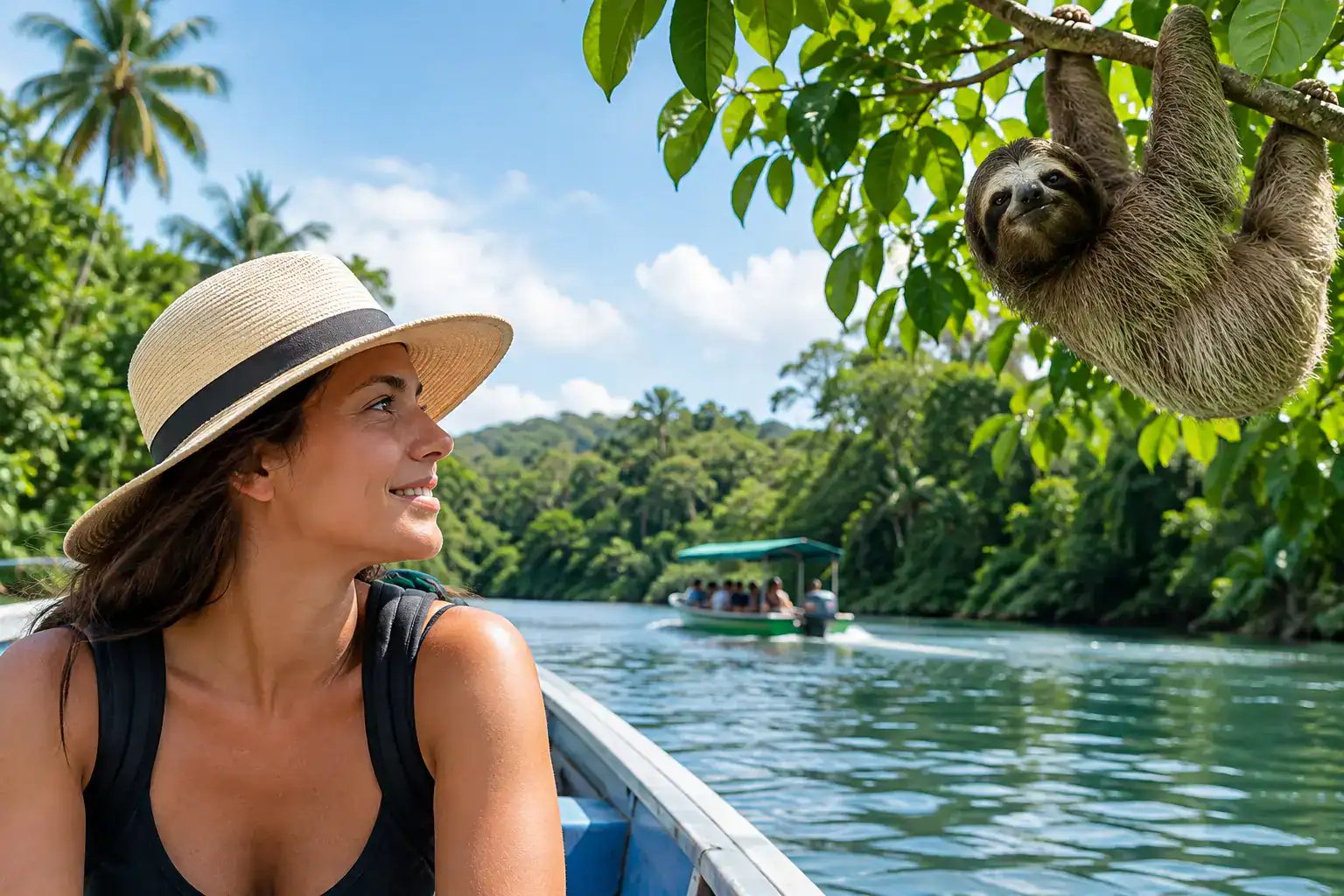
Pura Vida: The Meaning, Philosophy and Soul of Costa Rica
More than a greeting, more than a slogan — discovering the way of life behind Costa Rica’s most famous words.
There is a moment that many travelers experience in Costa Rica.
Perhaps you are sitting in a small café on the Caribbean coast, listening to the rain falling gently on the roof. Your coffee arrives, you thank the person serving you, and they smile.
“Pura Vida.”
Two words. Nothing complicated. Yet somehow, they seem to say more than a simple “you’re welcome.”
A few hours later, you hear the same expression from a taxi driver, a shopkeeper, and two friends greeting each other in the street.
Before long, you begin to wonder: What does Pura Vida really mean?
The literal translation is “pure life.” But to understand its true meaning, you have to look beyond the words.
You have to understand a little of Costa Rica itself.
What Does Pura Vida Really Mean?
In everyday Costa Rican Spanish, Pura Vida can mean hello, goodbye, thank you, you’re welcome, everything is fine, or simply no worries.
Its meaning changes with the situation.
If someone asks, “¿Cómo estás?” — “How are you?” — the answer might be “Pura Vida.”
If a stranger helps you find your way, you might thank them with the same expression.
And when friends say goodbye after spending a pleasant afternoon together, Pura Vida can be a warm way to end the conversation.
But these practical meanings only tell part of the story.
Behind the expression lies a broader attitude toward life — one that has become closely associated with Costa Rican identity.
The Philosophy of Pura Vida: Appreciating What Really Matters
At the heart of Pura Vida is a simple idea: life does not have to be perfect to be appreciated.
It is about recognizing the value of ordinary moments, enjoying human connections, and remembering that happiness is not always found in material possessions or carefully planned achievements.
A conversation with a friend. A meal shared with family. A quiet afternoon. The sound of rain in the rainforest. A beautiful sunset after a long working day.
These moments may seem small, but they can carry enormous meaning.
Pura Vida encourages an appreciation of what is already present rather than a constant pursuit of what might come next.
It does not mean giving up ambitions or ignoring responsibilities.
It means making room for life while pursuing them.
Happiness Is Not the Same as Perfection
One of the most common misunderstandings about Pura Vida is the idea that Costa Ricans must always be happy, relaxed, and free from worry.
Of course, that is not reality.
Costa Rica has the same everyday challenges found in other countries. People work hard, raise families, face financial pressures, deal with traffic, and worry about the future.
Pura Vida does not magically remove those difficulties.
Instead, it can offer a different way of responding to them.
Sometimes it means accepting that a small inconvenience is not worth ruining an otherwise good day.
Sometimes it means finding humor in an unexpected situation.
And sometimes it simply means recognizing that, despite the difficulties, there is still something worth appreciating.
The philosophy is not about pretending everything is wonderful.
It is about refusing to let every frustration define the entire day.
The Art of Slowing Down Without Standing Still
Modern life often encourages people to move faster.
There are schedules to follow, messages to answer, deadlines to meet, and an endless list of things that seem urgently important.
Pura Vida offers a gentle reminder that not everything valuable can be measured by productivity.
A few minutes spent talking to a neighbor may be more meaningful than rushing immediately to the next task.
A shared meal can be an occasion for conversation rather than something to finish as quickly as possible.
And a beautiful view does not always need to become a photograph.
Sometimes it is enough simply to enjoy it.
This does not mean that Costa Ricans are universally unhurried or that punctuality is unimportant. That would be an unfair stereotype.
Rather, the philosophy of Pura Vida invites people to consider whether every moment really needs to be filled with another obligation.
There is a difference between wasting time and taking time to live.
Family, Friendship and the Importance of Human Connection
One of the most meaningful aspects of Pura Vida is its connection to everyday relationships.
For many Costa Ricans, family and friendships play an important role in social life.
Time spent together, conversations, celebrations, and shared meals help create a sense of belonging.
The philosophy of Pura Vida fits naturally into these moments.
It can be heard in the way someone welcomes a visitor, checks on a friend, or responds warmly to a simple thank-you.
It reminds us that kindness does not always require a grand gesture.
Sometimes it is a smile, a friendly greeting, or taking a little extra time to help someone.
For travelers, these small encounters can become some of the most memorable parts of visiting Costa Rica.
Not because everyone behaves the same way, but because genuine human connections often leave a stronger impression than famous landmarks.
Learning to Accept What You Cannot Control
Imagine planning a perfect day on Costa Rica’s Caribbean coast.
You want sunshine, calm seas, a beautiful beach, and perhaps a glimpse of a sloth in the rainforest.
Then the rain begins.
At first, you might feel disappointed.
But the rainforest becomes greener, the air smells fresh, and the sound of tropical rain creates an atmosphere you could never have planned.
Perhaps you sit down for a coffee and discover that the unexpected pause becomes one of your favorite memories.
This is one way of understanding Pura Vida.
It is not about abandoning plans or ignoring genuine problems.
It is about knowing when to adapt.
Some things deserve careful planning. Others require flexibility.
Learning the difference can make travel — and everyday life — considerably more enjoyable.
Pura Vida and the Connection to Nature
Costa Rica is internationally known for its extraordinary biodiversity.
Tropical rainforests, cloud forests, volcanoes, mangroves, rivers, and beaches create an environment in which nature is never far away.
The country has also developed a strong international reputation for conservation and nature-based tourism.
Although Pura Vida is not itself an environmental policy, its emphasis on appreciating life can connect naturally with respect for the natural world.
A rainforest is not simply a beautiful background for holiday photographs.
It is a living ecosystem.
A sloth resting in a tree, a monkey moving through the canopy, or a colorful butterfly crossing a garden is part of a much larger natural environment.
Experiencing these moments responsibly means observing wildlife without disturbing it, respecting protected areas, and recognizing the importance of preserving these places.
Visitors can explore more of the region’s natural beauty through the Cahuita National Park guide.
Pura Vida on Costa Rica’s Caribbean Coast
The philosophy takes on a particularly memorable atmosphere along Costa Rica’s Caribbean coast.
In Puerto Limón, Cahuita, and Puerto Viejo, tropical landscapes meet a rich cultural heritage.
The region has been shaped by Afro-Caribbean communities, Indigenous peoples, migration, agriculture, and maritime trade.
Its cultural identity includes distinctive music, food, languages, and traditions.
Spanish is widely spoken, while Limonese Creole English also forms an important part of the region’s linguistic heritage.
Pura Vida is understood throughout Costa Rica, but the Caribbean coast has its own identity that deserves to be appreciated on its own terms.
Here, the expression may accompany a conversation at a roadside restaurant, a friendly exchange in a village, or a farewell after a guided rainforest excursion.
What makes these moments special is not the phrase alone.
It is the human interaction behind it.
Discover more about this cultural diversity in our guide to the culture and history of Puerto Limón.
What Travelers Can Learn from Pura Vida
You do not have to live in Costa Rica to appreciate the ideas associated with Pura Vida.
Perhaps the most valuable lesson is that happiness does not always depend on having more.
Sometimes it comes from noticing more.
The sound of the ocean. A conversation without looking at your phone. A meal that lasts longer than expected. An afternoon spent outdoors.
Pura Vida can also remind us to be more patient with ourselves and others.
Not every day will go according to plan.
Not every problem can be solved immediately.
And not every moment needs to be productive.
For travelers, embracing this attitude can mean leaving some space in the itinerary for unexpected discoveries.
Instead of trying to visit five places in a single afternoon, spend more time in one.
Instead of rushing past a local restaurant, stop and enjoy a traditional meal.
Instead of treating every wildlife sighting as a photograph to collect, take a moment simply to observe.
And perhaps, when you return home, keep a little of that perspective.
Pura Vida Is Not About Having Less Ambition
There is another important side to this philosophy.
Pura Vida should not be confused with laziness, indifference, or a lack of ambition.
Costa Ricans are entrepreneurs, teachers, scientists, farmers, artists, business owners, and professionals who work toward their goals like people everywhere.
The expression does not mean that responsibilities are unimportant.
It simply suggests that personal achievement and enjoyment of life do not have to be opposites.
Working hard and appreciating a quiet evening are perfectly compatible.
Being ambitious and making time for family can coexist.
And planning for the future does not have to prevent someone from enjoying the present.
Perhaps that balance is one of the most useful ways to understand the philosophy.
Taking a Little Pura Vida Home
At some point, every journey ends.
The suitcase is unpacked. The photographs are sorted. Daily routines return.
But occasionally, something from a destination stays with us.
It might be a favorite dish, a piece of music, or a new way of looking at everyday situations.
For visitors to Costa Rica, that something is often Pura Vida.
Not because two words can solve life’s problems, but because they can serve as a reminder.
Be grateful for small things.
Treat people with kindness.
Spend time with those who matter.
Respect the world around you.
And when circumstances change, try to find a way forward without losing sight of what makes life worthwhile.
You may discover that Pura Vida is not something you leave behind when your holiday ends.
It is something you can carry into your everyday life.
—
Speak Like a Tico: Your Little Costa Rican Dictionary
Once you understand the philosophy of Pura Vida, it becomes even more enjoyable to discover the language surrounding it.
Costa Ricans, affectionately known as Ticos and Ticas, use a colorful collection of informal expressions that can make everyday conversations sound wonderfully distinctive.
Here are some of the words and phrases you may hear during your travels.
Pura Vida
Meaning: Pure life, all good, hello, goodbye, thank you, or no worries.
Example: “¡Todo bien! ¡Pura Vida!”
English: “Everything’s good! All good!”
The expression that captures so much of Costa Rica’s character.
Mae
Meaning: Dude, mate, buddy.
Example: “Mae, ¿viste ese mono?”
English: “Dude, did you see that monkey?”
One of the most common expressions in informal Costa Rican conversations.
Diay
Meaning: Well, so, what’s up, what happened?
Example: “¿Diay, mae, todo bien?”
English: “Hey, dude, everything good?”
A flexible conversational expression whose meaning depends on context and tone.
Tuanis
Meaning: Cool, great, awesome.
Example: “¡Qué tuanis estuvo el paseo!”
English: “That trip was really cool!”
A friendly way to describe something enjoyable.
Qué Chiva
Meaning: How cool! That’s awesome!
Example: “¡Qué chiva ese lugar!”
English: “What an awesome place!”
Perfect when discovering an impressive waterfall or beautiful beach.
Brete
Meaning: Work, job.
Example: “Mañana tengo brete.”
English: “I have work tomorrow.”
An everyday informal word for work.
Chunche
Meaning: Thing, object, gadget.
Example: “Pásame ese chunche.”
English: “Pass me that thing.”
Useful when you cannot remember the name of something.
Mejenga
Meaning: An informal football match.
Example: “Vamos a jugar una mejenga.”
English: “Let’s play a casual football game.”
A familiar expression among football-loving friends.
Qué Torta
Meaning: What a mess! What a mistake!
Example: “¡Qué torta me jalé!”
English: “What a mess I’ve made!”
Often used when something has gone wrong.
Pulsearla
Meaning: To keep trying, make an effort, or work hard toward something.
Example: “Hay que pulsearla.”
English: “You’ve got to keep trying.”
An expression of determination.
Soda
Meaning: A small, usually informal restaurant serving traditional Costa Rican food.
Example: “Vamos a comer en una soda.”
English: “Let’s eat at a local restaurant.”
An essential word for travelers looking for authentic local meals.
Casado
Meaning: A traditional Costa Rican meal, commonly served with rice, beans, salad, plantains, and a choice of protein.
Example: “Un casado con pollo, por favor.”
English: “A casado with chicken, please.”
A classic meal found throughout the country.
Gallo Pinto
Meaning: A traditional rice-and-beans dish, particularly popular at breakfast.
Example: “Quiero Gallo Pinto para desayunar.”
English: “I’d like Gallo Pinto for breakfast.”
One of Costa Rica’s best-known everyday dishes.
A Little Conversation in Costa Rican Spanish
Imagine two friends meeting outside a small restaurant.
Carlos: “¡Diay, mae! ¿Todo bien?”
Andrés: “¡Pura Vida! ¿Y vos?”
Carlos: “Todo tuanis. ¿Vamos a comer a una soda?”
Andrés: “¡De una! Después tengo que ir al brete.”
Carlos: “Bueno, ¡vamos jalando!”
And here’s the English translation:
Carlos: “Hey, dude! Everything good?”
Andrés: “All good! And you?”
Carlos: “Everything’s great. Want to eat at a local restaurant?”
Andrés: “Absolutely! Afterward I have to go to work.”
Carlos: “Alright, let’s get going!”
Of course, not everyone in Costa Rica speaks this way in every situation. Language varies between generations, communities, and social settings.
But recognizing a few local expressions can make conversations more enjoyable and help you feel a little closer to the country.
And when someone smiles and says “Pura Vida,” you will know that those two little words can mean much more than their literal translation.
Pura Vida, mae.