
Puerto Viejo to Cahuita Bus Routes and Tips
Plan the Puerto Viejo to Cahuita bus with practical route guidance, boarding tips, luggage advice, and what to expect on Costa Rica’s Caribbean coast today.
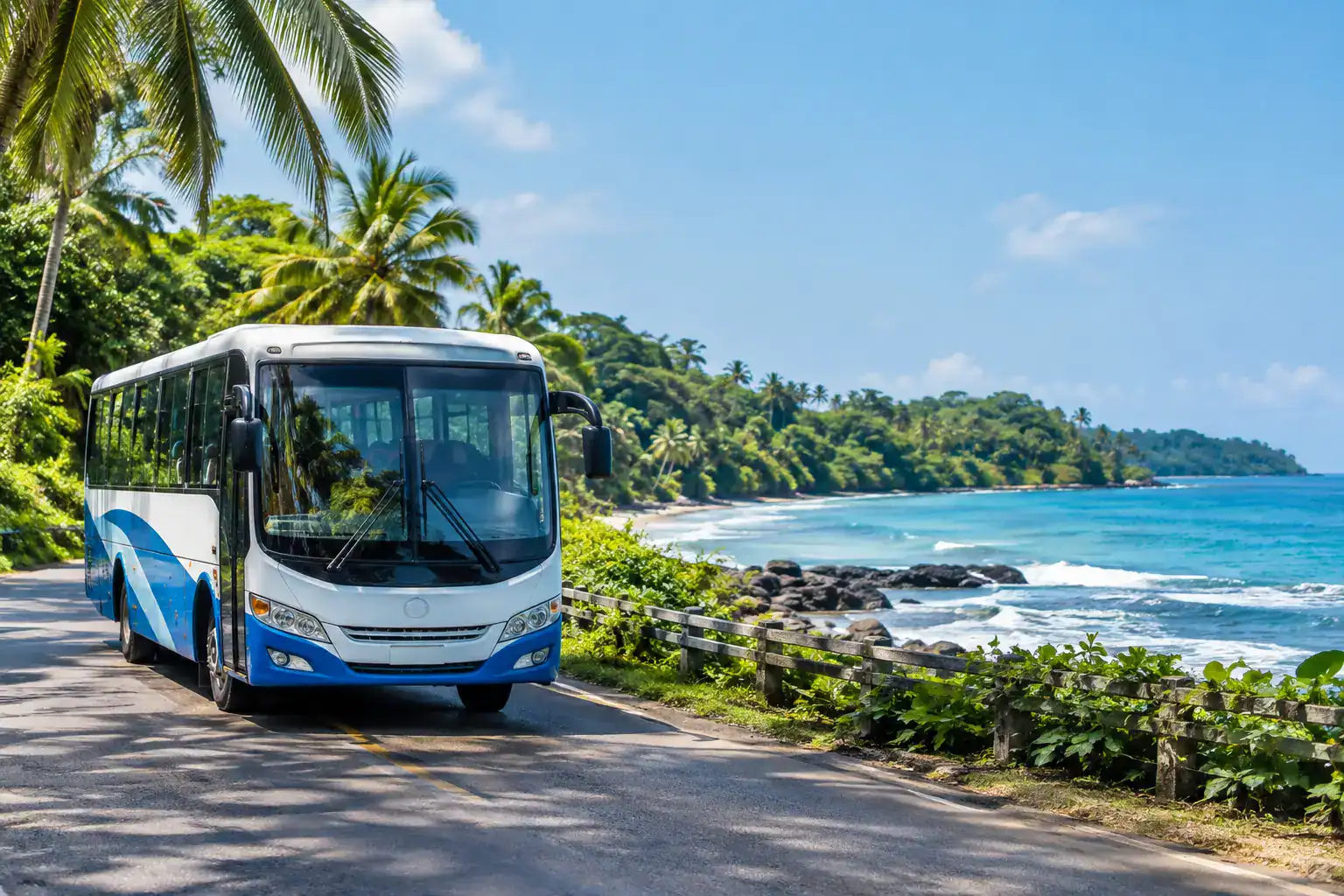
The Puerto Viejo to Cahuita bus is one of the simplest ways to move between two of Costa Rica’s best-known Caribbean coast destinations. The ride is short, inexpensive, and practical for travelers staying near Playa Cocles, downtown Puerto Viejo, or Cahuita National Park. It is also a useful option if you would rather avoid renting a car for a brief coastal transfer.
Cahuita lies roughly 10 to 11 miles north of Puerto Viejo de Talamanca along Route 36. The journey follows the coast through the small communities, farms, and forested stretches that connect the southern Caribbean. On a clear day, it is a modest journey. On a rainy afternoon, or when school and work traffic is moving, allow more time than the map suggests.
How the Puerto Viejo to Cahuita Bus Works
Most travelers use buses running between Puerto Viejo and Limón that stop in Cahuita on the way. These are regular public buses, not a dedicated tourist shuttle, which is part of their appeal: they are affordable and connect the towns as local residents use them every day.
In Puerto Viejo, ask at your hotel, guesthouse, or a nearby shop where to wait for the bus toward Cahuita or Limón. Pickup locations can be straightforward but are not always marked in the way visitors may expect. The correct side of the road matters, so confirm that you are boarding a northbound bus. If you are staying south of town, near Cocles or Punta Uva, you may need to take a local ride into Puerto Viejo first or arrange a taxi to a convenient stop.
In Cahuita, buses generally set down passengers close to the compact town center, within easy walking distance of restaurants, small hotels, and the entrance area for Cahuita National Park. If your accommodation is outside the center, check in advance whether it is walkable with luggage. Cahuita’s roads can become muddy or uneven after rain, and a short distance on a map can feel longer with a suitcase.
Direct service versus a connection
A direct Puerto Viejo to Cahuita bus is normally the most sensible choice. A connection through Limón would add unnecessary time for this short route and is only worth considering if you have missed the last practical service, have a specific reason to visit Limón, or are continuing north afterward.
Do not rely on a timetable screenshot found months ago online. Schedules can shift for holidays, school calendars, road conditions, and operator decisions. Confirm departure times on the day before travel through your accommodation, at a local bus office, or directly at the boarding point. This is particularly wise on Sundays, public holidays, and during the wetter months, when an early start gives you more flexibility.
How Long Does the Ride Take?
The bus journey usually takes about 35 to 50 minutes, depending on the number of stops, traffic, and weather. It is not an express service, so treat the timing as an estimate rather than a fixed promise.
Morning departures can be pleasant for travelers heading to Cahuita National Park before the stronger midday heat. Later buses suit visitors checking out of a Puerto Viejo hotel, though they leave less margin for an afternoon walk in the park or a swim at Playa Negra. If you have a fixed activity, restaurant reservation, or onward transfer, plan to arrive earlier than necessary.
The route itself is part of the experience, but it is not a scenic sightseeing tour. Expect everyday Caribbean coast life: people commuting, students traveling, groceries being carried home, and passengers joining or leaving in smaller settlements. Keep your belongings close, make room for other passengers, and enjoy the chance to see the region at a local pace.
Tickets, Luggage, and Paying on Board
For a short regional trip such as this one, travelers should expect a low local fare. Carry Costa Rican colones in small denominations, since cash is commonly the easiest way to pay and a driver may not be able to make change for a large bill. Ask the driver or fare collector for Cahuita when boarding, especially if the bus continues beyond town.
A backpack or small rolling bag is usually manageable. Larger luggage may need to be placed where the driver directs, and space can be limited during busy periods. Never leave valuables, passports, cameras, or electronics in an unattended bag. Keep them with you throughout the journey.
Buses can fill at popular travel times. If having a seat matters to you, arrive early at the pickup point, particularly on weekend mornings and around school commuting hours. Standing for part of a 40-minute ride is possible, but not ideal with a large pack or young children.
Is the Bus Right for Your Trip?
For solo travelers, couples, and budget-conscious visitors, the bus is usually the best balance of cost and convenience. It eliminates parking concerns in Cahuita and avoids the need to drive after a long flight or on unfamiliar roads. It is also a lower-impact choice than taking a private vehicle for a short transfer.
A taxi or pre-arranged private transfer may be better for families with substantial luggage, travelers arriving after dark, or anyone heading directly to a remote lodge outside either town. It can also make sense when three or four people are sharing the cost. The trade-off is price: private transport is considerably more expensive than a public bus, even over this short distance.
A rental car gives you freedom to continue to Manzanillo, Bribri, Limón, or inland attractions on your own schedule. Yet it is not necessary simply to enjoy Puerto Viejo and Cahuita. Both destinations are walkable at their centers, and local taxis, bicycles, and occasional shuttles can cover many nearby needs.
Practical Tips for a Comfortable Journey
Pack for changing Caribbean weather. A light rain jacket or compact poncho is more useful than an umbrella at crowded stops, while sunscreen and water still matter even under a cloudy sky. Air conditioning should not be assumed, so wear light clothing and keep a dry layer handy for rain-cooled interiors.
If you are traveling with a surfboard, bicycle, oversized stroller, or diving equipment, do not assume it will fit. Ask your accommodation to check the current policy with the operator or consider a private transfer. Regular buses are built for everyday passenger travel, not guaranteed oversized-equipment transport.
Use the ride to arrive with a plan rather than trying to organize everything at the last minute. Download offline maps while you have Wi-Fi, save your accommodation address, and know whether your host offers pickup. Mobile service is generally available around the towns, but it can be inconsistent on parts of the coast.
Traveling after dark
For most visitors, daytime travel is the more comfortable choice. Bus stops are easier to identify, the road is more pleasant to navigate on arrival, and you have time to settle in before evening. If you must travel later, arrange your onward transport from Cahuita in advance and avoid walking isolated roads with luggage.
What to Do After Arriving in Cahuita
Cahuita has a quieter rhythm than Puerto Viejo. Its center is small enough to explore on foot, with Afro-Caribbean cooking, casual cafés, locally run accommodations, and easy access to the coast. Visitors often come for Cahuita National Park, where forest trails run near beaches and wildlife may be visible from the path. Wildlife is never guaranteed, and keeping a respectful distance is essential for both your safety and the animals’ well-being.
If you have only a few hours, leave your bags first and focus on one experience rather than rushing. A beach walk, an unhurried local lunch, or a section of the national park makes better use of the visit than trying to cover the entire area. Bring drinking water, insect repellent, and footwear suitable for damp trails if the park is part of your plan.
Can I take the bus from Cahuita back to Puerto Viejo?
Yes. Look for a southbound service toward Puerto Viejo or Manzanillo and confirm with the driver that it stops where you need to get off. As on the northbound trip, verify the current schedule locally rather than assuming return departures run at the same intervals all day.
Do I need to reserve a seat?
Reservations are generally not part of the experience on local public buses. Arrive early, carry cash, and have a backup plan if the bus is full or delayed. For a time-sensitive airport transfer or tour departure, private transport may be the safer choice.
Is Cahuita worth visiting as a day trip from Puerto Viejo?
Yes, especially for travelers interested in the national park, calmer beaches, and a different perspective on the Caribbean coast. A day trip works well when you start early and check the return bus timing before setting out. Staying overnight, however, gives you more room to appreciate Cahuita after day visitors have left.
The bus between Puerto Viejo and Cahuita is not complicated, but a little local preparation makes it far more relaxed. Confirm the day’s schedule, keep your plans flexible, and let the short ride be a connection between two distinct communities rather than just a transfer on your itinerary.