
Culture and History of Puerto Limón, Cahuita & Puerto Viejo
Understand the culture and history of Puerto Limón, Cahuita, and Puerto Viejo, from Afro-Caribbean roots to Indigenous traditions and responsible travel today.
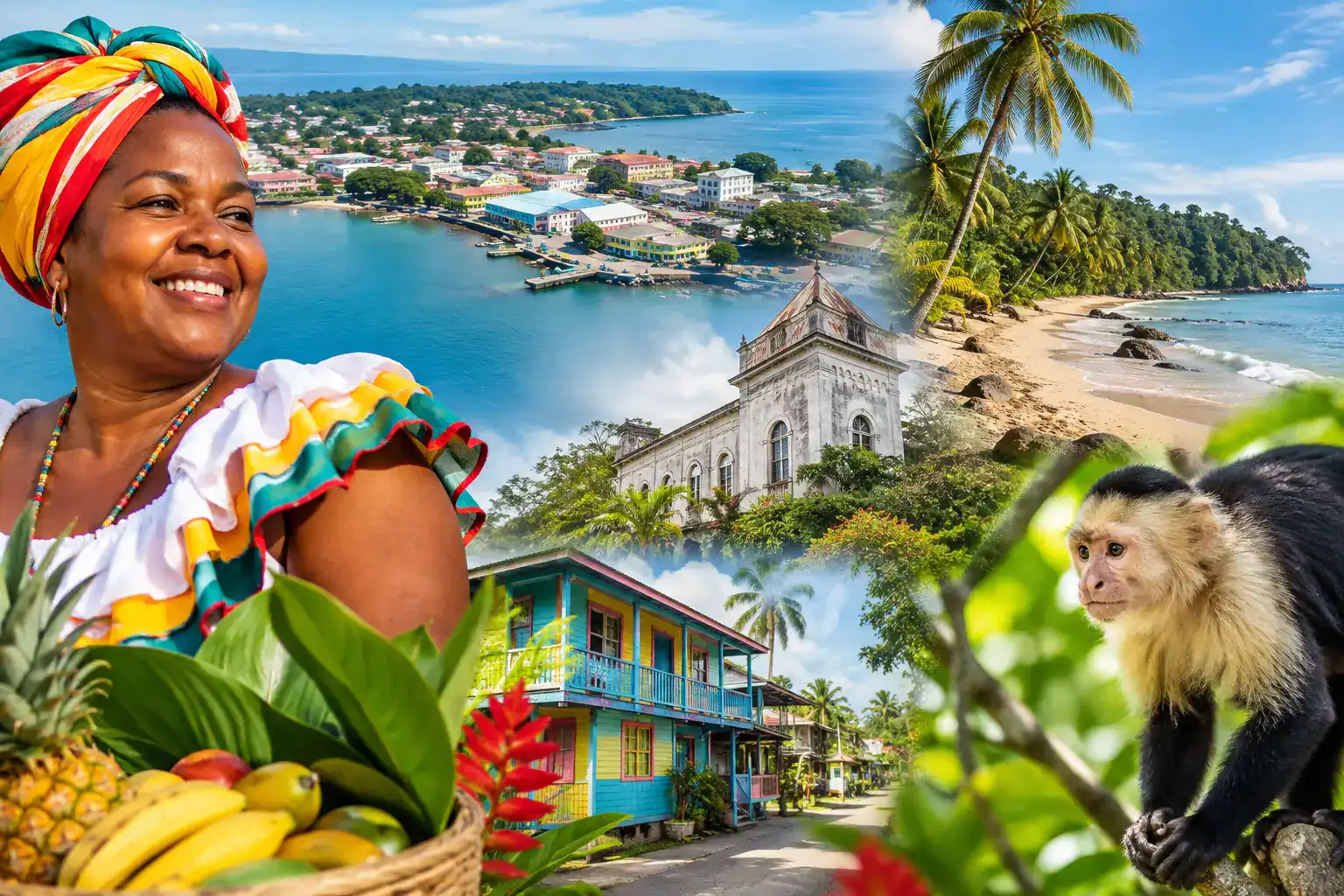
Puerto Limón, Cahuita, and Puerto Viejo may sit along one coastline, but they should not be treated as versions of the same destination. The culture and history of Puerto Limón, Cahuita, and Puerto Viejo have been shaped by Indigenous peoples, Afro-Caribbean migration, agriculture, railroads, port trade, religion, music, and a relationship with the sea that remains central to daily life.
For travelers, understanding that layered history makes the region more meaningful. It also helps visitors move beyond the simplified image of a tropical beach coast and appreciate the communities that give Costa Rica’s Caribbean side its distinct character.
Culture and History of Puerto Limón, Cahuita, and Puerto Viejo
Costa Rica’s Caribbean coast developed differently from much of the country. While the Central Valley became the political and economic center, Limón grew as the country’s main Caribbean port. Its development accelerated in the late 19th century with the construction of the railroad linking San José to the Atlantic and the expansion of banana production for export.
Workers arrived from Jamaica and other Caribbean islands, as well as from China, Italy, and elsewhere. Afro-Caribbean communities became indispensable to the railroad, port, and banana economy, bringing English-speaking Caribbean traditions, Protestant churches, foodways, family networks, and musical forms that continue to shape the province.
This history also includes exclusion. For decades, many Afro-Costa Ricans faced discrimination and restrictions that limited movement and opportunity outside Limón Province. The abolition of those restrictions in the mid-20th century was an important step, but the region’s social history cannot be separated from the inequalities its communities have experienced.
Today, Spanish is the principal language, but visitors may also hear English and Limonese Creole English, often called Mekatelyu. The cadence of local speech, the cooking, the neighborhood churches, and the importance of extended family all reflect a Caribbean identity that is both Costa Rican and distinctly regional.
Puerto Limón: A Port City With a Caribbean Identity
Puerto Limón is the provincial capital and the historical gateway to Costa Rica’s Caribbean coast. Its working port remains fundamental to the national economy, yet the city is also a place of historic architecture, public parks, markets, churches, and cultural institutions. It deserves more than a quick glance from a cruise ship window.
The city’s public life is closely tied to the waterfront and to the annual celebrations surrounding Día de las Culturas in October. The well-known Limón carnival tradition, when scheduled, brings together music, dance, food, and community groups. Dates and programming can change, so travelers should verify current local information before making plans around an event.
Puerto Limón is also associated with the legacy of Marcus Mosiah Garvey, the Jamaican-born Black nationalist leader who spent part of his youth in Limón. His connection to the city is a reminder that this coast was never culturally isolated. It was part of a wider Caribbean world shaped by migration, shipping routes, labor movements, and ideas traveling between islands and mainland ports.
For visitors with limited time, especially cruise passengers, Puerto Limón can provide useful historical context before continuing south to Cahuita or Puerto Viejo. A short visit is most rewarding when it includes time to observe the city as a living commercial center, not simply a departure point for beaches.
Cahuita: Afro-Caribbean Heritage Beside a National Park
About 40 kilometers south of Puerto Limón, Cahuita has a quieter pace and a strong Afro-Caribbean identity. The village developed through settlement by Afro-Caribbean families, many with roots in Jamaica and other islands. Fishing, small-scale agriculture, church life, and coastal trade shaped its early social fabric.
Cahuita is especially significant in Costa Rican music because it is closely associated with calypso. The late Walter Ferguson, often described as Costa Rica’s calypso king, lived in Cahuita and wrote songs that captured everyday life with humor, observation, and social commentary. Calypso here is not background music for visitors. It is a local storytelling tradition, often sung in English or Creole-inflected English, with an unmistakably Caribbean rhythm.
Food is another direct expression of heritage. Rice and beans cooked with coconut milk is a defining dish of the region, though recipes vary from one kitchen to another. Other traditional preparations include rondón, a seafood and coconut-milk stew, spicy pati pastries, plantains, and pan bon, a dark, richly spiced Caribbean-style bread. Ask respectfully about ingredients and heat levels rather than assuming every dish is prepared the same way.
Cahuita National Park gives the town an unusual setting: rainforest, coastal trails, beaches, and coral reef meet within walking distance of the community. Its popularity has brought valuable visitor spending, but it has also made thoughtful tourism essential. Staying on marked trails, avoiding contact with wildlife, and choosing local businesses can help ensure that tourism supports rather than overwhelms the town.
A place where community comes first
Cahuita’s small scale is part of its appeal, but it also means visitors should approach it with consideration. Residential streets, church areas, and beaches used by local families are not resort amenities. Keep noise low, ask before photographing people, and avoid leaving trash or playing loud music near the shore.
The town can feel especially relaxed compared with Puerto Viejo, which suits travelers seeking nature and culture without a nonstop social scene. That distinction matters when choosing where to stay.
Puerto Viejo de Talamanca: A Meeting Point of Cultures
Puerto Viejo de Talamanca, commonly called Puerto Viejo, lies farther south near the Panamanian border. It is a more international and tourism-oriented town than Cahuita, known for surf beaches, restaurants, nightlife, and access to the wider Talamanca area. Yet its identity cannot be reduced to surf culture.
The area sits within a region of deep Indigenous significance. Bribri and Cabécar peoples have lived in Talamanca for generations, maintaining languages, agricultural knowledge, spiritual traditions, and strong connections to the forest and rivers. Nearby Indigenous territories are home to communities with their own governance and customs. A visit to an Indigenous community should be arranged through a responsible local provider or community-led initiative, with clear expectations around photography, purchases, and respectful behavior.
Puerto Viejo also reflects Afro-Caribbean settlement patterns shared along the coast. This is visible in food, music, family names, language, and the long-standing relationship between communities and the sea. More recently, Costa Ricans from other regions and international residents have added new businesses and cultural influences. That mix is part of Puerto Viejo’s energy, but it can create pressure on housing, roads, waste management, and coastal ecosystems.
The best way to experience Puerto Viejo is to balance its livelier side with attention to the surrounding landscape and communities. Explore beaches such as Playa Cocles, Punta Uva, and Manzanillo with awareness of changing sea conditions. Caribbean currents can be strong, and lifeguard coverage is not guaranteed. Do not assume that a beautiful beach is automatically safe for swimming.
How to Travel With Greater Context
A meaningful visit does not require turning every meal or beach walk into a history lesson. It does mean making choices that recognize where you are. Eat at independently owned local restaurants, consider locally guided cultural or nature experiences, and learn a few Spanish greetings. If someone speaks Creole English, listen with interest rather than treating it as a novelty.
Travelers should also distinguish among the destinations. Puerto Limón offers urban and port history. Cahuita combines Afro-Caribbean heritage with a close-knit village setting and national park access. Puerto Viejo is more varied and international, with nearby Indigenous cultural contexts and a broader range of beach experiences. Trying to see all three in a few rushed hours often leaves visitors with only roadside impressions.
Transportation is another practical consideration. The coastal road connects the main towns, but travel times can vary with weather, traffic, and road conditions. Renting a car provides flexibility, while shared shuttles, taxis, and public buses may suit travelers who prefer not to drive. At night, plan transportation in advance, especially when staying outside the main town centers.
Respectful Encounters Make Better Travel
The Caribbean coast is not a theme park built around coconut palms and reggae playlists. It is a region where communities have built livelihoods through difficult historical circumstances, protected cultural traditions, and adapted to rapid tourism growth.
Give Puerto Limón time to be more than a port, let Cahuita reveal itself at a slower pace, and approach Puerto Viejo with curiosity about the people and places beyond its beach bars. That attention turns a coastal itinerary into a more informed, respectful connection with Costa Rica’s Caribbean coast.