
Cahuita versus Puerto Viejo for Your Trip
Compare Cahuita versus Puerto Viejo for beaches, wildlife, food, lodging, nightlife, and transport on Costa Rica’s Caribbean coast, then plan confidently.
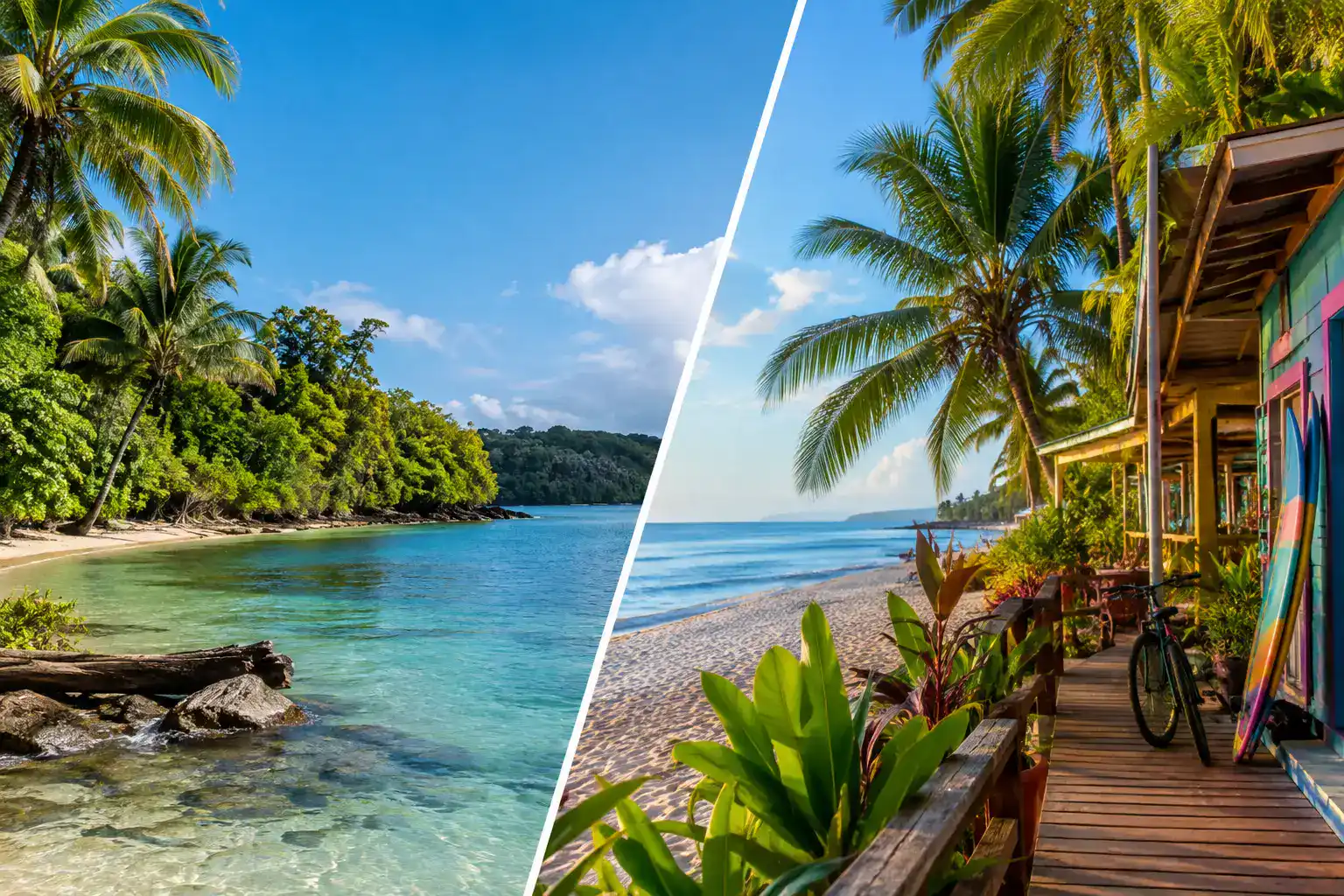
Cahuita versus Puerto Viejo is not a contest between a better and worse destination. These neighboring Caribbean Coast towns offer noticeably different versions of a Costa Rica trip. Cahuita is more compact, quieter, and closely tied to its national park. Puerto Viejo is livelier, more spread out, and surrounded by a string of beaches, restaurants, and small communities that reward unhurried exploration.
They are close enough to combine in one itinerary, yet different enough that choosing a base matters. The best fit depends on whether you picture your Caribbean days beginning with a forest walk and a swim near town, or with a bicycle ride between beach coves, cafés, and late-evening music.
Cahuita versus Puerto Viejo for different trips
Cahuita suits travelers who want nature within easy reach and a town that feels manageable on foot. The center is small, with restaurants, basic services, accommodations, and the Kelly Creek entrance to Cahuita National Park near one another. It can work especially well for families, first-time visitors to the Caribbean Coast, and travelers who prefer an early night without feeling isolated.
Puerto Viejo de Talamanca, commonly called Puerto Viejo, has more movement and more variety. Its central streets have a larger concentration of dining, bars, shops, surf-related businesses, and accommodations. Beyond town, the coastal road leads toward Playa Cocles, Playa Chiquita, Punta Uva, and Manzanillo. This gives visitors more choices, but it also means deciding whether to stay in the center or farther out along the coast.
For a short stay, Cahuita’s compact layout can make planning easier. For a longer stay, Puerto Viejo offers more beach-hopping, dining variety, and different atmospheres from one neighborhood to the next. Neither choice is fixed: many independent travelers stay in one place and visit the other by public bus, taxi, shuttle, rental vehicle, or bicycle where conditions allow.
Beaches and swimming conditions
Cahuita’s shoreline has a quieter, less developed character. Near the national park, Playa Blanca is known for its pale sand and calm-looking water on favorable days, while Playa Negra north of town has darker volcanic sand and a broad, open feel. The scenery changes with rainfall, tides, and sea conditions, as it does across the Caribbean coast.
The coast here is beautiful but should not be treated as a resort pool. Currents can be strong, conditions shift quickly, and not every beach has lifeguards or clearly marked hazards. Ask locally about the sea that day, avoid isolated swimming spots, and give the water the same respect you would give a trail in the rainforest.
Puerto Viejo provides more distinct beach settings. Playa Cocles is popular with surfers and has a more energetic atmosphere. Playa Chiquita tends to feel more sheltered and residential, while Punta Uva is valued for its scenic bay, shade, and gentler appearance in suitable conditions. Farther south, the Manzanillo area offers another beautiful stretch of coast beside protected land.
That variety is Puerto Viejo’s advantage, but it comes with a practical trade-off. The most appealing beach for the day may not be steps from your hotel. A bicycle, car, taxi, or local transportation can make the experience much easier, especially in heat or rain.
Nature and wildlife
Cahuita has the clearer edge for travelers whose priority is a national park experience. Cahuita National Park protects coastal forest, beaches, and reef habitats. Its main trail follows the shoreline through lush vegetation, making it one of the Caribbean Coast’s most accessible places to combine a walk through the forest with time by the sea.
Wildlife is never guaranteed, and visitors should be wary of anyone who promises sightings. Still, patient walkers may encounter monkeys, sloths, iguanas, birds, crabs, and other forest life. Go early when possible, keep a respectful distance, and never feed animals. Food can change wildlife behavior and create problems for both animals and visitors.
Puerto Viejo is also deeply connected to nature, although its appeal is more dispersed. The beaches, roadside vegetation, gardens, and nearby protected areas make it easy to feel surrounded by tropical life. The Gandoca-Manzanillo National Wildlife Refuge south of town is particularly relevant for visitors interested in coastal ecosystems and low-impact outdoor exploration.
If you want a defined park visit with a simple starting point, choose Cahuita. If you prefer nature woven through several days of beach exploration, Puerto Viejo may feel more rewarding.
Food, culture, and the pace after dark
Both towns belong to a region shaped by Afro-Caribbean heritage, Indigenous communities, migration, agriculture, and a long relationship with the sea. Visitors should approach that cultural richness with attention rather than reducing the coast to a beach backdrop. Choosing locally owned businesses, learning a little about the region, and treating communities as places where people live – not simply places to consume – makes a difference.
Cahuita’s restaurant scene is smaller, which can be a pleasure for travelers seeking an easygoing evening. You will find Caribbean-influenced cooking alongside Costa Rican staples and international options. The town’s scale encourages a slower rhythm: dinner, a walk, and a relatively quiet night.
Puerto Viejo has broader culinary range and more going on after sunset. There are casual cafés, bakeries, Caribbean cooking, vegetarian-friendly menus, international kitchens, and bars, although individual businesses can change hours by season and day of the week. The center can be noisy at night, particularly during busy travel periods, so travelers who value sleep should consider accommodations just outside the busiest streets.
For nightlife and restaurant choice, Puerto Viejo is the stronger option. For a more low-key evening and a smaller-town setting, Cahuita is usually the better match.
Where to stay
In Cahuita, many accommodations are within walking distance of town, the beach, and the national park entrance. This is useful if you do not plan to rent a car. The choice generally ranges from simple guesthouses and hostels to small hotels, cabins, and vacation rentals. Book well ahead for peak travel periods, holidays, and school breaks.
Puerto Viejo requires more attention to location. Staying in town puts restaurants and transport nearby, but can bring traffic, music, and a busier street scene. Staying near Cocles, Chiquita, Punta Uva, or Manzanillo can provide more space and beach access, though meals, groceries, and evening plans may require transport.
Before reserving, check the precise location rather than relying on a listing that simply says “Puerto Viejo.” Ask about road access in rainy weather, parking if needed, air conditioning or fans, mosquito protection, and whether the property is walkable to the beach you actually want to use. Along the Caribbean Coast, a short distance on a map can feel much longer in tropical heat or after dark.
Getting around and staying practical
Cahuita lies north of Puerto Viejo on the main coastal route, making it the more convenient of the two for travelers arriving from Limón and continuing south. Public buses connect communities along this corridor, though schedules and frequency can change. Confirm current details locally rather than planning a tight connection around an old online timetable.
In Puerto Viejo, bicycles are popular for daytime travel between town and nearby beaches. They are not automatically the safest choice for everyone. Road surfaces, rain, darkness, traffic, and the absence of sidewalks in places require care. Use lights, wear a helmet if available, and avoid cycling after dark or while carrying valuables.
A rental car gives flexibility for travelers staying outside town or visiting several beaches, but it is not essential for every itinerary. Secure parking and keeping belongings out of sight matter in both destinations. As elsewhere in Costa Rica, do not leave bags, passports, electronics, or beach gear unattended in a vehicle.
Cash is useful for small purchases and local transport, while cards are accepted at many established businesses. Carry a waterproof layer, reef-safe sun protection, insect repellent, and a reusable bottle. Rain can arrive even during a day that begins bright and hot.
Which should you choose?
Choose Cahuita if your ideal trip centers on Cahuita National Park, a walkable small town, a calmer base, and uncomplicated access to beach and forest. It is particularly appealing when your schedule is short or you want to limit daily transportation decisions.
Choose Puerto Viejo if you want a wider range of restaurants, a more social atmosphere, surf culture, and several beaches with distinct personalities. It is often the better base for travelers who enjoy exploring different corners of the coast over several days.
A combined stay is worthwhile when time allows. Spend a few nights in Cahuita for the national park and slower pace, then continue to Puerto Viejo to explore the southern beaches and broader dining scene. The change of setting reveals why these towns should be appreciated on their own terms.
The most memorable choice is usually the one that leaves room to slow down: watch the weather, listen to local guidance, support community businesses, and let the Caribbean Coast set a less hurried rhythm than your itinerary may have planned.