
Cahuita National Park Guide for a Better Visit
Plan your visit with this Cahuita National Park guide: trails, beaches, wildlife, entry points, safety, and respectful travel on Costa Rica's coast today.
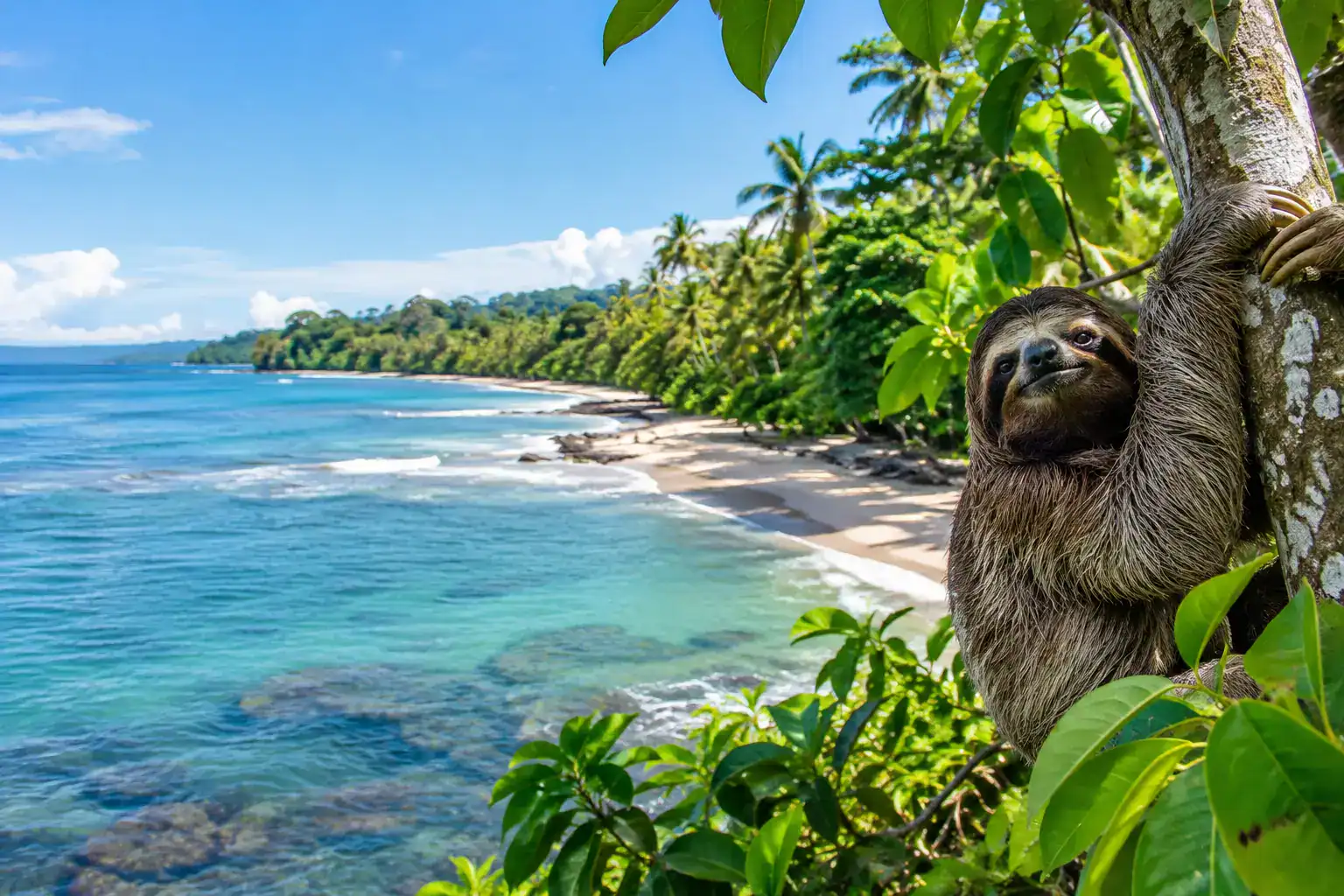
The most memorable part of Cahuita National Park is often not a dramatic summit or a single viewpoint. It is the gradual shift between rainforest shade, pale-sand beaches, and the Caribbean Sea, with a monkey calling somewhere beyond the trail. This Cahuita National Park guide explains how to experience that landscape thoughtfully, whether you are staying nearby, traveling independently from Puerto Limón, or working with limited time from a cruise call.
What makes Cahuita National Park different
Cahuita National Park protects a rare combination of lowland coastal forest, beaches, wetlands, and coral reef on Costa Rica’s southern Caribbean coast. The park runs alongside the small town of Cahuita and extends south toward the Puerto Vargas sector. Unlike a rainforest reserve reached after a long inland drive, this is a national park where the forest and sea remain closely connected.
That connection shapes the visit. The main coastal trail is mostly level and approachable for many travelers, but it is not an urban promenade. Roots, mud after rain, heat, insects, and changing beach conditions are all part of the experience. The reward is a slow, observant day rather than a checklist of attractions.
The marine area is equally significant. Cahuita’s reef is among Costa Rica’s most important Caribbean reef systems, yet visibility and snorkeling conditions depend heavily on weather, currents, rainfall, and park management rules. A calm-looking sea should never be treated as a guarantee of safe swimming or snorkeling.
Cahuita National Park guide: choosing your entrance
The park has two commonly used access points, and the best choice depends on how much time you have and how you plan to return.
The Cahuita sector, near the town center and Playa Blanca, is convenient for visitors staying in Cahuita. This entrance has traditionally operated on a voluntary contribution model, helping support local conservation efforts. The Puerto Vargas sector lies farther south and is generally the more practical starting point for visitors arriving by car from Puerto Limón or the north. Admission arrangements, accepted payment methods, and operating procedures can change, so confirm the current information with official park staff before setting out.
Walking the entire coastal route between Cahuita and Puerto Vargas is a satisfying option for active visitors. The route is roughly 5 miles one way, depending on the section measured, and usually takes several hours once wildlife stops, beach breaks, and humid conditions are included. It is not a loop. Arrange a taxi, private transfer, or vehicle plan for the far end before you begin, especially if you do not want to rush the final stretch.
For a shorter visit, enter from Cahuita, walk through the forest and along Playa Blanca, then return the same way. From Puerto Vargas, explore a portion of the trail and nearby beaches before retracing your steps. This approach works well for families, visitors with a tight schedule, and cruise passengers who need a reliable return time.
The trail, beaches, and what to expect
The coastal trail moves through dense vegetation where wildlife can be difficult to spot at first. Patience helps. Look upward and along branches rather than scanning only the ground. White-faced capuchin monkeys, howler monkeys, sloths, raccoons, iguanas, basilisk lizards, and a wide variety of birds may be present, but sightings are never assured. The most responsible expectation is to enjoy the habitat, not to expect animals on cue.
Several open beach sections break up the forest walk. Playa Blanca, close to the Cahuita entrance, is especially appealing for a rest, but sea conditions can shift quickly. Rip currents may occur, and there are not lifeguards stationed along every beach. Swim only where conditions are clearly safe, remain close to shore, and avoid entering the water alone.
The trail can become slippery after rain. Closed shoes or supportive sandals with good grip are a better choice than flip-flops. Bring drinking water from town, since services inside the park are limited. Food should be packed carefully and all waste carried out. Monkeys that approach bags or picnic areas have learned that visitors sometimes feed them, a habit that harms wildlife and creates difficult behavior around people.
For a comfortable day, carry these essentials:
- Refillable water, sun protection, and insect repellent
- Closed shoes or trail sandals with secure soles
- A light rain layer and dry bag for phones or cameras
- Swimwear only if sea conditions and park guidance make swimming appropriate
Snorkeling in Cahuita’s marine area
Cahuita is often associated with snorkeling, but it is not a destination where visitors should simply rent a mask and head out alone. The reef is a protected ecosystem, while currents, surf, and visibility can be challenging. Local authorized guides are the sensible choice when trips are operating, as they understand access conditions and help visitors avoid damaging coral.
Do not touch coral, stand on reef formations, chase marine animals, or apply sunscreen immediately before entering the water if it is likely to wash off. Reef-safe choices and protective clothing can reduce impacts, though no product eliminates them entirely. If visibility is poor or the sea is rough, choose the forest trail or a beach walk instead. Skipping a snorkeling trip on an unsuitable day is good judgment, not a missed opportunity.
Getting there from Puerto Limón and Puerto Viejo
Cahuita sits on Route 36, about 27 miles south of Puerto Limón and north of Puerto Viejo de Talamanca. A rental car provides the most flexibility, particularly for travelers planning to use Puerto Vargas and continue south afterward. Public buses connect the main Caribbean coastal towns, but schedules can be less convenient for a full park crossing, so allow extra time and verify departures locally.
Taxis and private drivers are useful for one-way trail logistics. Agree on the pickup point, timing, and fare before beginning the hike, particularly if the collection point is Puerto Vargas. Mobile coverage can vary, and it is unwise to rely on arranging transport only after reaching the other end.
For cruise visitors arriving in Puerto Limón, Cahuita can be a rewarding shore excursion, but it requires realistic timing. Traffic, ship all-aboard times, weather, and the distance back to port matter more than the temptation to complete every section of trail. A shorter visit from Puerto Vargas or Cahuita town leaves a safer margin than a full one-way crossing on a tightly scheduled day.
Respecting the park and Cahuita community
Cahuita is not just a gateway to a protected area. The town is part of Costa Rica’s Afro-Caribbean cultural landscape, with a distinct history, food culture, language influences, and long-standing relationship with the coast. Give the park time, but also leave time to eat locally, walk the town respectfully, and support established community businesses.
Inside the park, stay on marked routes and follow ranger instructions. Do not bring drones unless you have confirmed the required authorization. Keep voices low near wildlife, do not play music from speakers, and never feed animals. These simple decisions protect the experience for the next visitor and reduce pressure on a small, sensitive coastal ecosystem.
Is Cahuita National Park suitable for children?
Yes, in sections. Families often enjoy the shorter forest-and-beach walks near either entrance. Choose a distance that matches your children’s comfort in heat and humidity, supervise them closely near the water, and avoid treating the full cross-park route as mandatory.
How long should you allow for Cahuita National Park?
Allow two to three hours for a relaxed short visit. Plan most of a day if you want to walk from one entrance to the other, stop for wildlife observation, and organize transportation back. Add more flexibility during rainy weather.
When is the best time to visit?
Early morning is generally the most comfortable time for walking and often the best period for quiet wildlife observation. Cahuita can be visited year-round, but rain, sea state, trail conditions, and snorkeling visibility vary. The Caribbean coast does not follow Costa Rica’s Pacific-side weather pattern exactly, so check local conditions close to your visit.
Cahuita rewards travelers who make room for uncertainty: a trail may be muddier than expected, the sea may not be right for snorkeling, and the sloth may remain hidden. That is precisely why a flexible visit, paced around the park’s conditions rather than a fixed itinerary, feels most at home on this coast.